• TalkBass has been independent since 1998. Add your voice.
    Create a free account to reply to discussions, view embedded media, and browse with fewer display ads.
    Join freeLog in
    Want zero display ads or expanded classifieds tools? Compare plans.

Dingwall Owners Club

Adding a recessed strap button on the back will bring the nut about 1.5 or 1.6 inches closer to his body. So will playing with the neck angled up, which it already should be anyway, but perhaps isn't.

Yeah I know what you're saying, but he has said the body of the combustion is too far to the right for the belly cut, no mention of the nut or reach issues. So adding a strap pin that moves it further to the right can only exacerbate that problem surely?
Like I said, it doesn't make sense and pics :)
 
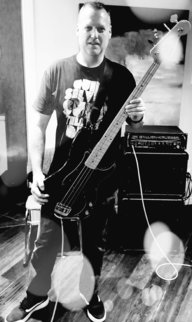
Kinda feeling like it's useless to discuss and give advice on ergonomics at this point without seeing pictures of the player standing with bass on? The traditional strap positions and hang on a Dingwall is a little bit to the right of a traditional P/J, but not that far off, and it actually brings the nut closer to the player, not farther away.

A couple more pictures of traditional strap location in standing playing situations:


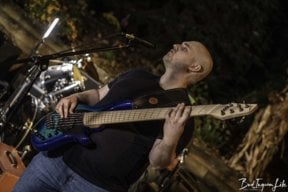
In this one, compare how the Dingwall 'hangs' compared to where the two guitarists' guitars hang...not really any different.


In other news, I'm going back to the FD-3 in neck position from the P-Tone. Lesson learned...just like what the FD-3 in neck brings to the table a bit more than the P-tone.
 
Last edited:
In other news, I'm going back to the FD-3 in neck position from the P-Tone. Lesson learned...just like what the FD-3 in neck brings to the table a bit more than the P-tone.

Curious to hear more about this, I'm still tempted to try and FD-3 in the neck of my combustion 3x as I'm not 100% sold on the p-tone in there, it's good but maybe it's just the active electronics throwing me.

I do know that I definitely want a P-tone in the neck position of my passive AB-1 4 string as it's not quite where I want it to be soundwise although I can't describe what's missing.
 
Curious to hear more about this, I'm still tempted to try and FD-3 in the neck of my combustion 3x as I'm not 100% sold on the p-tone in there, it's good but maybe it's just the active electronics throwing me.

I do know that I definitely want a P-tone in the neck position of my passive AB-1 4 string as it's not quite where I want it to be soundwise although I can't describe what's missing.

In the end, to me it doesn't feel as wide or 'rich' as the FD-3. Running N/B parallel it ended up feeling like I was losing some of the 'bigness' of the tone. Hard to really describe and on stage my sense of detail is uber-amplified. In the end i sort of thought "Oooooh...this is what a Dingwall would sound like if it were a 'normal' bass" if that makes any sense. If you're looking to make your tone more 'traditional' this would be a great option. If you're really missing the solo P-bass tone-open thing, it would be a great option, and in a 3x setting you'd get that uber-musicman, a usable N/B parallel and a good P-bass solo neck setting.

Also, it would be good to note that I'm probably fairly set in my ways tonally on stage. I've been using FD-3 basses now for literally every show, rehearsal, recording since 2005. So thousands of hours, and a handful of hundred live performances.
 
Last edited:
I get what you mean by losing the bigness of tone, the P-tone certainly has a different sound. I'm sure I've said it before by the one in my combustion 5 sounds quite different (active obviously, but also passive switched) to the one in my passive ABZ5.
They are different construction, finishes and woods so maybe it's just that making the difference. I'll keep an eye out for an FD-3 to throw in there just to satisfy my curiosity.
 
Interesting take on it, Bill. And I definitely get it.

I think the P is a bit tighter, more midrange, and a little more, shall we say 'ganky' (Mind you my only experience is the actual-P in my SP5). In comparison, the FD3 is richer, flatter through the mids or maybe even a touch scooped, and polite, but big. Both are great, that's why I'm grateful to have an AB and an SP, because all the tones work in different situations for me.
 
Interesting take on it, Bill. And I definitely get it.

I think the P is a bit tighter, more midrange, and a little more, shall we say 'ganky' (Mind you my only experience is the actual-P in my SP5). In comparison, the FD3 is richer, flatter through the mids or maybe even a touch scooped, and polite, but big. Both are great, that's why I'm grateful to have an AB and an SP, because all the tones work in different situations for me.

Yeah, I'm not going to get rid of the P-Tone, and I think it's probably a great option for lots of settings and people. I just knew from the moment of install that it wasn't probably the tone for me. In some ways it also 'flattened' the preamp a bit, meaning I could apply more of the bass control, but felt like it was sort of naturally rolled off in the stuff in the mids and upper mids. I don't necessarily need that content, up there, but can roll off if needed.
 
In the end, to me it doesn't feel as wide or 'rich' as the FD-3. Running N/B parallel it ended up feeling like I was losing some of the 'bigness' of the tone. Hard to really describe and on stage my sense of detail is uber-amplified. In the end i sort of thought "Oooooh...this is what a Dingwall would sound like if it were a 'normal' bass" if that makes any sense. If you're looking to make your tone more 'traditional' this would be a great option. If you're really missing the solo P-bass tone-open thing, it would be a great option, and in a 3x setting you'd get that uber-musicman, a usable N/B parallel and a good P-bass solo neck setting.

Also, it would be good to note that I'm probably fairly set in my ways tonally on stage. I've been using FD-3 basses now for literally every show, rehearsal, recording since 2005. So thousands of hours, and a handful of hundred live performances.
Interesting...This makes me think about keeping the super fatties on the neck position. Hmmm...decisions
 
Interesting...This makes me think about keeping the super fatties on the neck position. Hmmm...decisions

My end feeling was just that this is just a place that Sheldon has dialed in the right hardware in the right place. Not that I don't already trust his judgement and testing. And it's worth testing new things from time to time anyway...but points to team Dingwall on this for having the winner out of the box. And I don't want to discourage those from trying and seeing if this is for them. I was surprised though because I polled people back in November or December about it, and overwhelmingly people we down with P-Tone in the neck of the 3X setup.
 
My end feeling was just that this is just a place that Sheldon has dialed in the right hardware in the right place. Not that I don't already trust his judgement and testing. And it's worth testing new things from time to time anyway...but points to team Dingwall on this for having the winner out of the box. And I don't want to discourage those from trying and seeing if this is for them. I was surprised though because I polled people back in November or December about it, and overwhelmingly people we down with P-Tone in the neck of the 3X setup.

Thanks for the rundown on this.

I'm still considering trying it out in my 2 pup SJ.

I would have to speculate that other basses and styles of music/playing will have different results. In my world I don't actually have a use for it.... yet.

But if I played in the right situation it might world lovely. Then again I may come to the same conclusion as your self.

I do think that you may have talked me out of putting a p tone in the six string..... if it was available so no loss there.

But the SJ could still be a go.
 
I would have to speculate that other basses and styles of music/playing will have different results. In my world I don't actually have a use for it.... yet.

But if I played in the right situation it might world lovely. Then again I may come to the same conclusion as your self.

I do think that you may have talked me out of putting a p t

The true tragedy here, is that no one will ever know if the 'personal taste' side of this matches what they want to hear or not. :P

;)

If you're prone to liking hearing a more traditional or mainstream pickup tone a'la Fender style classic P & J this may indeed be the pickup for you. I would guess it reads as an idealized 'perfect' mind's eye version of that. But probably important to remember that I jettisoned all my 'traditional' basses and leanings the first time I picked up and Afterburner and haven't looked back since.
 
My experience with the P tones has been overwhelmingly positive. But, I was lucky enough to start with Dingwall P pup in a Super series PJ4. So, I always had a baseline sound to compare and contrast with new Dingwall acquisitions.

First, the improvement over my soon to be sold Fender J was night and day. Especially in a band mix. I was just getting a much better sound, more punch, more focus and clarity. I was having way more fun.

Next up was the AB-1, and while I loved everything about it, weight, feel, looks, and clarity of the longscale, the tone tended towards polite, and in comparison to the SPJ, a little thin. I was on the fence, but a drop in PTone was only $150. And I was really happy with it. No pickguard issues to deal with, just two screws and two wires.

The Super J 5 with Super Fatties not quite as extreme a difference, and when I changed the wiring to series on both pups, I was pretty darn close to my SP4 baseline. I went ahead and made the change to the P pup to get that last little bit, and also to open up some space between the neck and the treble side of the pup, where I’m popping the G. (Now C). The P sits a little further from the neck than the Super Fatties.

And now I’m back with again with the black Super P4. Puts the pup right in the sweet spot. With an added bonus: less controls. I really like simple.

Main point, I never felt like I was gambling with P tones, because I already had my happy place. Parts were readily available to take me there. I can go on about how much I like the P’s, (and it looks like I have, again) but until it’s on your palette, its me talking.

And, as always, YMMV, IMHO, my $.02. And I don’t know anything about the latest pickup editions.
 
  • Like
Reactions: Waltsdog and Iv@N
I have found discussion very interesting of late regarding tone, ergonomics and pickups. I think bass tone is like fine wine. If you get used to a certain tonal pallette, it is sometimes hard to immediately appreciate a bass with a somewhat different tone. One cannot cleanse one's pallette of prior bass tone as one can when tasting fine wine. I have been sort of a P-bass tone kind of guy for a long time, and since purchasing first an ABZ, and the two AB1s, I have found my pallette has slowly shifted to more of a jazz tone. I love the parallel settings on both the 3x and 2x AB1. I do also now like the neck solo'd with the original non p-tone pups, but I do find myself tweaking that tone a bit by adding some bass and cutting the highs a bit to make it a little more P-like.

I also put a P-tone in my ABz, and ultimately was going to switch it back before I sold it. I liked the tone, but it was too out of balance with the bridge to get back to that great Dingwall jazz type tone.

I will probably try the FDVs for grins at some point, but I am now in tone heaven with the N-B parallel setting for both basses and the Glock set flat. So much growl and definition, and just phat clear tone.

Point being that I wasn't always comfortable with my Dingwalls as I am now. It took some time to make that ear-migration in tone, with lots of experimentation with string types and settings, and also adapting technique (as has been previously mentioned). In addition, it took some time to figure out my ergonomically ideal hang point. I used to wear my ABs pretty high, but have them slung down a fair bit lower now. I think you really have to play a Dingwall for a while and really experiment until you find that sweetspot in tone (including platform, pickup type and setting, strings), hand technique and bass location.

I have no GAS for any other basses whatsoever, unless of course they are long-scale Dingwalls! But even if I never purchased another Dingwall bass, I would be vastly content with the two I have.
 
I suppose it depends on what sort of strap you have, but all my straps "stick" to my shoulder will enough that I can move my basses position around and it stays there. In my current band, most of my bass lines are pretty easy to handle, fretting-wise, but there is one riff that has a 1st to 4th fret stretch on the B string a bunch of times...when that riff comes up I just angle the bass more upwards, and the reach becomes manageable. With that "technique" at my disposal, I've never had a problem with my fretting hand on a Dingwall.

And about the tummy cut, I don't believe the intention is that it sits on you stomach...it sits on the side of your stomach, and the cut is so the edge of the bass doesn't dig into you there.

I don't want to discount or claim your experience is wrong @Hambone70, I just think you're struggling with things that most of us dealt with early in our playing careers. Working out fretting hand technique, strap length, and tone shaping are all things that won't change when a Dingwall is in or out of the equation. Sure, a multiscale requires some adjustment, but all the foundational information and technique still holds true here.
Apologies for time-wasting here. Excuses - I'm relatively new to bass, and the 5-string, long-scale, active, fanned-fret elements are new to me, and I'm coming to this late in life. Old dog, new tricks, etc.

Thanks for the help from everyone.
 
I have found discussion very interesting of late regarding tone, ergonomics and pickups. I think bass tone is like fine wine. If you get used to a certain tonal pallette, it is sometimes hard to immediately appreciate a bass with a somewhat different tone. One cannot cleanse one's pallette of prior bass tone as one can when tasting fine wine. I have been sort of a P-bass tone kind of guy for a long time, and since purchasing first an ABZ, and the two AB1s, I have found my pallette has slowly shifted to more of a jazz tone. I love the parallel settings on both the 3x and 2x AB1. I do also now like the neck solo'd with the original non p-tone pups, but I do find myself tweaking that tone a bit by adding some bass and cutting the highs a bit to make it a little more P-like.

I also put a P-tone in my ABz, and ultimately was going to switch it back before I sold it. I liked the tone, but it was too out of balance with the bridge to get back to that great Dingwall jazz type tone.

I will probably try the FDVs for grins at some point, but I am now in tone heaven with the N-B parallel setting for both basses and the Glock set flat. So much growl and definition, and just phat clear tone.

Point being that I wasn't always comfortable with my Dingwalls as I am now. It took some time to make that ear-migration in tone, with lots of experimentation with string types and settings, and also adapting technique (as has been previously mentioned). In addition, it took some time to figure out my ergonomically ideal hang point. I used to wear my ABs pretty high, but have them slung down a fair bit lower now. I think you really have to play a Dingwall for a while and really experiment until you find that sweetspot in tone (including platform, pickup type and setting, strings), hand technique and bass location.

I have no GAS for any other basses whatsoever, unless of course they are long-scale Dingwalls! But even if I never purchased another Dingwall bass, I would be vastly content with the two I have.

Much wisdom here. :cool:
 
Apologies for time-wasting here. Excuses - I'm relatively new to bass, and the 5-string, long-scale, active, fanned-fret elements are new to me, and I'm coming to this late in life. Old dog, new tricks, etc.

Thanks for the help from everyone.

Many of us have been playing for decades, and so the hard-learned lessons seem like obvious truths to us. This can lead to some sighing and head scratching, but pay no notice. And no apologies necessary--we all had to learn at some point. Keep asking!

As for the set-up issues, it might have already been said, but, if I'm correct in recalling that the bass was used, it is *possible* that a prior owner abused it in some way that makes set-up of what is otherwise a relatively high-end instrument problematic (even the Chinese versions are finished, QC'ed, and set up in Saskatoon). If you diligently followed all of Sheldon's videos (kindly linked by Iv@N) and still can't get the thing to work right, it's a definite possibility. Kind of like buying a Porsche with a very worn tie rod--famed handling doesn't matter when you can't steer well, and no amount of adjustment's going to correct it ("Did you check the toe-in?" "How about the camber?"). Hopefully that's NOT the case, and there's another (cheaper!) solution than a repair of a damaged bass. Best of luck!
 

Latest posts