• TalkBass has been independent since 1998. Add your voice.
    Create a free account to reply to discussions, view embedded media, and browse with fewer display ads.
    Join freeLog in
    Want zero display ads or expanded classifieds tools? Compare plans.

Do I simply prefer passive?

I got my first active in 83 and have had at least one, usually several on hand ever since then. Apart from the odd dirty pot and once an output jack being intermittent, neither of which are an active only fault, I have never, ever had one let me down when playing. Dunno how that makes them waaaaay less reliable.

I'm glad your active basses never let you down. I can't say the same thing.

Anyway, I believe that the best way to avoid problems is avoid them. Passive basses are my way to go.
 
Last edited:
  • Like
Reactions: Marko 1
I own three passive Fenders. I bought a passive Spector Euro a number of years ago and have to say it was pretty darn good.

I’m due to receive a Sadowsky Will Lee next month. It has an onboard preamp with a passive bypass. Then, in a huge leap, I ordered a fully active Spector NS-2 for delivery in a year.

They all do what they’re supposed to do. With the differences that make life interesting.
 
  • Like
Reactions: ruju
I wire my basses as lower impedance devices (long explanation left out for brevity). All our basses are electric - they have pickups that are connected to circuitry. The one thing that an active bass does that a passive one doesn’t is it puts the first circuitry before the volume control and cable. This has implications on the performance of the instrument - your volume control affects the tone of the instrument, and there is a fixed peak and roll off in the high frequencies - you can’t get more bandwidth without changing pickups in a normally wired passive bass.

Both of those things can be addressed with a lower impedance circuit - I wire my basses that way - they’re technically all passive, but with most of what I like about what active circuitry onboard can do for you.
 
Sometimes simplicity is the ticket.
When I had basses with active preamps I always found myself setting them as neutrally as possible.
I think the classic EMG pickups (P/J/35/40/81/60/85/SA/etc) have a different thing going as the preamp is a fundamental part of the pickup.
 
I've always been in the active camp, but since I got a bass with the Nordy Big Singles with an active/passive switch - I found it much easier to dial in the right sound through my pedals in passive. I never use it in active anymore, and I've found a lot has to do with having quality pickups.
 
There’s such a wide variety of sounds available from both active and passive basses that I find it impossible to make any blanket statement about active vs. passive. A pre-EB Stingray and an Alembic Series I are both active basses but they don’t sound at all similar. A Fender Precision and a Gibson EB 0 are both passive basses that sound nothing alike.

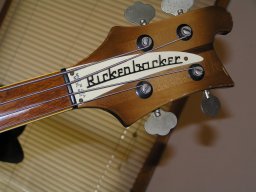
Over the years I’ve owned a lot (probably a few too many) of each, passive and active, and can honestly say I don’t have any general preference. I do, however have specific preferences that are formed on a bass-to-bass bassis.* I make each assessment in the context of the instrument involved. Resultingly, I’ve pulled preamps from basses that didn’t benefit from them and added them to basses that did - subjectively speaking, of course. For example, I recently added an MEC preamp to my (previously passive) Warwick Corvette and I felt it was an improvement but I would never consider doing that to my old Guild 201 or one of my Rickenbackers.

*I really like that I got to say bass-to-bass bassis. It was worth the whole post, really.
The Warwick MEC pickups and PreAmp are my favorite of any Active bass Ive played. The simple 2 Band PreAmp is awesome. Very usable treble and bass knobs, and the Warwicks have Tons of miss on tap naturally. I typically boostes the Bass a tad and rolled off a bit of Highs with bright new Nickels on the bass.
Other than Warwicks, I usually prefer passive with tone knob.
 
  • Like
Reactions: Lo-E and GTHintz
I have an active bass, but also a number of passive ones and various external preamps. I find I can easily dial in a tone I like with the passive instruments, but find it more of a faff with the active. My first bass was active, so it's not like I'm that much of an old fogey, although IIRC that just had a simple passive tone. I've also owned a couple of Westone Thunders (IA and III) and a Fender Cowpoke that I was fine with. Have I just BECOME and old fogey (don't answer that..).

It's a valid lifestyle choice for people of all ages, and it is ok if you are confused.
 
26570273[/URL], member: 384493"]I'm curious what you mean by this. I'm an EE so get as technical as you like if you'd care to elaborate.

I’ll give you the quick version:

Hum cancelling pickups, but wired in parallel. Your impedance drops to a fourth of what it was in series. To tune the response, you load the pickups capacitively - that loading is across the pickup, before the volume control, so the volume control is not between the pickups and the capacitive loading - it doesn’t mess with the tone when you turn it down. With the lower source impedance, the volume and tone controls use smaller value pots.

Lower impedance means the cable capacity is less of a load - make the cable longer, things don’t change much.

One detail about this is you can scale the resistive loading more or less, depending on how much superelevation you want - you can have a higher resonance peak if you want, or keep it as is.

The process starts with characterizing the impedance of the pickups - I do simulations of things before I build; after doing a few dozen of these, I can get pretty close to the final values for things on the first try (and avoid things that won’t work well).
 
Last edited:
I have an active bass, but also a number of passive ones and various external preamps. I find I can easily dial in a tone I like with the passive instruments, but find it more of a faff with the active. My first bass was active, so it's not like I'm that much of an old fogey, although IIRC that just had a simple passive tone. I've also owned a couple of Westone Thunders (IA and III) and a Fender Cowpoke that I was fine with. Have I just BECOME and old fogey (don't answer that..).
I don't really like active basses. I think that they all tend to sound same-y regardless of their tonal versatility... passive basses usually just tend to have a little more in the way of character, to me.
 
Different pres do different things and the knobs interact with one another differently. An old musicman preamp is going to behave very differently than a digital type or newer preamp. I think in general the major thing that messes with people who play passive basses and switch is the volume control, people feel like they’re “missing” sound by dialing it back on an active when they’re not. A passive bass can have an open volume pot and not end up too detailed sounding, an active preamp bass in general will go into further detail with that volume pot, and the output will be much stronger.

The -15 dampener on amplifiers was designed not because active basses are too loud for amps, it’s because some people like having the volume all the way open and that setting is too much for amplifiers. Iirc even the first musicman amplifiers didn’t have the -15 input. That and the actual manual said to never turn them up above halfway as it will drive the amp lol

the thing is that with a passive bass the more the volume knob is turned up the more the tone knob actually does, where as with an active bass the tone knob changes the sound more or less the same amount with the volume knob lower. All pres are different and I personally find that the musicman preamps treble knob tends to “soften” as the volume knob is lowered but it does hold longer than a passive bass does!
 
  • Like
Reactions: GTHintz
Great music has been created by bassists using both style instruments, so I refuse to knock either one. Personally, the active instruments I've used left a bit of a bad impression. Brittle tone, way too much treble sizzle and not enough comfy wool in the midrange. A P bass with or without flats is a better overall choice for the majority of music I play. The two Rics and other assorted passive basses have all seen regular duty when called upon. That said, a StingRay in the right hands is capable of sending chills down your spine. But remember: "Jaco din need no active bass!"
 
  • Like
Reactions: woodyng2
Honestly there's great active and great passive basses out there. With eq pedals and axe effects and all this other new technology you really don't need to have an onboard pre the way you used to back when amp heads were simpler and headroom was a luxury more than standard like it is now. If you have a good enough set up passive is more than good enough. Some basses and players naturally sound better passive. I don't really have a problem with active basses but I really think they need to be good circuits or it's kinda worthless honestly. Case and point is one of my basses that came to me active and I couldn't stand the tones. I swapped everything out for passive and it made everything a million times better sounding. I actually put it in another bass and it made a positive difference. It sounded good already but the preamp have it a new flavor and I really like it. It's really all matchmaking preamp with pickup and with bass and with player.
 
  • Like
Reactions: Dincrest