
Enjoy the benefits of a premium membership!
Upgrade Account
-
TalkBass has been independent since 1998. Add your voice.
Create a free account to reply to discussions, view embedded media, and browse with fewer display ads.
Join free Log in
Want zero display ads or expanded classifieds tools? Compare plans.
You are using an out of date browser. It may not display this or other websites correctly.
You should upgrade or use an alternative browser.
You should upgrade or use an alternative browser.
Do you need music theory?
- Thread starter IamGroot
- Start date
More options
Who Replied?


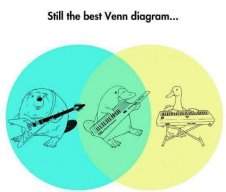
Knowing is USUALLY better than not knowing.Knowing is ALWAYS better than not knowing.
When I'm eating a hotdog, the less I know about it the better.

Chord Usage in JazzTo me it means having a decent knowledge of key centers, scales, modes, chords, and how they all fit together. Understanding time signatures and rhythmic subdivisions would also fall into theory. It used to also mean voice leading, but I don't really use voice leading as a bass player, and I haven't written any music for a long time. Another aspect of theory I haven't used recently is tempering and intonation.
Musicalvania? Is that close to Strasbourg, North Dakota where the Lawrence Welk home is?I have always found it helpful to know WORKING music theory in order to transpose on the fly since I play with a variety of singers who sing a various keys. I don't know all the modes or the names of scales, etc., but I can hear them. It can't hurt to know the language of the country you live in, right? Since I live in Musicalvania, I should be at least conversant in the language...
They used to speak both Russian and German up there. Maybe even Wendt.
Should not be a divisive question. All of us can benefit from learning theory. "Need" is a bit of a sticky word in the sense that there are people who have so much talent that the only thing they actually need is for someone to put an instrument in their hands and cut them loose. But the vast majority of us are not like that. Some might be a little like that, some may be nothing like that, but most of us need tools.
The way I look at theory is mainly as a set of tools to help me communicate what I hear and want to hear others do. I can play it without that. I can feel it without that. But I can't tell you what I want without that. So theory, for me, is critical if I'm going to communicate with others.
The way I look at theory is mainly as a set of tools to help me communicate what I hear and want to hear others do. I can play it without that. I can feel it without that. But I can't tell you what I want without that. So theory, for me, is critical if I'm going to communicate with others.

You don’t need to study English to speak it.
But you do if you want to write it.
But you do if you want to write it.
You don't want an electrician working on your house who knows little or no electrical theory (Ohms Law and whatnot).
I don't want to play with musicians who know little or no theory.
Depends If you’re being hired to wire the venue or play the gig!
The absence of formal theory training doesn’t negate ones input or creative ability. I’d struggle to name concepts in grammar apart from maybe ‘syntax’ but it doesn’t mean I’m unable to communicate or be understood by people around me. It’s rare when a drummer or guitarist has said “Nice groove, I’m digging the flat third on bar three and the triplet you played on the turn around.” They might be more inclined to just lock in and play and do that wee look and a nod.

Yes, one does if one wants to be a musician. Just if one wants to be a mathematician one has to use math.
All who play music or try to are using music theory, whether they know it or not.
Now if you want to be proficient at it, it would behoove one to learn music theory like any other language.
Babies can learn to speak a language but can't read or write it until they are taught to and learn to. If one does not follow through and learn the rest of how to work with or used the language they can and usually are limited in how they can interact within the language and communicate with others. Those folks are considered illiterate in the language they are trying to communicate in.
Not hatin' just sayin'
All who play music or try to are using music theory, whether they know it or not.
Now if you want to be proficient at it, it would behoove one to learn music theory like any other language.
Babies can learn to speak a language but can't read or write it until they are taught to and learn to. If one does not follow through and learn the rest of how to work with or used the language they can and usually are limited in how they can interact within the language and communicate with others. Those folks are considered illiterate in the language they are trying to communicate in.
Not hatin' just sayin'
Or read itYou don’t need to study English to speak it.
But you do if you want to write it.

Yet you use music theory whether you know it or not. When you say you've written music what do you mean, chord changes or little dots on paper, melody lines and such as well?I've written and recorded about 100 songs. I've played in successful original bands and toured in the US and abroad. I've played in about 50 cover bands. I've performed with some well known musicians as well as some of the most talented on the planet. I currently earn most of my living playing bass.
I know very little, if any, theory.
I also know folks that have worked all their lives supporting their families. Worked well with others all their lives yet, can't read a newspaper or street sign or write a grocery list.
The reason modern popular music is so great is because anyone can get playing rather quickly. If you avoid music theory you’ll pick some up without realising, as others have mentioned.
For me, music theory is music. I love it. I also can’t imagine working in a professional scenario without it. Even down to the basic settings of “what’re the chords... I, VI, II, V in Bb? Okay, count us in”.
I’ve always said the 2nd album syndrome comes down to bands not really knowing how music works... They have years to come up with a killer 1st album then when it’s time to write a second they fumble out some middle of the road poopie because they’re not actually musicians....
Even the Beatles were switched on to it and could pick out from other songs what worked and then rework it for themselves.
of course, these are just general musings.
For me, music theory is music. I love it. I also can’t imagine working in a professional scenario without it. Even down to the basic settings of “what’re the chords... I, VI, II, V in Bb? Okay, count us in”.
I’ve always said the 2nd album syndrome comes down to bands not really knowing how music works... They have years to come up with a killer 1st album then when it’s time to write a second they fumble out some middle of the road poopie because they’re not actually musicians....
Even the Beatles were switched on to it and could pick out from other songs what worked and then rework it for themselves.
of course, these are just general musings.
The biggest point I should’ve expressed is that I’m a music teacher at college (16-18 years old in UK).
Best musician at the start of the year looked to be this technically great guitarist playing John Mayer licks. Turns out he’s the worst musician in the class and really struggles to access the course and play with others. The stuff he has learnt has been note for note on YouTube. When asked to play a simple chord progression with G, C, and D he completely falls apart. It’s frustrating to work with I have reworked basic music theory into my curriculum to cater.
Best musician at the start of the year looked to be this technically great guitarist playing John Mayer licks. Turns out he’s the worst musician in the class and really struggles to access the course and play with others. The stuff he has learnt has been note for note on YouTube. When asked to play a simple chord progression with G, C, and D he completely falls apart. It’s frustrating to work with I have reworked basic music theory into my curriculum to cater.

- Oct 7, 2000
- 18,619
- 38,939
- Disclosures
- Endorsing artist: Musicman basses
When you say you've written music what do you mean, chord changes or little dots on paper, melody lines and such as well?
Songs.
One of my favorites is the one in my sig... where I wrote, played, sang, and recorded it all alone in my bedroom... the other guys are faking it for the video
.The most I could tell you about this song is that its in G.
And there's not a chance I'd be able to write out what I was doing in this life time.
Songs.
One of my favorites is the one in my sig... where I wrote, played, sang, and recorded it all alone in my bedroom... the other guys are faking it for the video
The most I could tell you about this song is that its in G.
And there's not a chance I'd be able to write out what I was doing in this life time.
Pretty Cool!
It's still never too late to learn theory and understand what you are doing and how to communicate it to more people that do understand music theory.
Even though as you said you work with some well-known musicians as well as some of the most talented on the planet. They may already know music theory and understand what you are doing for you
There's is a chance you'd be able to write out what you were doing in this lifetime, if you wanted too
- Oct 7, 2000
- 18,619
- 38,939
- Disclosures
- Endorsing artist: Musicman basses
Even though as you said you work with some well-known musicians as well as some of the most talented on the planet.
Have worked... I'm just playin with regular people lately. Talented, but regular talented
.And thanks for the compliment.
I wouldn't say you need it, I'm self taught and play by ear but wished I'd learnt theory when I was younger, not knowing theory hasn't stopped me playing in bands or enjoying playing bass.
Last edited:

Knowing theory helps you understand why and how things work. It can also help you decipher a piece, and communicate with ohter musicians easier.
Anybody plays a song applies some the principles of theory with or without being aware of it imo.
Anybody plays a song applies some the principles of theory with or without being aware of it imo.
Is your name Adam Clayton?I've written and recorded about 100 songs. I've played in successful original bands and toured in the US and abroad. I've played in about 50 cover bands. I've performed with some well known musicians as well as some of the most talented on the planet. I currently earn most of my living playing bass.
I know very little, if any, theory.

Whenever I’ve gotten stuck as a musician, I’ve gone out and learnt more about what I do. Part of that journey was learning the theory behind what I do/play.
Someone once said that Theory is descriptive, not prescriptive.
I’ve found it pretty handy to be able to talk about and explain what I’m doing with other musicians I’m working with, and likewise understand what they’re explaining and doing.
I’m doing jazz and corporate gigs, some reading for shows. Helps me with my gigs.
If I was Bob Dylan I’d probably not be bothered!
Someone once said that Theory is descriptive, not prescriptive.
I’ve found it pretty handy to be able to talk about and explain what I’m doing with other musicians I’m working with, and likewise understand what they’re explaining and doing.
I’m doing jazz and corporate gigs, some reading for shows. Helps me with my gigs.
If I was Bob Dylan I’d probably not be bothered!


