
Enjoy the benefits of a premium membership!
Upgrade Account
-
TalkBass has been independent since 1998. Add your voice.
Create a free account to reply to discussions, view embedded media, and browse with fewer display ads.
Join free Log in
Want zero display ads or expanded classifieds tools? Compare plans.
You are using an out of date browser. It may not display this or other websites correctly.
You should upgrade or use an alternative browser.
You should upgrade or use an alternative browser.
Do you prefer smaller or larger radius?
- Thread starter 10emmanuel
- Start date
-
- Tags
- radius
More options
Who Replied?



- Apr 18, 2008
- 16,019
- 1
- 31,734
- Disclosures
- I'm highly opinionated and extremely self-assured

9” to 12” is my zone on 4 strings. Flatter on 5 strings, like 15” or so. I also like a compound radius, especially on 5 string.

One of my basses has a compound radius and it's awesome. 12" by the 1st fret, 16" by the 22nd. Gets progressively more flat the higher up you go.
I think more people would really dig it if they tried it out. Fender is starting to use it on their American Ultra line.
I think more people would really dig it if they tried it out. Fender is starting to use it on their American Ultra line.

I'd be way over my head if I had to spec out a custom bass for myself, not that I have to worry about that anytime soon.
I have 3 basses with very distinct neck profiles, as my Precision has a compound radius (chunky at the nut, flat near the heel), my 5-string jazz has an asymmetrical profile and my Warwick fretless has neck is pretty much a half circle. All 3 work fine for me.
I have 3 basses with very distinct neck profiles, as my Precision has a compound radius (chunky at the nut, flat near the heel), my 5-string jazz has an asymmetrical profile and my Warwick fretless has neck is pretty much a half circle. All 3 work fine for me.

Because I previously owned a 5-string Sire bass with a 7.25 radius neck profile, and the volume differential between the E, A, and D strings compared to the others was absurd. Because the pickups were not radiused to the neck profile, I was unable to use it... Fret buzzing was caused by lowering the string height to avoid sounding lower volume wise, therefore no more 7.25 in my instance...

If you plane a board using a hand plane it's a natural motion to follow the taper of the board thus creating a compound radius in the process.
That's how I learned how to do it and since than all of my builds have been compound.
I think the reason more manufacturers don't do it is it's a lot more to program into a cad file. Or in the case of those using old school machines/jigs it's just not possible. That and because people simply aren't asking for it in large enough numbers.
I wish more people could play a compound board because it makes for such a nice feel. Whether you like a flatter feel or rounder, it makes a difference most will perceive as an improvement. I typically go for around a 7.25 - 9.5 as a personal preference.
That's how I learned how to do it and since than all of my builds have been compound.
I think the reason more manufacturers don't do it is it's a lot more to program into a cad file. Or in the case of those using old school machines/jigs it's just not possible. That and because people simply aren't asking for it in large enough numbers.
I wish more people could play a compound board because it makes for such a nice feel. Whether you like a flatter feel or rounder, it makes a difference most will perceive as an improvement. I typically go for around a 7.25 - 9.5 as a personal preference.


I prefer flatter boards, with 12.5” being the most round I am truly happy with. Compound boards are awesome, too. The 9.5” radius on my NG3 is the only thing about it I don’t love (and the primary reason I keep having conversations with myself explaining the compound radius on the Canadian Dingwalls is an insufficient reason to put money down on one).

Damn near flat if possible. I don’t know what the radius is on my Steinberger but it feels about the same as a Warwick fretless and I know those are 36”. My regular gigging basses are 16”, bit curvy but that’s all right. I don’t like the super tight ones like 7.5 or 9, but it’s not like I’d be unable to gig with such a thing either.

This is exactly it for me. My favourite neck is 1.75" four string, with a pretty round board and a beefy round back. The same neck with a flat board would be awful (for me) to play. The nut width and radius with a skinnier or flatter neck would feel like crap to me too. It's all a cohesive thing for me and I can't just blanket say I prefer one radius over anotheri generally like a smaller radius, but: the radius + the fingerboard thickness + the width of the fingerboard work together (for me) such that i'd consider some to be comfortable, and some, not so much --- no matter the specific radius of a particular instrument's fingerboard.

Agreed. In fact I enjoy switching around basses to enjoy the difference between them...Radius isn't as big a factor as string spacing and getting the right string height.
but with age and deteriorated hand function, and utilizing a lot of that B string, I now stick with my basses that are narrower at the nut so my wrist doesn't hurt. My beloved Fenders are all but relegated to wall art.

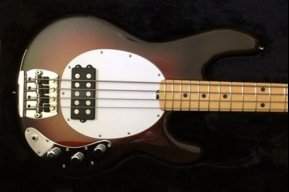
I have 6 Basses. Two have an 11 inch radius. When I got them the difference from the others (7.5 inches) was very noticeable. Today I'm not conscience of any differences even though the 2 with the larger radius are the least played. I voted "Indifferent".
Last edited:

Of all the different brands and models of basses that I’ve owned, I like the necks on Warwick (German) basses the best. These have a profile like an acoustic bass. Once you get used to it, they always feel comfortable.
7.25" on my J-Bass, so far. Good fit for smaller hands. But as technique improves, perhaps a flatter radius becomes easier to 'articulate' with? I have another bass with a 9.5" radius and I notice the difference, but it's not an impediment.
The smaller, the better. I wish there were commonly available fretboards that had radii like 6" or 5", or even 4" or 3" compound, like an upright.
Same with frets. The smaller, the better (both width and height, but especially height).
Same with frets. The smaller, the better (both width and height, but especially height).
Last edited:
I love the Fender radius (7.25"), but some Jazz Bass's with the radius have big volume difference between G/E and D/A strings when you prefer higher pickup height.
Went with "indifferent" because the nut width and spacing at the bridge (on 5 strings) is much more important to me.Hello mates!
Tell everybody WHAT, WHY and also HOW MUCH RADIUS?
The radius on my Stingrays is 11 inches, but the 1.75" nut and 17.5mm spacing at the bridge is what makes it perfect. That is the right formula for me. Have had a ton of other basses with wider nut and spacing and never liked them, as well as narrow of each (Warwick Thumb and Streamer) and felt too narrow.
Havent played a 4 string in years, so not thoughts on that front. There you have it

I'm in the 9.5"-10" camp. I'd call that middle of the road.Hello mates!
Tell everybody WHAT, WHY and also HOW MUCH RADIUS?


