• TalkBass has been independent since 1998. Add your voice.
    Create a free account to reply to discussions, view embedded media, and browse with fewer display ads.
    Join freeLog in
    Want zero display ads or expanded classifieds tools? Compare plans.

Does body wood matter?

Not specifically a wood tone demo but certainly an excellent example of how phenomenal some peoples hearing can be as it relates to identifying (while blindfolded) which bass is being played. There's no way I could do this blindfolded with any accuracy. I'd bet he could hear a tone difference in varying wood basses if it existed.

Holi cannoli. Unbelievable.
 
  • Like
Reactions: GBassNorth
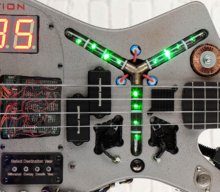
Just thought for G&G I would post this YouTube clip. The Spaceman Dominator Bass.


I actually in some ways dig the tone of this instrument on tape. But, does it sound like its wood counterpart, such as a P or J? Possibly depends on your ears; but, my ears say no.;)
 
I would probably fail in a blind test of differentiating the sound of these woods. They might sound similar or different a little bit but I would say they all sound good given we play it well and it has good pickups & preamp.

Just stick to the most common wood (ash, alder, maple, probably mahogany) since it will give that familiar traditional sound and use pickup/preamp combo to cut thru and makes the bass sound distinct. Oh, and price plays a factor too. I would want afford a bubinga but normally it is very expensive.
 
................... he pretended as if the crucial point of contention doesn't exist for purposes of declaring victory.

But that's how this whole "issue" keeps itself alive!

My 2c: if tonewood made such a relevant impact, why wood (pun) there have been (and continue to be) instruments made (very successfully, I might add) of composite materials: plywood, fiber board, masonite, etc.?
Sure it makes a difference in how the instrument resonates.
I have 4 Ricks, and they are all different in their resonance and tonal qualities, there's no denying it, but the actual amplified significance is very slight compared to things like plucking hand technique and strings.
What comes out of the cabinet at the end of the chain has more to do with the EQ settings than wood.

Bottom line:
if you like the look of the wood, go for it, but if not, then go for preferred weight.
 
But that's how this whole "issue" keeps itself alive!

It's kept alive by the people who are declaring the debate over? Actually, I think you may be on to something here! ;)

My 2c: if tonewood made such a relevant impact, why wood (pun) there have been (and continue to be) instruments made (very successfully, I might add) of composite materials: plywood, fiber board, masonite, etc.?

I'm confuzzled. It could be because I don't have much of a dog in the hunt on the tonewood debate. Is one side saying "Non-wood materials are bad for making instruments?" I've never seen that claim being made. It's a terrible claim. I loved my Steinberger XP-2 and its fiberglass-n-graphite composite neck.

I've seen one side saying "The materials an instrument is constructed out of have an effect on the tone of the vibrating string" and the other side denying that claim. I'd give the following gloss to the statement to get a bit more precise: "The materials an instrument is constructed out of impart a harmonic distortion to the vibrating string." Physics wise, I find it hard to deny this statement merely from the fact that the elastic modulus of materials in the real world is a function of frequency rather than being frequency-independent. I think it's an effect that is generally smaller than others, but it can be clearly argued with physics and engineering principles that the effect, while small, isn't zero.

Which leads, of course, to the possibility that the effect, while not zero, may in fact be beneath the threshold of human perception. Entirely possible.

Sure it makes a difference in how the instrument resonates.
I have 4 Ricks, and they are all different in their resonance and tonal qualities, there's no denying it, but the actual amplified significance is very slight compared to things like plucking hand technique and strings.
What comes out of the cabinet at the end of the chain has more to do with the EQ settings than wood.

Bottom line:
if you like the look of the wood, go for it, but if not, then go for preferred weight.

I pretty much agree with everything you say here. I think the playing technique, strings, electronics and sound amplification chain have a bigger influence than the particular materials choice.
 
I wouldn't worry about getting anything that will last a 'long time.' I don't think anyone here keeps basses a 'long time.' Judging from the comments and ads in the classified section, I would guess most keep them about 5 - 10 years. Most good brands should last 50+ years. I just sold one that was 24 years old and it sounded as good as when it was new. Just take care of your gear and it will take care of you.
 
It's not so much the type of wood, but the qualities of the individual piece of wood that matters.
People generalize too much about it.
And the fact that the difference it makes is so slight as to be all but irrelevant in the end.

Well, "irrelevant" is in the ears and feel of the musician. This is why "does tonewood make a difference" and "does tonewood matter" are two completely different questions in spite of the efforts of many here to say they are the same question. For example the wood in my Squier P-bass is not alder and should be. Admittedly the difference is slight, but it matters to me.