Your ideas are not untrue, but take way more work than just learning a traditional fingering for double bass.
The biggest difference is clearly that the 4 fingers can be used on BG without pivots or shifts, with the hand open and ready to play across four half steps.
There are no solid examples of ANYONE doing that on double bass. Hence, the thread name.
I hope you won't take offense if i disagree again!

If you learn the 1-2-3-4 fingering system from scratch, if it's just the only way you know how to play the bass, and can play it with the same physical ease as the 1-2-4 method, surely one system is not 'more difficult' (mentally or physically) than another? It's just...different. In fact, if you can use one system all over the bass, (1-2-3-4 and T-1-2-3) surely that makes playing the instrument mentally
easier?
Like I've been saying, there is at least one method which uses uses a 4-finger system all over the bass without pivots or shifts. Are we to dismiss it as difficult or wrong just because it is not traditional?
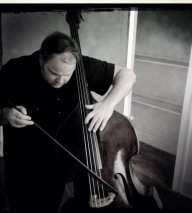
Here is as clear an example as I can find of this method in action - look at the opening three notes for the double bass. Notice the lack of pivots or shifts and the ability to cover a minor 3rd in one position, without having very large hands. Just the method I'm talking about, working.
There's a description of how this 4-finger-in-one-position-no-sweat method is achieved (albeit perhaps not the most succinct description - i don't use this method!) earlier in this thread.
I don't mind if you want to keep the thread name the same, I was just kidding about that. But surely you can see that what you said didn't exist and doesn't work, in fact does!
If we are here on talkbass to share ideas, to further our understanding of the instrument and its possibilities, shouldn't we be welcoming with open arms a new idea, a new method, such as this?