
Enjoy the benefits of a premium membership!
Upgrade Account
-
TalkBass has been independent since 1998. Add your voice.
Create a free account to reply to discussions, view embedded media, and browse with fewer display ads.
Join free Log in
Want zero display ads or expanded classifieds tools? Compare plans.
You are using an out of date browser. It may not display this or other websites correctly.
You should upgrade or use an alternative browser.
You should upgrade or use an alternative browser.
Double Bass Double Bass snapped at the heel
- Thread starter EAME
- Start date
-
- Tags
- double double bass heel
More options
Who Replied?
Your bass isn't a Kay, Engelhardt, American Standard or King so it won't have a dovetail like a Spanish guitar. That's an American plywood bass thing.
Your bass isn't a Kay, Engelhardt, American Standard or King so it won't have a dovetail like a Spanish guitar. That's an American plywood bass thing.
Ok.I presume it glues straight on the block then?
- Aug 1, 2005
- 3,546
- 1,421
- Disclosures
- Private Inventor - Bass Capos
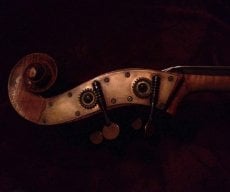
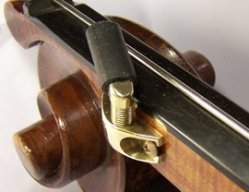
That's gorgeous, actually. Thinking of putting those on my bass just for looks. Think Lemur might have them?Oh god I know I had the same thought. And especially when it's so easy to do it right.View attachment 919762

- Aug 1, 2005
- 3,546
- 1,421
- Disclosures
- Private Inventor - Bass Capos
All I have to say is you tackle this repair by popping the fingerboard, then drilling holes for clamping screws.
Removing the heel from the neckblock on a bass like this is pure masochism, and the fingerboard should be removed anyway and whatever crap glue is there be scraped off.
99.9% of the difficulty in this job is clamping. Drill the pilot holes from the neck surface (fingerboard removed) with care and planning, and two screws will pull the parts back together better than any clamping jig you could build.
Remove the screws if you want, but I leave them. Use good epoxy if you want, but I prefer hide glue. I'm no luthier, but I've done this repair a few times, and all with quite good results.
Also, no need for compressed air grinders and auto body shop disc sanders here. Do this repair right and you have only a tiny breakline to retouch.
Removing the heel from the neckblock on a bass like this is pure masochism, and the fingerboard should be removed anyway and whatever crap glue is there be scraped off.
99.9% of the difficulty in this job is clamping. Drill the pilot holes from the neck surface (fingerboard removed) with care and planning, and two screws will pull the parts back together better than any clamping jig you could build.
Remove the screws if you want, but I leave them. Use good epoxy if you want, but I prefer hide glue. I'm no luthier, but I've done this repair a few times, and all with quite good results.
Also, no need for compressed air grinders and auto body shop disc sanders here. Do this repair right and you have only a tiny breakline to retouch.

That's gorgeous, actually. Thinking of putting those on my bass just for looks. Think Lemur might have them?
Oh god no. Custom one-offs. Big bucks.
Oh god no. Custom one-offs. Big bucks.
Probably not Lemur. Rather your wife's silverware drawer.
They are lovely. Pity they'd be so hard on your thumb.
Probably not Lemur. Rather your wife's silverware drawer.
They are lovely. Pity they'd be so hard on your thumb.
???.....why would your thumb touch them?

OP, Robo is probably right, getting the heel out may be difficult, and clamping in the proper position is the issue. For taking the FB off, I recently saw a nice link in safely removing the neck on a double bass., but your's is likely with PVA, so try same w/ vinegar.
All the old glue has to be cleaned off, exposing the bare wood only. Hopefully it will then fit without any gap, as it did right after it was broken.
For clarity, please say more about what kind of instrument this is.
All the old glue has to be cleaned off, exposing the bare wood only. Hopefully it will then fit without any gap, as it did right after it was broken.
For clarity, please say more about what kind of instrument this is.

Looks like Evo-stik also makes a product for cleaning up excess glue, may just work to remove all that stuff if your hardware store carries it. IF your bass is made with PVA glue (white color vs hide glue which is more like the color of a sugar daddy or brown cardboard box), I might approach it this way - remove the fingerboard using vinegar as per Ortsom, get a lag bolt and the proper long drill bit, and with the parts clamped in place, go straight through the neck (sans fingerboard) into the heel, also having applied glue in the break. Then you'd have to drill a shallow hole in the back of the fingerboard to clear the bolt head when you glue it back on (or countersink it into the maple if you have enough to work with). The fingerboard/neck glue joint is structurally significant, so you want to make sure the surfaces are as flush as possible and clamped well when you glue it. Same could be done with a wooden dowel, and that's definitely a more elegant solution, but it seems to me the lag bolt would have a little less room for error (as long as you drill the hole large enough that you don't crack the wood with the bolt). Even if it's made with PVA, I'd recommend hide glue for any gluing because it's so nice to work with and reversible. It's cheap (Hide Glue 1 lb), a whole pound of the stuff will probably last you the rest of your life unless you're a luthier or into silly primitive bows like some of us here in NC... Don't, I repeat, DON'T, get the titebond "hide glue" liquid in a bottle. I can't think of anything that stuff would be good for, it just sucks and never cures fully. Get the real stuff in granulated form. I just put some in a half-pint mason jar and approximate my ratio of water to glue (can always add more glue or water once it's hot to achieve the viscosity you want), put the half-pint jar in a saucepan of water with a rag between glass and metal, and put a thermometer in the water (not the glue) to make sure you don't go above 140 deg F, which would weaken the glue. I use dollar-store paint brushes to apply. [Invalid or Expired Link Removed]
All that said, there's always the chance that your bass was originally constructed using hide glue (as was my CCB project, and I'm assuming that your bass is Chinese). If it is, first do three cheers, then I'd say take the neck heel out of the block entirely and repair the neck/heel break and THEN seat it back into the block. But if it's PVA, this probably isn't possible without destroying a lot of wood. Unless you're Chuck Norris or Joseph the bass luthier's son or something.
All that said, there's always the chance that your bass was originally constructed using hide glue (as was my CCB project, and I'm assuming that your bass is Chinese). If it is, first do three cheers, then I'd say take the neck heel out of the block entirely and repair the neck/heel break and THEN seat it back into the block. But if it's PVA, this probably isn't possible without destroying a lot of wood. Unless you're Chuck Norris or Joseph the bass luthier's son or something.

Dang James, that's a beautiful repair, master work. I've heard the old Hawkes basses were put together with deck screws as well, and collated nails for the ribs.
Yes sorry,It's a very deep sounding [Spyro 'Weiss' [light] strings] and pleasing budget/learning 'Gear4music' 3/4,made of course in China.The thing that seems a worry is actually setting the right angle again,because after cleaning out all that crap I used,there's inevitably been some of the wood removed from inside the two joints.Maybe there's a way to pack these out again,wedges maybe?
Also taking out the heel I feel the side panels will spring out,it all looks like theres no gap between the heel sides and where the panels join to it.
So first I will remove the finger board,and attempt to do what you suggest.The hard part being removing the fingerboard and clamping.
It will just be 'there' and broken if I dont at least try and fix it,I know it probably doesn't justify elaborate repair,but If I can get past the fingerboard,I'll go for it.
Also taking out the heel I feel the side panels will spring out,it all looks like theres no gap between the heel sides and where the panels join to it.
So first I will remove the finger board,and attempt to do what you suggest.The hard part being removing the fingerboard and clamping.
It will just be 'there' and broken if I dont at least try and fix it,I know it probably doesn't justify elaborate repair,but If I can get past the fingerboard,I'll go for it.
Dang James, that's a beautiful repair, master work. I've heard the old Hawkes basses were put together with deck screws as well, and collated nails for the ribs.
I can't claim the drywall screws; that one came from a thread here last year. As for the Hawkes, that would probably be an improvement on the one that I had in here last year. Almost the entire rib garland had been tripled and averaged 6+ mm thick....
Yes sorry,It's a very deep sounding [Spyro 'Weiss' [light] strings] and pleasing budget/learning 'Gear4music' 3/4,made of course in China.The thing that seems a worry is actually setting the right angle again,because after cleaning out all that crap I used,there's inevitably been some of the wood removed from inside the two joints.Maybe there's a way to pack these out again,wedges maybe?
Also taking out the heel I feel the side panels will spring out,it all looks like theres no gap between the heel sides and where the panels join to it.
So first I will remove the finger board,and attempt to do what you suggest.The hard part being removing the fingerboard and clamping.
It will just be 'there' and broken if I dont at least try and fix it,I know it probably doesn't justify elaborate repair,but If I can get past the fingerboard,I'll go for it.
First wedge in overnight.
Dont you just love pickled onions...
I see. £430 for a complete outfit, even including a hard case, seems very attractive. And of course then there is Laura.
As a result of falls or bumps this type of damage occurs more frequently, also in higher price ranges, but the woods used for the necks in this very low price range are less strong than in a higher price range. If you get my drift. Truss rods are not used in acoustic DB's (afaik), but occasionally people do use CF stiffening bars below the FB (rarely in this price range though).
Try to see if the FB comes off, as you've started with. Watch out for your fingers, and watch out neither neck nor FB starts to split. If it really doesn't go, then don't, damaging it beyond recovery is pointless. That is one of the problems w/ PVA. As said, try vinegar, hot knife might also help.
If wood was removed from the surface of the break, as it now is, as long as that's just a few splinters that's OK here. The wood surface has been compromised by the polymer (--> no HHG), so I think we'd best use a slow epoxy anyway, which will fill that. Things bigger than, say, a mm though need to be filled (the epoxy will drip out).
When/if you get the FB off, you'll drill a few holes through the neck into the heel, used to clamp as well as align the neck. If you can't get the FB off, we'll change tack.
As a result of falls or bumps this type of damage occurs more frequently, also in higher price ranges, but the woods used for the necks in this very low price range are less strong than in a higher price range. If you get my drift. Truss rods are not used in acoustic DB's (afaik), but occasionally people do use CF stiffening bars below the FB (rarely in this price range though).
Please do some more research on how DB's are made. There is a block of wood, called the neck block, placed between top, back & ribs (sides), and the heel is glued in the mortise in that block. The block stays in, the heel could come out. But, as Robo alluded to, in this type of instrument that's an acquired taste of masochism, only appreciated by the chosen few.taking out the heel I feel the side panels will spring out,it all looks like theres no gap between the heel sides
Try to see if the FB comes off, as you've started with. Watch out for your fingers, and watch out neither neck nor FB starts to split. If it really doesn't go, then don't, damaging it beyond recovery is pointless. That is one of the problems w/ PVA. As said, try vinegar, hot knife might also help.
If wood was removed from the surface of the break, as it now is, as long as that's just a few splinters that's OK here. The wood surface has been compromised by the polymer (--> no HHG), so I think we'd best use a slow epoxy anyway, which will fill that. Things bigger than, say, a mm though need to be filled (the epoxy will drip out).
When/if you get the FB off, you'll drill a few holes through the neck into the heel, used to clamp as well as align the neck. If you can't get the FB off, we'll change tack.


