
Enjoy the benefits of a premium membership!
Upgrade Account
-
TalkBass has been independent since 1998. Add your voice.
Create a free account to reply to discussions, view embedded media, and browse with fewer display ads.
Join free Log in
Want zero display ads or expanded classifieds tools? Compare plans.
You are using an out of date browser. It may not display this or other websites correctly.
You should upgrade or use an alternative browser.
You should upgrade or use an alternative browser.
Drawbacks to small heads?
- Thread starter newbold
- Start date
More options
Who Replied?
Miniaturization makes things harder to fix. In consumer electronics repairs, entire boards are sometimes replaced even though a problem may stem from one bad resistor.
I've read here that a number of current-generation micro bass heads share the same Bang & Olufsen 'ICE' power amps. Do you suppose that techs will perform component-level work on these amps? I don't know, but I doubt it.
I've read here that a number of current-generation micro bass heads share the same Bang & Olufsen 'ICE' power amps. Do you suppose that techs will perform component-level work on these amps? I don't know, but I doubt it.

Miniaturization makes things harder to fix. In consumer electronics repairs, entire boards are sometimes replaced even though a problem may stem from one bad resistor.
I've read here that a number of current-generation micro bass heads share the same Bang & Olufsen 'ICE' power amps. Do you suppose that techs will perform component-level work on these amps? I don't know, but I doubt it.
This is certainly a point. Where I work, we design circuitry using surface mount technology (SMT). In the course of prototyping, we blow things up once in a while. So I have done component level repairs on SMT boards, and it's not terribly difficult. In fact, the boards that I have seen in switchmode bass amps use SMT components that are relatively large and easy to work with compared to IC's with hundreds of tiny little terminals.
In my view, the bigger problem is that very few techs, myself included, understand switchmode gear well enough to attempt any sort of repairs. And it's not such a big deal any more. Sending a 2.5 pound amp back to the manufacturer costs a few bucks. Replacing an entire switchmode power amp board is hardly more wasteful than swapping out a power supply or output transformer on a tube amp.
Integrated circuits contain transistors that we can't replace without throwing out the entire chip. High density circuit boards are the same thing, albeit on a larger scale.
I just chalk it up to the price of progress. I won't haul a heavy amp around, just in case it might one day need a new resistor.

The cost of replacing an entire board for one bad part is going to equal the cost of a frustrated tech trying to deal with a tiny little surface mounted part on a tiny little board with 20 or 30 other tiny little surface mounted parts on it. I say it's a tradeoff...it's got its advantages and disadvantages, just like everything else out there. The one part that's a little tough for me to deal with is the disposability factor. But considering that I've had to throw out computers that cost $2000 new two years after I got them, I think we'll at least get a lot more mileage out of our micro-amps than that.
billfitzmaurice
Commercial User
- Sep 15, 2004
- 16,860
- 278
- 76
- Disclosures
- Owner, Bill Fitzmaurice Loudspeaker Design
The cost of the entire board in most cases is no more than that of a power tube, and that's assuming a 5881 or 6L6. A lot less in the case of an SVT. But who doesn't buy a tube amp even though they know the tubes will need replacing eventually? Repair costs should be the last thing you worry about.The cost of replacing an entire board for one bad part is going to equal the cost of a frustrated tech trying to deal with a tiny little surface mounted part on a tiny little board with 20 or 30 other tiny little surface mounted parts on it.
How many tons of steel and copper have to be dug up out of the earth and transported thousands of miles, so that the one or two bass amps that break can be repaired at the component level?
There is another drawback to component level repair of switchmode gear. The tech is likely to use substitute parts that can severely compromise performance. Reading the Class-D forum at www.diyaudio.com, it appears that the good designers are paying very close attention to things like the specific dielectric used in ceramic capacitors, and other esoterica that the local amp tech will simply overlook. And the consequences show up in things like efficiency and reliability.

MikeBass
Supporting Member
- Nov 4, 2003
- 11,943
- 3,136
- Disclosures
- Endorsing artist- Suhr basses, PedalTrain, GHS, Ultimate Ears
well, if you're just talking about heads, the only drawbacks i can think of are that, in general, they don't sound very warm. the technology that they use to get so small usually gives a clean, some would even say sterile, tone. however, many will b!tchsmack me with their Markbass LMII's for saying that.
also, a small head would be easier to wander off with.
hmmm...
as for cabs, the saying goes:
Loud, Light, Low.
you can only have two.
Only 2?!?!? Man, go play some Epifani, Genz Benz cabs or something!
You need to play a Genz Benz NEOX212 (or 112). Loud as HELL, insanely low and light.
Or hell, the new GK neo 212 is stinkin' AWESOME sounding.
Light, LOUD and Low.
With the way the technology has been flying in the last few years, the new wave of small guys is insanely good.
The MB LMII, the GB Shuttle 6.0, the GK MB2 500 (oh good lord does that thing sound nice).
Sure, nothing small is going to sound like an SVT, but heck, most "big" amps don't either!
When I'm asked regularly to turn down my 6.0 into a NEOX212 because I can be almost pulled out of the PA in an 1800 seat auditorium and still be heard with the band.......the only draw back is a sound guy who thinks you're too loud!
Don't worry...I'm sure we end users will still get charged out the wazoo for itThe cost of the entire board in most cases is no more than that of a power tube, and that's assuming a 5881 or 6L6. A lot less in the case of an SVT.

As much as it takes, my man!How many tons of steel and copper have to be dug up out of the earth and transported thousands of miles, so that the one or two bass amps that break can be repaired at the component level?

Easier for someone to steal.
Mine goes back in its laptop bag at the end of the night and comes home with me and my bass because its so small and portable!

A couple months ago, I left my entire lightweight rig at a venue by accident. I had taken my bass to my car, then came back for the amp, started chatting with the band, then drove away. When I got home, I didn't bother to unload, and I rode my bike to work the next day so I never realized the amp was gone.
Fortunately the drummer grabbed it for me.
Fortunately the drummer grabbed it for me.
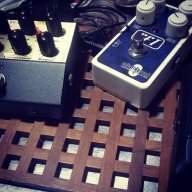
Thanks for the 'put it on the pedalboard' suggestion!!
I think Mark Bass has a lot of great ideas.
Invalid Link Removed
Invalid Link Removed
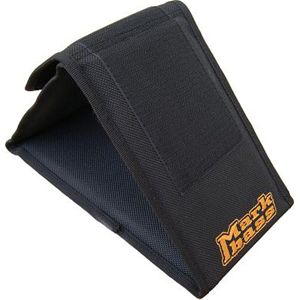
And while it's probably not really worth it to get the cab stand for my little head, it would work nicely to prop it up to see the controls and presets...I will probably make my own out of duct tape, snaps, and cardboard some afternoon.
I've been looking around for bags to fit pedalboards and my head as I intend on getting a cab for my Yamaha BBT500 110

I intend to use the cab alone for most of my smaller gigs and practices and then drop it back into the combo for anything I'd need the extra headroom. Even with just the cab I'd still be running 250W @ 4 ohms which is enough for what I'd need to do at the non-roadie stage.
Invalid Link Removed
So for what I intend to do, it seems as though I'd be best to get a Keyboard bag for my pedalboards (before the amp and in the fx loop)
Invalid Link Removed
So I'd have the pre/post boards, and the middle for the amp, tuner, alarm clock and other misc. stuff - there would still be room for instrument and amp stands in the bag, as well as whatever else I'd need.
So - Gigbag, Pedalboard/amp bag, and cabinet in tow for the bus or easy in/out of cars and one trip with my stuff so I can help the drummer with stands.
and for any smaller rig situations I could just put my amp and a few odds and sods in my gigbag.
Something like this is more than ample:

A double bag has more storage and protection for my bass, and I think I've just about figured out how to make big into little and portable.
I think Mark Bass has a lot of great ideas.
Invalid Link Removed
Invalid Link Removed
And while it's probably not really worth it to get the cab stand for my little head, it would work nicely to prop it up to see the controls and presets...I will probably make my own out of duct tape, snaps, and cardboard some afternoon.
I've been looking around for bags to fit pedalboards and my head as I intend on getting a cab for my Yamaha BBT500 110
I intend to use the cab alone for most of my smaller gigs and practices and then drop it back into the combo for anything I'd need the extra headroom. Even with just the cab I'd still be running 250W @ 4 ohms which is enough for what I'd need to do at the non-roadie stage.
Invalid Link Removed
So for what I intend to do, it seems as though I'd be best to get a Keyboard bag for my pedalboards (before the amp and in the fx loop)
Invalid Link Removed
So I'd have the pre/post boards, and the middle for the amp, tuner, alarm clock and other misc. stuff - there would still be room for instrument and amp stands in the bag, as well as whatever else I'd need.
So - Gigbag, Pedalboard/amp bag, and cabinet in tow for the bus or easy in/out of cars and one trip with my stuff so I can help the drummer with stands.
and for any smaller rig situations I could just put my amp and a few odds and sods in my gigbag.
Something like this is more than ample:
A double bag has more storage and protection for my bass, and I think I've just about figured out how to make big into little and portable.

one mor big problem with micro amps...they end up costing a fortune when you can't resist selling your old heavy stuff and buying expensive super light cabinets. Doesn't make sense to have a light head and 100 pound speakers!
It doesn't, and yet it does. That's because the smallest and lightest cabs haven't overcome the laws of physics quite yet. That's why many people still keep their 100 lb cabs even if they've downsized the head, or even if they've downsized their cabs. I liked certain aspects of downsizing myself, but there's just things a larger cab gives me that I can't get out of a small one.one mor big problem with micro amps...they end up costing a fortune when you can't resist selling your old heavy stuff and buying expensive super light cabinets. Doesn't make sense to have a light head and 100 pound speakers!

Mine goes back in its laptop bag at the end of the night and comes home with me and my bass because its so small and portable!
+1 just did that. Unplug the cords & leave 'em (got spares if they grow legs). Super quick.
So, actually, the micro-heads are harder to steal.


on a few raucous gigs, my foot and instrument cable have been known to tug my shuttle right off the top of many a rental cab.
now, i'll loop my instrument cable around the back of the cab, e.g. usually around the tilt back handles of an ampeg 8x10, or the side handles of the clubs 4x10 cab. problem fixed, and technically, now i have no complaints.
and yea, i feel really wary of leaving my amp head unattended, especially after being complemented by fellow bassists on the bill.
now, i'll loop my instrument cable around the back of the cab, e.g. usually around the tilt back handles of an ampeg 8x10, or the side handles of the clubs 4x10 cab. problem fixed, and technically, now i have no complaints.
and yea, i feel really wary of leaving my amp head unattended, especially after being complemented by fellow bassists on the bill.


