• TalkBass has been independent since 1998. Add your voice.
    Create a free account to reply to discussions, view embedded media, and browse with fewer display ads.
    Join freeLog in
    Want zero display ads or expanded classifieds tools? Compare plans.

EBMM StingRay Special Club

Could anyone with a roasted maple fretboard tell me whether the fretboard discolours and/or gets dirty due to normal use please?

I have two charcoal sparkle Specials (4H and 4HH) with ebony fretboards and I am considering whether to trade the HH for a H with roasted maple fretboard if the opportunity arises here in the UK. I have previously owned two (non-special) 4H's with unfinished maple boards and didn't like how dirty the fretboards became over time, hence the question.
 
  • Like
Reactions: Jim C
Could anyone with a roasted maple fretboard tell me whether the fretboard discolours and/or gets dirty due to normal use please?

I have two charcoal sparkle Specials (4H and 4HH) with ebony fretboards and I am considering whether to trade the HH for a H with roasted maple fretboard if the opportunity arises here in the UK. I have previously owned two (non-special) 4H's with unfinished maple boards and didn't like how dirty the fretboards became over time, hence the question.


They will not get dirty any faster or slower than a typical fingerboard would. Totally normal to clean and oil them routinely. I wipe my bass down with a microfiber cloth every time I put it away.
 
They will not get dirty any faster or slower than a typical fingerboard would. Totally normal to clean and oil them routinely. I wipe my bass down with a microfiber cloth every time I put it away.

All things considered, the same dinge on maple will show up more than on a darker wood. Also, it's known that oiling the unfinished maple will likely cause discoloration, right? I don't know to what extent, though.
 
Could anyone with a roasted maple fretboard tell me whether the fretboard discolours and/or gets dirty due to normal use please?

I have two charcoal sparkle Specials (4H and 4HH) with ebony fretboards and I am considering whether to trade the HH for a H with roasted maple fretboard if the opportunity arises here in the UK. I have previously owned two (non-special) 4H's with unfinished maple boards and didn't like how dirty the fretboards became over time, hence the question.
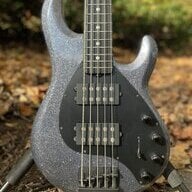
I haven't noticed any discolouration. I'm washing my hands before playing and wiping it down after. I don't have excessive or acid sweat either.

All things considered, the same dinge on maple will show up more than on a darker wood. Also, it's known that oiling the unfinished maple will likely cause discoloration, right? I don't know to what extent, though.

I've used the MusicNomad's F-One oil and it doesn't cause discolouration. My understanding is that it will discolour if the oil includes Lemon oil. Correct me if I'm wrong but I didn't want to test that in my bass and end up with a weird spot :)

At the same time, when I used lemon oil in my Rosewood fretboard bass, there was more dirt in the cloth than when I applied the F-one in the roasted maple of the Stingray.
 
  • Like
Reactions: Staccato
I know dead spots are a natural, but is it normal for the four-string Stingray Specials to have a noticeably bad dead spot -- like less than a second of fundamental -- on or around the 8th fret on the G string?

I know you said four-string, but I had dead spots (somewhere 6th to 8th fret, I don't remember exactly and don't have the basses any longer) on both the ebony-boarded five-string Specials I had. No dead spots on the '88 or the 30th anniversary SR5s I had with maple boards, or the USA SUB 5 I currently have with a pau ferro board.
 
@JazzyJacuzzi, sorry to hear that.
We have many threads about dead spots with many ideas - including some who say "I've definitely fixed the dead spot problem!" - but in fact different basses respond to different treatments. For example, I've had good luck with *decreasing* - not increasing - mass on the headstock. Unfortunately, the Special already has light tuners, right? That might be why your problem is at the 8th rather than the 6th or 7th.
There are still some ideas that are almost never mentioned, or that I've never seen mentioned, but I don't know that *this* thread wants to go into it.
You could start a thread like "Dead Spot: New Ideas Only Please" ..."we have many dead spot threads that all say the usual same things, thank you for that. But let's try to dig up some new ideas...".
I would contribute.
 
I went to a music store during lunch hour today and tried a few basses in the same price range. All of them had similar dead spots in terms of intensity. I suppose I misremembered the intensity of dead spots on my previous basses or I overanalyzed the Stingray since it's still within the 30-day return period.

But: After trying four Fender basses (American Ultra, Professional II, Original and 60th Anniversary), I can't believe how amazing the Stingray Special is. Everything about it is top notch.

I know dead spots are a natural, but is it normal for the four-string Stingray Specials to have a noticeably bad dead spot -- like less than a second of fundamental -- on or around the 8th fret on the G string?

I know you said four-string, but I had dead spots (somewhere 6th to 8th fret, I don't remember exactly and don't have the basses any longer) on both the ebony-boarded five-string Specials I had. No dead spots on the '88 or the 30th anniversary SR5s I had with maple boards, or the USA SUB 5 I currently have with a pau ferro board.

Every bass has deadspots, especially in the 5 - 8 fret zone of the g string. Some are worse than others... but it is one of those quirks. Some of the greatest Motown hits were recorded with noticeable dead spots.

@JazzyJacuzzi, sorry to hear that.
We have many threads about dead spots with many ideas - including some who say "I've definitely fixed the dead spot problem!" - but in fact different basses respond to different treatments. For example, I've had good luck with *decreasing* - not increasing - mass on the headstock. Unfortunately, the Special already has light tuners, right? That might be why your problem is at the 8th rather than the 6th or 7th.
There are still some ideas that are almost never mentioned, or that I've never seen mentioned, but I don't know that *this* thread wants to go into it.
You could start a thread like "Dead Spot: New Ideas Only Please" ..."we have many dead spot threads that all say the usual same things, thank you for that. But let's try to dig up some new ideas...".
I would contribute.
 
Presenting my membership card to the StringRay Special Club...
Man Man Stingray Special HH.jpg

2021 HH model.
 
I went to a music store during lunch hour today and tried a few basses in the same price range. All of them had similar dead spots in terms of intensity. I suppose I misremembered the intensity of dead spots on my previous basses or I overanalyzed the Stingray since it's still within the 30-day return period.

But: After trying four Fender basses (American Ultra, Professional II, Original and 60th Anniversary), I can't believe how amazing the Stingray Special is. Everything about it is top notch.

Isn't that just the thing?? After going through one of my something-is-feeling-weird-in-one-part-of-my-life-so-I'm-going-to-alleviate-that-with-a-new-bass phases recently, I tried to convince myself that, actually, a Jazz bass was the one for me, not this fantastic StingRay Special that had accommodated all my needs since I got it.

I went to the local GC and tried out the Player Plus Jazz. I couldn't wait to get home to my Special and come clean about my flirting.
 
I went to a music store during lunch hour today and tried a few basses in the same price range. All of them had similar dead spots in terms of intensity. I suppose I misremembered the intensity of dead spots on my previous basses or I overanalyzed the Stingray since it's still within the 30-day return period.

But: After trying four Fender basses (American Ultra, Professional II, Original and 60th Anniversary), I can't believe how amazing the Stingray Special is. Everything about it is top notch.

Isn't that just the thing?? After going through one of my something-is-feeling-weird-in-one-part-of-my-life-so-I'm-going-to-alleviate-that-with-a-new-bass phases recently, I tried to convince myself that, actually, a Jazz bass was the one for me, not this fantastic StingRay Special that had accommodated all my needs since I got it.

I went to the local GC and tried out the Player Plus Jazz. I couldn't wait to get home to my Special and come clean about my flirting.
 
Last edited:
I know dead spots are a natural, but is it normal for the four-string Stingray Specials to have a noticeably bad dead spot -- like less than a second of fundamental -- on or around the 8th fret on the G string?

I was able to fix a deadish spot on my Stingray by sticking a 5 gram tire balancing weight on the D string tuning key. Right on the clover. It was just enough to make the note sound acceptable.
 
A "C" clamp on the peg head often makes the dead spot less obnoxious and increases sustain. Use rubber strips under the anvils.
This test might help in determining if more mass is a good thing.
Pretty sure JohnK imbedded a piece of metal in the headstock of a SR with good results.
 
A "C" clamp on the peg head often makes the dead spot less obnoxious and increases sustain. Use rubber strips under the anvils.
This test might help in determining if more mass is a good thing.
Pretty sure JohnK imbedded a piece of metal in the headstock of a SR with good results.

I tried the Fender fatfinger on my SR5 and had no discernable difference, unfortunately. I'm learning to live with it. Problem is that the dead spot is at 5th fret on G string.. so I go up to the 10th on the D string and have a similar dead spot - which lends itself to the theory that the dead spot corresponds to the natural frequency of the head/neck.
 
  • Like
Reactions: Jim C
There is a chance that the right dimensions/properties of rubber pads on both sides, between the clamped on mass and the headstock, could be very effective.

A mass clamped solidly isn't dampening (although it will lower the frequency so you can try to put the dead spot "between two frets".
The Fender Fatfinger just had felt, right?
But the right mass on the right dampening rubber, both tuned just right, could fix this.