
What seamonkey fails to realize because he's never touched a tube amp in his life is that there is a HUGE difference between RECORDING with a tube amp and PLAYING on a tube amp.

TalkBass has been independent since 1998. Add your voice.
Create a free account to reply to discussions, view embedded media, and browse with fewer display ads.
Join free Log in
Want zero display ads or expanded classifieds tools? Compare plans.
When run perfectly 'clean' that's true. If you're running a tube amp perfectly clean you might as well have SS. But the percentage of tube users who do is quite small. And you certainly can't tell the difference from a clip, because you can't hear the dynamics of tubes in a clip. The only dynamics you hear are those of your PC.Although, as done with other listening tests on this board, nobody can really hear the difference between tube and SS.
Sorry Bill, I disagree. I like the sound of clean tubes better than clean SS, too. The differences are less exaggerated, but I can tell the difference when playing.When run perfectly 'clean' that's true. If you're running a tube amp perfectly clean you might as well have SS.
That just means you haven't heard clean tubes, which is understandable, as that's not what instrument amps are about. My comment would be more appropriate comparing high end power amps run well within their linear range.Sorry Bill, I disagree. I like the sound of clean tubes better than clean SS, too. The differences are less exaggerated, but I can tell the difference when playing.


Oh, and an SVT at that level sounds completely uncompressed to my ears, too. I agree that calling a compressor "transparent" is silly, but it can also mean not set near-flat, and I wouldn't think that would add distortion in and of itself.By way of example, very often people will add a high-quality preamp or compressor to their chain and say "it just improves the sound so much, it's so clean and transparent!" ...Not realizing the contradiction in those statements. My favorite gain stages are like that--on the one hand they sound super clean and clear, yet otoh they make a huge improvement to my tone, meaning by definition they are not in fact transparent. And if any compression is occurring, whether subtle or obvious, that too is a type of distortion.
Nobody can hear it, but some feel it.
Man, I'd really like to know what kind of THD levels it puts out at that low a volume, though. Can't be much at all. I know it can be there and I just might not be hearing it, but I really don't hear it at all.
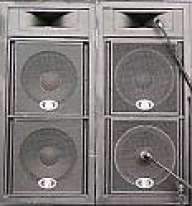
i use a mcintosh 275 with 1950's metal based gold lion kt88's at home, i think it sounds great. i wonder how an svt would sound reproducing music, i should try that out.

You have to tweak knobs to get the response right and you need the right cab, but I've done it and it sounds cool!i use a mcintosh 275 with 1950's metal based gold lion kt88's at home, i think it sounds great. i wonder how an svt would sound reproducing music, i should try that out.
A lot. THD means Total Harmonic Distortion, and that refers to any alteration of the signal, including that added by pre-voicing, EQ and compression. It has nothing to do with audible 'distortion' as in clipping, though when clipping is present the THD skyrockets.Man, I'd really like to know what kind of THD levels it puts out at that low a volume
Well if we're going by the "bzzzzzz" kind of distortion, I swear to you that I genuinely believe the non-pushed SVT to be the world's cleanest amp.A lot. THD means Total Harmonic Distortion, and that refers to any alteration of the signal, including that added by pre-voicing, EQ and compression. It has nothing to do with audible 'distortion' as in clipping, though when clipping is present the THD skyrockets.
Well if we're going by the "bzzzzzz" kind of distortion, I swear to you that I genuinely believe the non-pushed SVT to be the world's cleanest amp.


