• TalkBass has been independent since 1998. Add your voice.
    Create a free account to reply to discussions, view embedded media, and browse with fewer display ads.
    Join freeLog in
    Want zero display ads or expanded classifieds tools? Compare plans.

Fake Dark Glass Pedals

I personally think that DemonFX crosses a line here - I'm not comfortable with them.
If there are no legal issues to pursue, they are of course free to sell their pedals to those who want them, but I am not interested in that kind of business model.

Of course there are other brands that copy pedals, and even boutique brands copy circuits.
I mean there are only so many ways to build a compressor or overdrive. The Cali76 is in itself a copy of the 1176 - but Origin brought something new to the table by fitting it into a pedalboard friendly enclosure and making it run off 9V.

Comparing the Behringer BOD400 and the Boss ODB-3, there's no chance of seeing one is a clone of the other straight away - you gotta look that up. Same with the Joyo pedals who often are 'inspired' by another pedal, but the name only gives a hint at what you're looking at and the outside looks nothing like the original.
DemonFX has spent money on the outward appearance and they put in a lot of effort to make their pedals look as close to the original as legally possible.


I do not think that DemonFX is actually damaging the sales of Origin effects. I know I want my Cali76 to be built in the UK and frankly, when Origin says they use top ingredients, I have no trouble believing them, while I would take the same claim from a company like Demon with more than just a pinch of salt (not that they ever made such claims). However, having a straight rip off of a design like the Cali76 available for less than a hundred bucks will be taking away sales from those companies that offer their own designs in a lower price segment.
I mean, when you're not willing or able to shell out Cali76 money for a compressor, but you want to have compression on your board, you'll look around for what's available in your budget. Looking at the Call76 by DemonFX,
you tell yourself "The Cali76 is well regarded and well loved, but I'm only a hobby bassist with a limited budget. I won't require everything the Cali has to offer and I'll probably be fine with a copy that is not quite as good as the original" and pull the trigger.
Brands like EHX, JHS or TC, to name a few, have more or less legit and original production units in that price range, and in the moment you order the Demon, you did not buy one of these.
So DemonFX rides on the success of others by copying established designs while damaging a third party that can't do anything about it.

All of this is, of course, just my personal opinion on the subject. I am by no means an expert in any of this, so take it as it is: The ramblings of a very young old man.
 
  • Like
Reactions: SteveLo42
Yep.

Looked at the previous thread, had no idea about these pedals...

All I can say is fans of this "brand" should be happy there are "suckers" like me who still want and value the genuine article. This way, Darkglass can still produce innovative and high quality products for DemonFX to steal.

More rich people ought to have your attitude.

Thank you for doing your fair share of charity, so that poor people can get great tone as well. :thumbsup:
 
  • Like
Reactions: Winton
I personally think that DemonFX crosses a line here - I'm not comfortable with them.
If there are no legal issues to pursue, they are of course free to sell their pedals to those who want them, but I am not interested in that kind of business model.

Of course there are other brands that copy pedals, and even boutique brands copy circuits.
I mean there are only so many ways to build a compressor or overdrive. The Cali76 is in itself a copy of the 1176 - but Origin brought something new to the table by fitting it into a pedalboard friendly enclosure and making it run off 9V.

Comparing the Behringer BOD400 and the Boss ODB-3, there's no chance of seeing one is a clone of the other straight away - you gotta look that up. Same with the Joyo pedals who often are 'inspired' by another pedal, but the name only gives a hint at what you're looking at and the outside looks nothing like the original.
DemonFX has spent money on the outward appearance and they put in a lot of effort to make their pedals look as close to the original as legally possible.


I do not think that DemonFX is actually damaging the sales of Origin effects. I know I want my Cali76 to be built in the UK and frankly, when Origin says they use top ingredients, I have no trouble believing them, while I would take the same claim from a company like Demon with more than just a pinch of salt (not that they ever made such claims). However, having a straight rip off of a design like the Cali76 available for less than a hundred bucks will be taking away sales from those companies that offer their own designs in a lower price segment.
I mean, when you're not willing or able to shell out Cali76 money for a compressor, but you want to have compression on your board, you'll look around for what's available in your budget. Looking at the Call76 by DemonFX,
you tell yourself "The Cali76 is well regarded and well loved, but I'm only a hobby bassist with a limited budget. I won't require everything the Cali has to offer and I'll probably be fine with a copy that is not quite as good as the original" and pull the trigger.
Brands like EHX, JHS or TC, to name a few, have more or less legit and original production units in that price range, and in the moment you order the Demon, you did not buy one of these.
So DemonFX rides on the success of others by copying established designs while damaging a third party that can't do anything about it.

All of this is, of course, just my personal opinion on the subject. I am by no means an expert in any of this, so take it as it is: The ramblings of a very young old man.

I pretty much completely agree with this. I just can't get on board with a company who is blatantly and outright ripping off other companies' products. And what the hell, if they don't even sound the same that's even worse, in my opinion.

ADDITION: I first saw the DG copies when searching online, and my immediate reaction was hated 🤣
 
i've bought a few DemonFX pedals just to compare them to the original versions that i own. after testing them, i've sold most of them (and will probably re-sell the rest), most of them sound good but IME, they are not exact sounding clones (with an exception of a few), or as well built as the originals.
 
Last edited:
I'm in the process of returning the DemonFX pedal because of the LED issue, and wasn't a huge fan of the sound.

I don't really have an issue with copying circuits, most pedals are copies and derivatives, even the original Darkglass pedals. I do think DemonFX takes it a little too far by very heavily copying the look and names of pedals.
 
I don't care about any Darkglass product, yet I cannot understand why folks are even discussing if this is counterfeit or not. Although I really don't have much money on my hands, I have a BDDI v2 incoming instead of the obvious Behringer clone. I like to work with few but good tools. Maybe working for a small PA company makes me appreciate the labor which goes into R&D a little more. Call me snobbish. 😉
 
Cheap components, cheap materials, and cheap labor. Doesn’t necessarily have to be children. I mean, let’s hope it isn

I've heard some good things about the DemonFX pedals. I haven't tried one myself, but I didn't realize he did more than DG pedals. I might need to look into them again.
I wonder what they are skimping on to hit those price points? Cheap components? Child labor?
Initial conceptulisation, origins R & D and the final markup. Originality has a cost.
The build quality of the Deamonfx stuff seems on par with most mass market ROC products. The days of everything from there being different shades of crap have long gone.
 
I don't care about any Darkglass product, yet I cannot understand why folks are even discussing if this is counterfeit or not. Although I really don't have much money on my hands, I have a BDDI v2 incoming instead of the obvious Behringer clone. I like to work with few but good tools. Maybe working for a small PA company makes me appreciate the labor which goes into R&D a little more. Call me snobbish. 😉
It doesn’t make you snobbish, it just reflects your own perfectly valid point of view. Other people have their own perfectly valid points of view. Your opinion can be different from someone else’s, it’s ok.
 
IP rights being violated is an issue for me. It is one thing to “cop a riff”. It is a whole ‘nother thing “copying the whole damn song” and getting paid for it.

Reverse engineering and IP law

Legality Of Reverse Engineering: Impact On Trade Secrets Intellectual Property
Have IP rights been violated? Like, not in your opinion, but has this gone before a court and that was the judgement, from an actual judge? Has Darkglass/Korg taken any legal action whatsoever? Maybe they like this being discussed… for marketing reasons… but if the answers to those questions are “no”, and it’s still your opinion that rights have been violated, then it’s really “just your opinion”. To which you’re certainly entitled, but it isn’t any more or less valid than anyone else’s opinion.
 
  • Like
Reactions: Dognorab
IP rights being violated is an issue for me. It is one thing to “cop a riff”. It is a whole ‘nother thing “copying the whole damn song” and getting paid for it.

Reverse engineering and IP law

Legality Of Reverse Engineering: Impact On Trade Secrets Intellectual Property
As it was stated earlier in this threat, gut shots reveal they are actually quite a bit different inside from the original.

It's not like boutique builders doesn't run with this concept too, they just charge more, and usually keeps the rip off a little less obvious on the visual side.

The visual design however does definitely crosses the line, but I don't buy my pedals based on looks.
 
I’ve been thinking about this thread, especially the IP aspects.

In the 70s, Fender sued some companies for copying their designs, which in many cases at that time were actually of higher quality than Fender’s output, at a much lower price point. It was decided by legal professionals that they could only trademark the headstock shape and their logo. Today there are many, many Fender copies from some very well known brands.

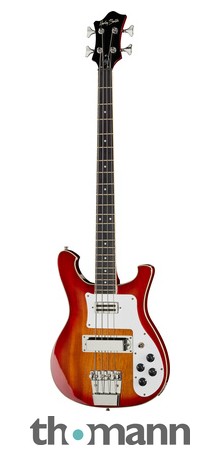
Rickenbacker still relentlessly litigates companies that copy their designs, so there are no Rickenbacker copies.

In the 80s, computer startups like Sun Microsystems started selling servers using UNIX, an almost open source operating system, and their success ate away the dominance of microcomputer companies like HP, who’d also done the same thing in the 70s against mainframes.

In the early 2000s, open source Linux on cheaper server hardware started eating into the UNIX market share of Sun, IBM, Compaq, and HP. Sun made the decision too late to open source their UNIX, but when they did, their reasoning was that it would create a greater market for *their* products versus competitive offerings from IBM, HP, Microsoft, and Dell. If they done so in 1999, we’d never have heard of Linux, it would all be Solaris and Solaris variants.

Today, Fender’s market share is huge - larger by far than any other single producer of electric stringed instruments, something like 30% of the market. I can walk into literally any music store and buy a Fender product, and if not, I can buy one of their many copies across all price points from Squier, G&L, Bacchus, Sadowsky, Lakland, Sire, etc.

Rickenbacker’s market share is tiny. I can *not* walk into most music stores near where I live and walk out with a Rick. And if I owned one and wanted to get it repaired, I have no idea where I would take it. YouTube seems like my only option.

Linux’s market share is also huge. They’ve almost completely eroded the UNIX market in most industries, and Red Hat is an industry giant. Almost all of the public clouds are running some form of Linux, entirely compatible with other forms of Linux. To quote the CEO of Sun, the network is now the computer, except it’s not running on Solaris because they missed the boat.

Similarly, the Boss OC-2. Many copies exist, from some well known names, and some even do the “OC-2 thing” better than Boss did. Boss could kill them all if they re-released an exact copy of their old Japanese OC-2. They don’t need to - they’re selling plenty of OC-5’s, Blues Drivers, EQ’s, TU’s, etc let alone their new multi effect offerings and the Katanas. I doubt they have room in their production queue for a mass market re-release. Same with the FU-2, which was itself a clone of the Super Fuzz.

Speaking of Fuzzes, the original Big Muff Pi has been copied and re-copied many, many times, but I’d bet that EHX is still the number 1 producer of BMP fuzz pedals out there.

Think of how many preamp pedal companies there are making a product to sound like an Ampeg SVT, and how Ampeg has been trying to play catch up because they skipped the preamp pedal market for so long, insisting on big iron amps and cabs. They’re also still selling a lot of SVTs.

So in the end, if you’re a big fan of Darkglass, understand that their business is *not* being threatened by copies at all, the copies are validating their space in the market against all of the non-Darkglass OD/ distortion/ fuzz/ compressor/ harmonic booster alternatives. This only helps them. That’s why they’ve done exactly nothing about it.
 
Last edited:
  • Like
Reactions: Dognorab
Have IP rights been violated? Like, not in your opinion, but has this gone before a court and that was the judgement, from an actual judge? Has Darkglass/Korg taken any legal action whatsoever? Maybe they like this being discussed… for marketing reasons… but if the answers to those questions are “no”, and it’s still your opinion that rights have been violated, then it’s really “just your opinion”. To which you’re certainly entitled, but it isn’t any more or less valid than anyone else’s opinion.
I said I have an issue with IP rights being violated. Let me clarify, that means any IP. I provided links to documents to IP rights as seen through a legal lens. I provided this link as a PSA so more informed discussions can be made. Using the documents as backdrop, the pedals look suspicious to even a minimally legally informed person like me. It is up to a court to decide merits as IP rights are a grey area with case-by-case elements.
As it was stated earlier in this threat, gut shots reveal they are actually quite a bit different inside from the original.

It's not like boutique builders doesn't run with this concept too, they just charge more, and usually keeps the rip off a little less obvious on the visual side.

The visual design however does definitely crosses the line, but I don't buy my pedals based on looks.
IMO, these pedals look really shady. I think they fall under the “whole damn song” category. Others see it as “copping a riff”. If DG and the other companies see this as a threat that is worth the legal fees to pursue, then they will.

Gibson is contesting Dean with mixed results:
Gibdon v Dean
 
Last edited:
Interesting conversation. Makes me wonder, where does it end? Do you tell your pharmacist you don’t want generic meds, only the original brand name, even if it costs more and isn’t covered by insurance? Do you only buy Kleenex brand tissues and q tip brand cotton swabs? Always Pepsi and coke, never store brand cola? I’m picturing the demonfx box with a “compare to darkglass” label like every otc med at the local pharmacy lol
IMG_1708.jpeg
 
  • Like
Reactions: Paco Leon
Rickenbacker still relentlessly litigates companies that copy their designs, so there are no Rickenbacker copies.
😁
 
I’ll note that none of the Darkglass or DSM clones are now on DemonFX’s website or their Aliexpress store and their Ampeg Classic Analog Bass Preamp and Opticomp clones only bear the faintest resemblance to the original. The Keeley Workstation clones are also gone, but the compressor is still there as is the “Call76”.

And there’s the egregious TurboTuner ripoff.

I wonder if they ran into legal trouble.