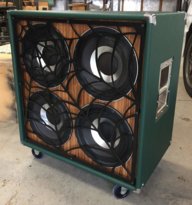
Did it register zero resistance or an open circuit? Not the same thing!
I tested for continuity, the meter jumps to 0 ohms. An Open circuit (incomplete) would have had the VU meter remain at infinity, I believe.

TalkBass has been independent since 1998. Add your voice.
Create a free account to reply to discussions, view embedded media, and browse with fewer display ads.
Join free Log in
Want zero display ads or expanded classifieds tools? Compare plans.
Did it register zero resistance or an open circuit? Not the same thing!

Easy way to test is go probe to probe.I tested for continuity, the meter jumps to 0 ohms. An Open circuit (incomplete) would have had the VU meter remain at infinity, I believe.
Yes, the behavior is identical when touching the meter probes together.Easy way to test is go probe to probe.


It occurred to me I might be able to simply disconnect the woofer & tweeter and test the mid, same for tweeter.
Or would removing the speakers form the crossover circuit kill the signal?

Find a frequency sweep app for your phone and run a sweep on it.It occurred to me I might be able to simply disconnect the woofer & tweeter and test the mid, same for tweeter.
Or would removing the speakers form the crossover circuit kill the signal?
Find a frequency sweep app for your phone and run a sweep on it.
Mambo please give us a top down pic of your crossovers and all wiring. Folks here can help trace the signal path and figure it out.

Looks right to me. The only connection I can't really inspect is the first coil input from the + input. You are using the right signal in, from the terminal, so that's fine. It is still called a crossover, more descriptive is a "high-pass crossover". I would next bypass the Lpad. Connect the tweeter+ to the terminal you have labeled #3. See if that yeilds sound. Otherwise could have a bad crimp connection, bad Lpad, mislabeled Lpad?
Other than this small issue with the horn, how does it sound?