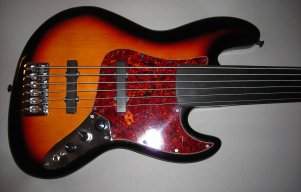
In my experience, the tuning machines on cheaper FMIC basses don't feel as nice when you turn them.

TalkBass has been independent since 1998. Add your voice.
Create a free account to reply to discussions, view embedded media, and browse with fewer display ads.
Join free Log in
Want zero display ads or expanded classifieds tools? Compare plans.
Similar to differences between Lexus and Toyota.
Higger end Squiers and low end Fenders are in the same ballpark as early Fenders - if you find one with a few years on it and the neck is straight, they can be very good instruments. New ones, you run the risk that the neck will twist. They come out of tge factory made really well - cnc machining is more accurate than anything made years ago - it’s just the stability of the wood in the necks that’s an issue nowadays.
the classic difference between the two comes in the form of my usual psa / warning regarding the trash quality neck plate screws on the VMs, not only are they made of metal cheese but are a much smaller gauge. as long as there's no problem, fine, but it's a point of concern and nutshells the issues.
Me either, but apparently at least one person here has had an issue. Seems like a very dubious and risky way to try and save a few cents per screw. The bridge on my VM 70’s is the standard bent plate and the tuners on my two Squiers work just fine. I’m even rolling with the stock pups on both.I would honestly love to know where you guys are getting this info. I owned Squiers, used Squier parts and have never seen or heard of any of these issues. Never seen any complaint about Squier necks or neck screws here either although I may have missed the posts.
Similar to differences between Lexus and Toyota.
I would honestly love to know where you guys are getting this info.

Some people still think it’s 1980.I would honestly love to know where you guys are getting this info. I owned Squiers, used Squier parts and have never seen or heard of any of these issues. Never seen any complaint about Squier necks or neck screws here either although I may have missed the posts.


it's a cult, but we're growing lolI would honestly love to know where you guys are getting this info. I owned Squiers, used Squier parts and have never seen or heard of any of these issues. Never seen any complaint about Squier necks or neck screws here either although I may have missed the posts.


So, you had 3 necks that came up twisted?First hand. We have 3 Fenders at my work (Tele, strat, and a Jazz) - all MIM’s. Bought at the same time. 2 years in, the tele and the Jazz necks were noticeably twisted - kind of playable, provided you run the action a bit high - definitely not ideal. I bought a Squier P neck a few years ago. Lasted less than a year before it was unplayable. Horrible twist.
Now I buy roasted necks from Warmoth. 8 necks between a few of mine and some for clients. 4 years at this, not a hint of twist or warp in any of them.
So, you had 3 necks that came up twisted?
Where do you live? I am thinking climate.
I don't doubt that at all. The pitch is probably squeezed out as they go through the CNC machines.Chicago. All in climate controlled rooms. I’ve owned and made a few dozen guitars and basses over the years. Those recent Fenders/Squiers are the only twisted necks I’ve ever had problems with over 4 plus decades. It’s not the climate. The wood in the necks isn’t properly cured/dried before manufacture.
Honestly, the build quality and hardware are very close to the 70's Fenders I used to play...in the 70's.
If they treated whatever wood that is used, basswood, soft maple, agathis properly cured/dried before manufacture, would that help? It's not a crappy wood thing?Saying something is as good as a 70’s Fender? You are aware that 70’s Fenders have a reputation as the worst time frame in Fender’s history for quality and consistency. I hope.
Any bass made today should, with cnc machining, be head and shoulders above what Fender was making on worn out crude tooling in the 70’s, at least in terms of mechanical things.
If they treated whatever wood that is used, basswood, soft maple, agathis properly cured/dried before manufacture, would that help? It's not a crappy wood thing?
The hardware is perhaps the most cost saving cut.
I was talking about all woods, body, and neck in general but, I take it in your answer that if another manufacturer in your example PRS took Squier's wood and kiln dried it, it would be fine.It’s maple, and the wood is fine, but not treated well enough. If PRS started with the same wood, and did their heat treatment, they’d be stable necks.
I was talking about all woods, body, and neck in general