What's digital in a (insert any manufacturer here/Fender Rumble) class D amp?Reading comprehension, it is for class d and digital audio applications.
 Please enlighten me!
If there is any, what does the mosfet calculate?

Last edited:

TalkBass has been independent since 1998. Add your voice.
Create a free account to reply to discussions, view embedded media, and browse with fewer display ads.
Join free Log in
Want zero display ads or expanded classifieds tools? Compare plans.
What's digital in a (insert any manufacturer here/Fender Rumble) class D amp?Reading comprehension, it is for class d and digital audio applications.
Please enlighten me!Fender Rumble Studio 40 and Stage 800 are what I call digital amps. Also for example power amps that include DSP processing are also digital amps.What's digital in a (insert any manufacturer here/Fender Rumble) class D amp?
And what do mosfets (or rather classD ICs...) calculate in'em? Why would anyone call'em digital?Fender Rumble Studio 40 and Stage 800 are what I call digital amps. Also for example power amps that include DSP processing are also digital amps.


It is the lower powered Rumbles that use TI IC's in the power section, the highest power one that does is the Rumble 100c which uses the LM386 (dual‑chip for 100 W).I am the one that presents real world examples of TI chips used in Fender Rumble products. But OK!
Is one of those just a backup bass or do you play both on most of your gigs?
Power‑amplifier ICs contain the active transistor devices inside the silicon die. The external package may look like a single chip, but the internal circuitry includes MOSFETs, bipolar transistors, or a combination of both that perform the actual amplification. The surrounding passive components (bias resistors, capacitors, feedback network) are typically placed on the board, while the transistors that handle the high‑current output are integrated on the chip.That is bullsh$t talk. Class D needs/has no transistors. If You bought one with'em, it's not Class D. So IDK what the point is here.
...
| Texas Instruments, “LM3886 Audio Power Amplifier” datasheet (TI, 2023) | Describes the LM3886 as “a single‑chip, high‑performance audio power amplifier” that contains an internal MOSFET output stage and internal bias circuitry. |

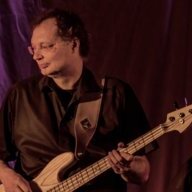
The Ibanez is a backup bass, I play the KLŌS bass exclusively these days, pretty much because it weighs 7 pounds, the neck is super stable (carbon fiber), and it sounds great.Is one of those just a backup bass or do you play both on most of your gigs?
If you gig both, which bass for what type of songs?
I'd love to be able to play one through my FENDER RUMBLE 100 COMBO (back to Rumbling topics)!!!The Ibanez is a backup bass, I play the KLŌS bass exclusively these days, pretty much because it weighs 7 pounds, the neck is super stable (carbon fiber), and it sounds great.
I am not an expert on the power sections of audio amplifiers, but you obviously know less than you proport to know, so I'm done with this topic.That is bullsh$t talk. Class D needs/has no transistors. If You bought one with'em, it's not Class D. So IDK what the point is here.
...


 www.talkbass.com
Please Please, take this class D stuff to it's own thread?


www.talkbass.com
www.talkbass.com
www.talkbass.com
www.talkbass.com


Thanks!Search results for query: *
I agree, Sharpie!@dORSY and @John D Harris, gentlemen, please!! Do take this recent technical discussion elsewhere, if you must persist.When we get new Rumblers with a Studio 40 and/or Stage 800 modeling amp I respectfully refer them to our Stage & Studio sub-thread for discussions about the modeling features so as not to confuse our non-modeling Rumblers here in the main Rumble Club thread.And, I do believe this debate has long since left the majority the rest of us here in your technical dust. I'm sorry to say, though, that we don't have a sub-thread for whatever your particular point(s) of discussion(s) may be. Perhaps you would be good enough to find one here:Search results for query: "'class d"
... or here:Search results for query: Digital
But if not, please feel free to start a new thread there in the Amps & Cabs Forum!Thank you for your consideration, kind sirs.

ICs are still used for analog, digital, and hybrid circuits. If anyone is misled, it’s because they aren’t paying enough attention.Grok's madeup hallucination
You will not find any calss AB at any recently made high power application.
There are multi-stage high power "class AB" amps (amp stage after amp stage, with power switching), but those aren't even called class AB anymore. (class G/H/etc.)
a class D chip is NOT a transistor... or mosfet... or...
We could call them ICs, but they are analog, that could be misleading as IC is mostly used for digital integrated circuits these days. (and a lot of class D designs also integrate signal processing - DSP)
Yes, but are they Class D covers?In case anyone is interested, Fender is now offering deluxe padded covers for some of the Rumble combos. You can check them out on the official Fender site.

It’s one of the reasons I went with Custom Amp Covers.Would it be too much to ask of Fender to put a pocket on their covers to store the power chord like other manufactures do? Being there is no place on my 500 amp to store it?
I hafta carry a bunch of carp besides a power cable so I have duffels.It’s one of the reasons I went with Custom Amp Covers.
Would it be too much to ask of Fender to put a pocket on their covers to store the power chord like other manufactures do? Being there is no place on my 500 amp to store it?
It’s one of the reasons I went with Custom Amp Covers.
I hafta carry a bunch of carp besides a power cable so I have duffels.

I have a gig bag with stands & stuff but I want to be sure everything that needs cables has them packaged with it.I hafta carry a bunch of carp besides a power cable so I have duffels.
Straps stay on my basses. Basses live on stands. When I pack basses up to take somewhere, cords, etc. go in the cases then. They come out when I unpack back home.I don't put cords, cables, straps, stands, tuners, picks, mics, or other accessories, in my bass or guitar cases lest I take the wrong one at the wrong time. Likewise, if I had pockets on my amp covers. That's what's this is for:
I've got at least 2, maybe more, of everything I need besides a bass, a guitar or an amp. I never leave home without it.