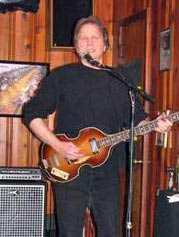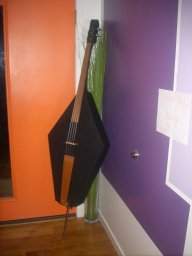
I have zero issues with short scale flats on my Hofner.
Same here! When I got my Icon I slapped on a set of La Bella Beatle Bass flats on it, set the intonation, and it's been good ever since.

TalkBass has been independent since 1998. Add your voice.
Create a free account to reply to discussions, view embedded media, and browse with fewer display ads.
Join free Log in
Want zero display ads or expanded classifieds tools? Compare plans.
I have zero issues with short scale flats on my Hofner.

Using a tuner and with great care in saddle and height adjustment I hear bad intonation or overtones with both Fender and Dadarrio flats.


I agree with you! Physics proves that short scale basses do not intonate correctly, or as well, as long scale basses. That's why basses have long scales. That said, I am a short scale player and I know exactly what you mean about flats on short scale basses. I've stated this out here before. Something just doesn't sound right with flats on a short scale bass! That's one of the reasons why I switched to rounds and the tone world opened up for me. Wow! I couldn't believe it. I used RotoSound Swing Bass 66 rounds sets for over a decade and recently switched to LaBella Deep Talkin' rounds. If you want a deader sound, palm mute and tear away. Best of both worlds and more versatile. I seldom look back to flats but do have a 3rd bass set up with flats for fun, etc. But, my go-to bass has rounds!I have been driving myself nuts with intonation issues on my shortscale and while wondering why there aren't more choices in shortscale flats I figured there must be a reason. Using a tuner and with great care in saddle and height adjustment I hear bad intonation or overtones with both Fender and Dadarrio flats. When I switched to rounds, the fundamental is clear, clean and sounds spot on. Can anyone dispute this?
I agree with you! Physics proves that short scale basses do not intonate correctly, or as well, as long scale basses. That's why basses have long scales. That said, I am a short scale player and I know exactly what you mean about flats on short scale basses. I've stated this out here before. Something just doesn't sound right with flats on a short scale bass! That's one of the reasons why I switched to rounds and the tone world opened up for me. Wow! I couldn't believe it. I used RotoSound Swing Bass 66 rounds sets for over a decade and recently switched to LaBella Deep Talkin' rounds. If you want a deader sound, palm mute and tear away. Best of both worlds and more versatile. I seldom look back to flats but do have a 3rd bass set up with flats for fun, etc. But, my go-to bass has rounds!
There are allot of SS flats players with no issues so it must be the string, bass or setup. SS basses were used with flats allot in the 60's and 70's and so it works. It has to be other issues than the scale, for if it was just the scale there would be intonation and sound issues with any kind of strings not just flats.
Most bass players play long scale basses and most basses made are long scale. The (gray?) issue in the original post by senorblues was not ONLY referring to frequency intonation but to OVERTONES. I imagine most players just do not hear the overtones. Heres one of the posts by the senorblues and I agree with him from my experience.
My tuner shows correct intonation. The problem is what I am hearing. The sound of the fundamental is not clear or strong; sounds out of tune because of harmonics or overtones I don't know- but especially high on the fretboard.
Understood but I have never heard overtones and suggest you to adjust the pickup height...might help.

I only use flats. No issues.
FF--If the fretted note is flat, move the saddle forward.

I agree with you! Physics proves that short scale basses do not intonate correctly, or as well, as long scale basses. That's why basses have long scales.
I've stated this out here before. Something just doesn't sound right with flats on a short scale bass!
Wrong. PROVE IT. Present scientific evidence based in physics if you want anyone to swallow this absurd assertion. You'll need to measure and reproduce the frequencies generated by different scale length basses (tones and "overtones") and make an argument based on measurable and documented phenomena. Otherwise, it's not based in physics.
You're missing three critical words: "In my opinion". This is not a fact, and thousands of bass players disagree with it. Just because you don't like the sound doesn't mean the same applies to others. Your opinion is not reality to anyone but you.


I've known about this for decades from repair men, players, and my own ears. There's tons of info on this. With only a quick 10 minute search I found many references. Here's a few. I'm sure there are better articles than these. I'll keep looking. Please feel free to knock yourself out, prove it to yourself, and then report back with your findings so others can learn.Wrong. PROVE IT. Present scientific evidence based in physics if you want anyone to swallow this absurd assertion. You'll need to measure and reproduce the frequencies generated by different scale length basses (tones and "overtones") and make an argument based on measurable and documented phenomena. Otherwise, it's not based in physics.

Flats do not work on shorties