• TalkBass has been independent since 1998. Add your voice.
    Create a free account to reply to discussions, view embedded media, and browse with fewer display ads.
    Join freeLog in
    Want zero display ads or expanded classifieds tools? Compare plans.

Fodera Club Part XIII

Status
Not open for further replies.
I think then the trick comes in when to figure out if it is time to fish or cut bait with the commitment. One can do a cost/benefit analysis of various instruments and try and mate that to current and projected playing needs (hey, this sounds like an MBA project - I'm gonna make a matrix!). But there are other factors. At age 50 I certainly have a different take on things than when I was 20 (or 30, or even 40). And I've got gigs booked. If I were to decide that I was going to "commit" to a 6, would I muddle through those gigs (knowing my performance would suffer) or cancel them until I get "good enough" or ?

Bah, too much thinking. I just want my MGS to get here so I can see if I bond with the whole concept.
 
I think then the trick comes in when to figure out if it is time to fish or cut bait with the commitment. One can do a cost/benefit analysis of various instruments and try and mate that to current and projected playing needs (hey, this sounds like an MBA project - I'm gonna make a matrix!). But there are other factors. At age 50 I certainly have a different take on things than when I was 20 (or 30, or even 40). And I've got gigs booked. If I were to decide that I was going to "commit" to a 6, would I muddle through those gigs (knowing my performance would suffer) or cancel them until I get "good enough" or ?

Bah, too much thinking. I just want my MGS to get here so I can see if I bond with the whole concept.

yep. i had the benefit of doing this when i was 29 or so. and am an obstinate sob.

and there is gonna be a time when it's *not right* and you have to respect that.
 
Here ya go!

attachment.jpg

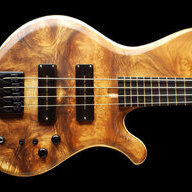
I love this photo. Actually, except for the Digi-Key box in the background (there a big day gig competitor of mine!) :(

I'm guessing most people will focus on the Koa though! :D
 
I think then the trick comes in when to figure out if it is time to fish or cut bait with the commitment. One can do a cost/benefit analysis of various instruments and try and mate that to current and projected playing needs (hey, this sounds like an MBA project - I'm gonna make a matrix!). But there are other factors. At age 50 I certainly have a different take on things than when I was 20 (or 30, or even 40). And I've got gigs booked. If I were to decide that I was going to "commit" to a 6, would I muddle through those gigs (knowing my performance would suffer) or cancel them until I get "good enough" or ?

Bah, too much thinking. I just want my MGS to get here so I can see if I bond with the whole concept.

The conversation makes sense. My personal experience is that I went to 5 for a while, but it just never felt as natural as a 4. And for me (not saying its right for others) I didn't feel the extra string added enough to justify making me less comfortable with the instrument. So I "committed" to 4s from that point forward.
 
I just gave up on 6 after playing it part time for ten years. Here's an aptly titled blog post I wrote on it for those with too much time.

http://robinruscio.com/2011/10/why-im-giving-up-six-string-bass/

I should write a follow up and say that I also can't imagine playing four again instead of 5. For on thing, I have more and more acts that actually require a 5, such a Broadway shows that specify it, and my 80's band that transposes down a lot.
 
I should write a follow up and say that I also can't imagine playing four again instead of 5. For on thing, I have more and more acts that actually require a 5, such a Broadway shows that specify it, and my 80's band that transposes down a lot.

I thought I would have a tough time moving back to 4 (and did the first two times I tried), but instead the third time stuck and I have found it fairly liberating. Plus it has led to me playing with more space. But I don't have a book that absolutely requires any notes below low-E, and for those tunes where I used to incorporate those notes I've made friends again with the note an octave up.

If you've got gigs that demand the lower notes, then the choice is clear. If you don't, then I think there is no right or wrong answer. Funny that you mention damping as an issue with the C-string on the 6 - I find that to often be an issue with the B-string on a 5. I'll see if the C is problematic next week. But coming from originally being a fingerstyle guitarist for decades, my technique (or lack thereof) may be more suited to dealing with high C than low B.
 
I just gave up on 6 after playing it part time for ten years. Here's an aptly titled blog post I wrote on it for those with too much time.

http://robinruscio.com/2011/10/why-im-giving-up-six-string-bass/

I should write a follow up and say that I also can't imagine playing four again instead of 5. For on thing, I have more and more acts that actually require a 5, such a Broadway shows that specify it, and my 80's band that transposes down a lot.

+1, im in that exact situation right now. I even have a 6 smith too which I'm trying to get rid of and getting two 5ers instead. I will probably be selling my smith once I get my MG 5(with C string), and then I will probably buy a P bass 5 stringer (with low B).
The reasons you point out are the same to me too haha. I feel its too big, heavy, muting causes problems (annoying when recording), other bassists also tend to give the stink eye when I pull the 6er out too.
I also agree that the C string tone was very thin, not good for comping but It does feel ok for soloing, I hope the C on my new MG will be a bit fatter though.
It will take me some time to get used to the two different 5ers since I have been playing 6 for most of my electric bass lifetime.
And I can't go to 4 either, I mainly play upright bass but I feel the electric bass very different than upright so playing a 4 never really intrigued me.
I also feel that the reason Im trying to get away from the 6 is like you said, sound quality is becoming more important to me, I like to think its an aspect of me starting to mature in my playing.
 
Funny that you mention damping as an issue with the C-string on the 6 - I find that to often be an issue with the B-string on a 5. I'll see if the C is problematic next week. But coming from originally being a fingerstyle guitarist for decades, my technique (or lack thereof) may be more suited to dealing with high C than low B.

I think he means its a problem because muting all 6 strings with one smaller sized hand can be difficult. As you know when you play on one string it will make another string resonate, and muting every string becomes way more difficult on a 6 than a 5... to me its not a problem too much playing live but when recording it can be heard.
 
I have play 4 string for almost 15 years. Had a few 5's with a low B. Three years ago I got a Yamaha 5 and strung it E-C. Didn't played that much since the bass wasn't so great compared to Emperor 4. So I ordered a Emperor 5 with 34 scale and 17.5 mm spacing. I want 34 scale so I easy could switch between all my basses. But idea of 33 scale was just big so now I have a MG on the way with 33 scale and 16.5 spacing. I hope that bass doesn't messes with muscle memory :)
 
Well I played 6 string bass for almost 16 years, and last year in January I got my MG.
Well to tell you the truth I love it, but still sometimes I'm missing my 6 for some stuff. I still have Smith CR6, but I use it hardly because Fodera is now my main bass.

I was a never fan of 4 string bass, have no idea why, but since I got into some bands that required a jazz bass, I got a sunburst '74 jazz bass, and I realize one thing... on every bass I play different. And by different I mean different approach to playing.
Only thing that I can get out of my mind is people that are against having 6 string bass player in a band... really don't get that, If it's about the looks, then you shouldn't be playing at all, and btw. I'm a true fan of Anthony Jacksons philosophy on contrabass guitar.

But since I got into other basses I actually realized that it's fun to have 4 string for some gigs, also E-C for some gig, B-G for some gigs, and of course 6 string for some gigs.

Still in my mind is a beautiful 6 string Fodera, that I'll probably get in future, but right now I'm feeling a need to play few years on my new bass before I decide what to get it.
 
i'm going back to the 6-string thing for a moment, if i may.

i think i'm in a different mode than most of you guys, as 90% of what i've done over the last 27 years has been music in a band i started, music that i've written, free improv or music that people of like minds have written. in all these, the range of the 6-string is critical. so 4-string is not really gonna cut it.

i think it's a lot easier to ignore the B/C strings and play the middle four (like i've done on countless 50s/60s pop music gigs—hell, i played 6-string with jerry lee lewis) than it is to add the those strings on a 4-string ;-)

to me it's mindset.

and yeah, some band leaders hear with their eyes.
 
Yes, to me it's not a matter of looks, it's more of a comfort problem when standing up. Other bassists (some) will also tend to think just cuz you have a 6 you gotta play chord melodies, fast technical solos...etc, and when you play something simple or just stay in the pocket with nothing fancy it disappoints them.
I had teachers in college tell me that if it has more than 4 strings it's not a bass... To which I ignored and played my 6 throughout my studies, there are people out there that think that way. They either expect way too much or way too little since 6 is not the norm. If you don't use that high c or low b in one tune they start to question why you have a 6. As for me I wouldn't care but I'm pointing it out, those kind of people are out there.
 
Status
Not open for further replies.