

Enjoy the benefits of a premium membership!
Upgrade Account
-
TalkBass has been independent since 1998. Add your voice.
Create a free account to reply to discussions, view embedded media, and browse with fewer display ads.
Join free Log in
Want zero display ads or expanded classifieds tools? Compare plans.
You are using an out of date browser. It may not display this or other websites correctly.
You should upgrade or use an alternative browser.
You should upgrade or use an alternative browser.
G&L Club Part 3
- Thread starter Bryan R. Tyler
- Start date
-
- Tags
- club
- Status
- Not open for further replies.
More options
Who Replied?
Chef
In Memoriam
I have pdf's of those instruction sheets, but it's been a long time since I had an early bass come with those...
Chef
In Memoriam
had several pm's wanting the instructions
i was wrong, i don't have pdf's, i have scans
here:
GnL basses :: GLfactsetup.jpg picture by komual - Photobucket
feel free to print
the other set is one photo forward.
i was wrong, i don't have pdf's, i have scans
here:
GnL basses :: GLfactsetup.jpg picture by komual - Photobucket
feel free to print
the other set is one photo forward.

Very nice L2Ke. I have the setup and control sheets too, came with a couple early 80s G&L basses I have. Nice reference. Don't forget to send your warranty card in!
I would like to get a pdf scan of the instruction sheets for my 1981 L-2000 E.

Better experience ?
Well dealing with a dealer in California compared to New York City had me a little apprehensive. I did get it it within the time frame that was quoted so from that perspective, yes it was better. Overall I was happy and it was straight forward. There are no issues either so thats good.
Here are some photos of the head stock logo's.
Attachments



Looks like I'll be joining this club on Tuesday. I have my first ever G&L coming my way and I'm pumped! 
Chef
In Memoriam
look up one post from your original one.
I would like to get a pdf scan of the instruction sheets for my 1981 L-2000 E.


30th Anniversary L2K arrived today.
NICE! That looks awesome- enjoy!

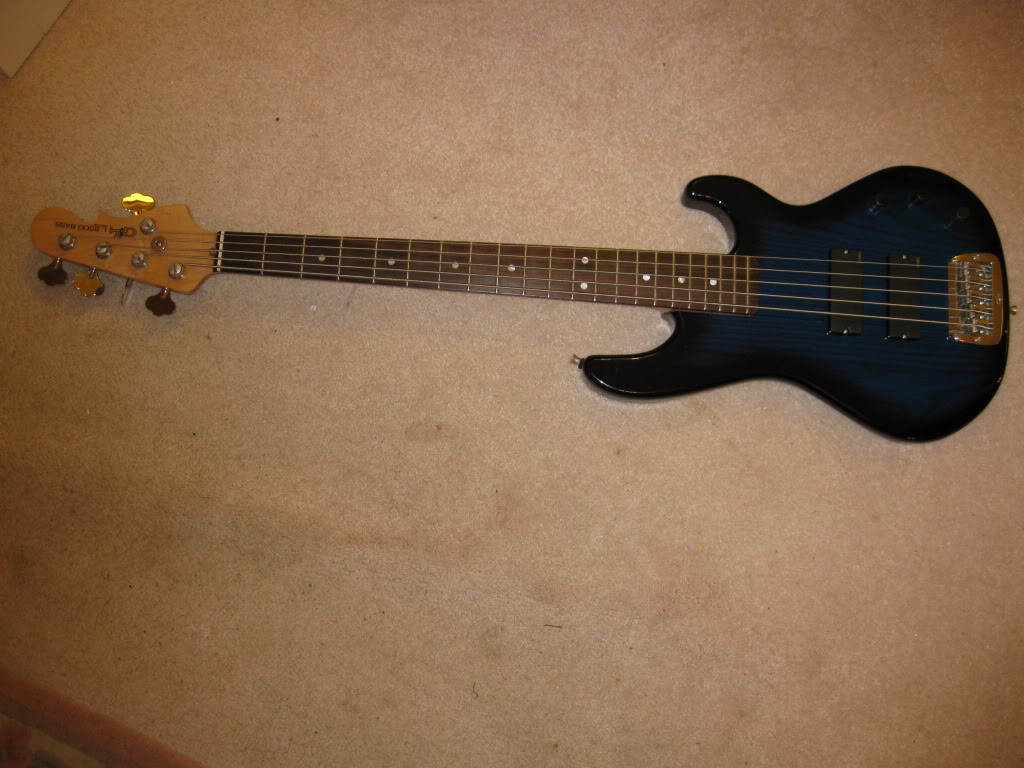
Anybody else have one of these? 1996 G&L L-5500 five string in blueburst with factory-original EMGs.
Chef
In Memoriam
I've always wanted one of those.
Never found one that was the right combo of weight and affordable for me.
Never found one that was the right combo of weight and affordable for me.
Sorry if this has been asked but if you know a dealer can you order a TRIBUTE model with a matching painted headstock?
I've always wanted one of those.
Never found one that was the right combo of weight and affordable for me.
This one is not too bad on weight -- about 10 pounds, but well balanced. It was a special order in lightweight swamp ash.

Sorry if this has been asked but if you know a dealer can you order a TRIBUTE model with a matching painted headstock?
You cannot get a matching headstock on a Tribute unless you do it yourself.
Is it common on new basses for the truss rod nut to be loose and not have much relief? The neck is almost flat and the nut turns freely.
Chef
In Memoriam
My BABP LE2500 is like that. Doesn't need hardly any help from the trussrod at all.
Yeah but Chef. Shouldn't I be able to add relief if I need it?
Chef
In Memoriam
I take your point. Not sure what to tell you on that...higher tension strings?
De-humidifier?
You want the action higher? Might have to raise the saddles a tad.
I like mine just shy of dead flat, but I'm a fairly soft player anymore, preferring to let the amp do the work, and not dig too much anymore.
Might have to wait for someone smarter'n me to help you, or call G&L c/s...
De-humidifier?
You want the action higher? Might have to raise the saddles a tad.
I like mine just shy of dead flat, but I'm a fairly soft player anymore, preferring to let the amp do the work, and not dig too much anymore.
Might have to wait for someone smarter'n me to help you, or call G&L c/s...
Is it common on new basses for the truss rod nut to be loose and not have much relief? The neck is almost flat and the nut turns freely.
In my experience it is. You tune up the new neck but leave the truss rod nut totally loose and slowly (the amount of time of which depends upon the wood, luck, temperature and a bunch of other stuff) the strings will slowly (talking from days to months) pull relief into the neck. Once you see the relief being about what you want you tighten the truss rod nut to counterbalance the string tension and the increasing relief will stop.
People have told me about necks bent backwards with no truss rod tension. Such necks are presumed defective and as I understand it fixing them requires steaming and warping in a special jig.
- Status
- Not open for further replies.


