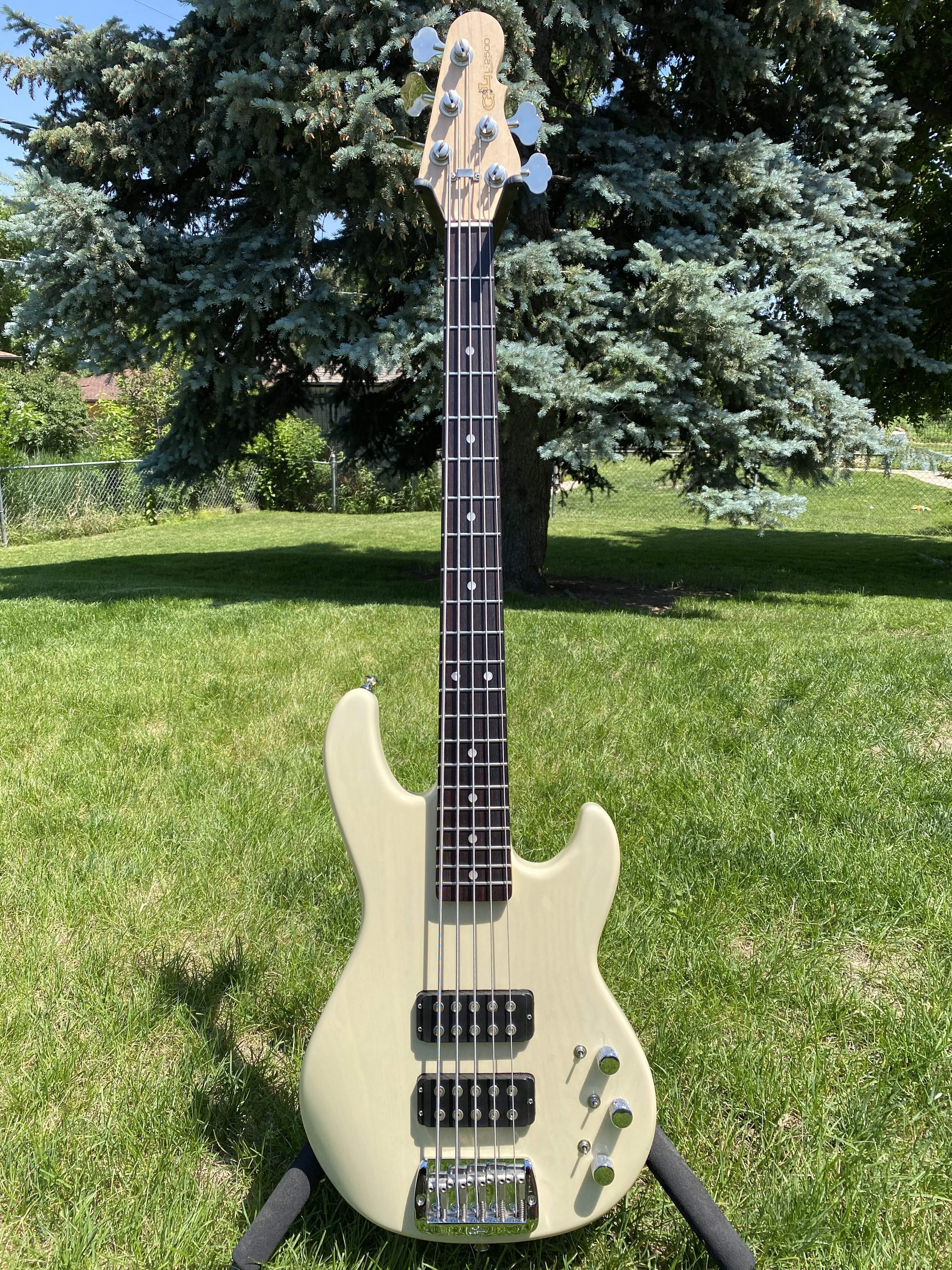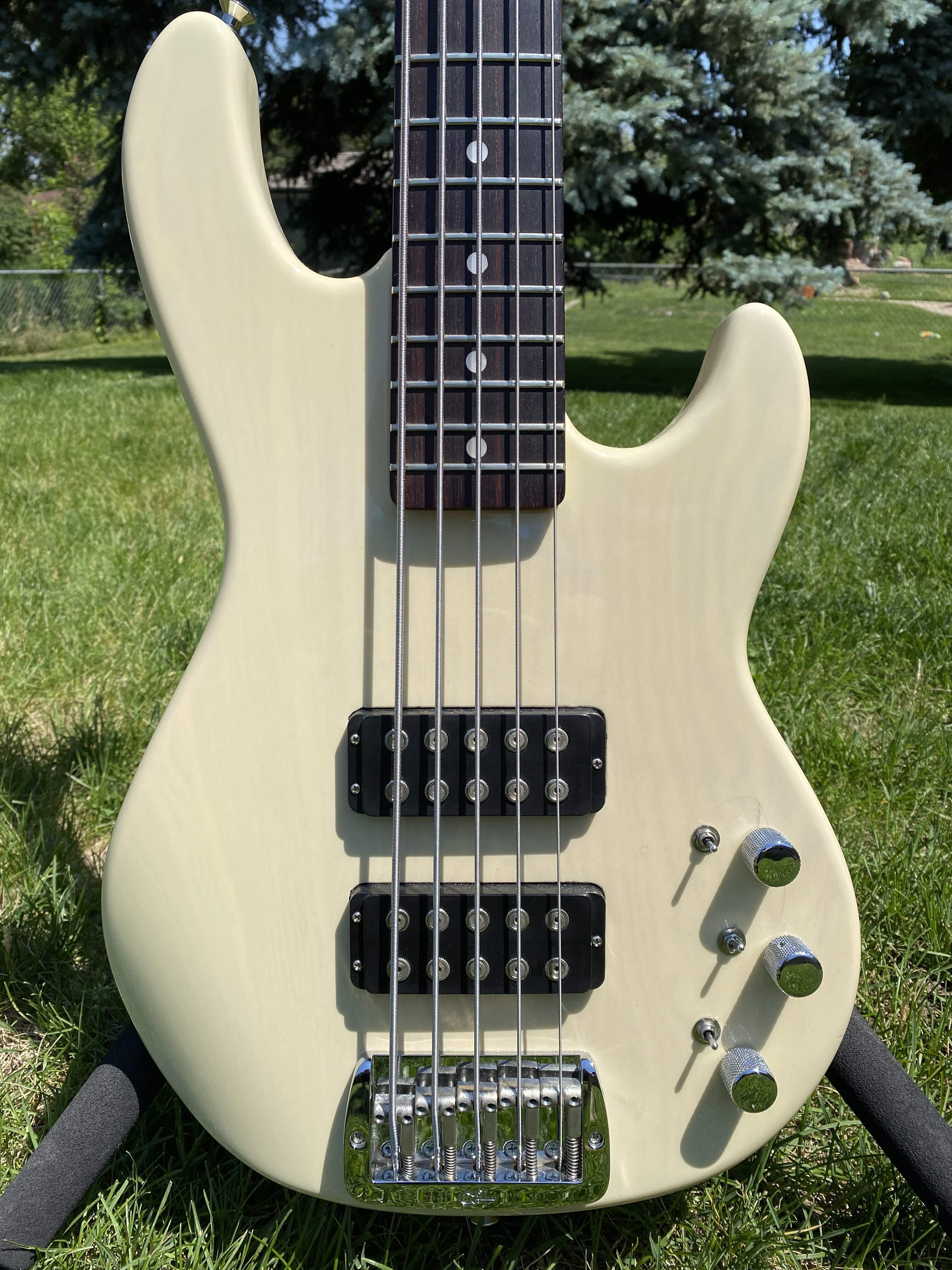
The active EQ I have in my LB-100 is a Seymour Duncan STC-2C-BO concentric, giving me both treble and bass boost and cut. It's really quite good and I'd like to keep it in the bass. Has anybody tried dropping an MFD into an LB-100 with active electronics?Yes highly recommend! I just prefer the Lb body style View attachment 4486434View attachment 4486435

Enjoy the benefits of a premium membership!
Upgrade Account
-
TalkBass has been independent since 1998. Add your voice.
Create a free account to reply to discussions, view embedded media, and browse with fewer display ads.
Join free Log in
Want zero display ads or expanded classifieds tools? Compare plans.
You are using an out of date browser. It may not display this or other websites correctly.
You should upgrade or use an alternative browser.
You should upgrade or use an alternative browser.
More options
Who Replied?Since nobody has responded to my query, I thought I'd respond myself. I called Memo at G&L this morning (Monday, 11-29-21) and asked his thoughts. He said it "might" overdrive my Seymour Duncan STC-2C-BO active EQ because it is hotter than the stock alnico pickup, but that "maybe" adjusting the pickup away from the strings would cure that. He suggested if that didn't work to contact Seymour Duncan for a possible solution. Since I might not be the only person on this forum who might be considering something similar, I thought I'd continue to research the possibility for all of us who love MFD pickups.The active EQ I have in my LB-100 is a Seymour Duncan STC-2C-BO concentric, giving me both treble and bass boost and cut. It's really quite good and I'd like to keep it in the bass. Has anybody tried dropping an MFD into an LB-100 with active electronics?


That seems feasible to me, though I don't know enough about the actual workings of electrical components to say whether it would work for sure or not, or for that matter, what value to use. I got a very fast reply to my email to Seymour Duncan. Jeff there wrote: "The STC has great headroom, I use it with our SPB-3 which is a pretty hot bass pickup. I don't think its likely you'll distort the preamp, the easiest way to lower the output of the pickup would be to lower the pickup further from the strings." Could it really be so simple? I just thought of a possible way to find out. I have a USA SB-2. I could pull the split-coil out of it and put it in the LB-100. If it doesn't work out, I can put everything back. If it does work out, I can just buy a new one from G&L and drop it into the empty space in the SB-2. Kinda a pain, but it might save me the 80 bucks plus tax & shipping from G&L if it turns out I can't use it like I want to. And it gives me the perfect opportunity to put copper shielding tape into those pickup cavities.Since a pot is a variable resistor, couldn't you add a fixed resistor in series with the pot to reduce the overall output?
Sounds like a great project and a great learning experience. I don't want to derail that, but I wonder if your original concerns can be addressed by anyone that has installed an active preamp on an SB-1. (I'm assuming an SB-1 has an MFD positioned similarly-enough to the PU location on an LB-100.)
Forgive me if that's a stupid assumption, but I often learn things this way. And I'm a glutton for punishment. (Bring it, trolls!)
;->
Forgive me if that's a stupid assumption, but I often learn things this way. And I'm a glutton for punishment. (Bring it, trolls!)
;->
That sounds like an excellent observation, so let's ask: HAVE ANY OF YOU SB-1 OWNERS ADDED AN ACTIVE EQ LIKE THE SEYMOUR DUNCAN STC-2C-BO? (OR SOMETHING SIMILAR??) IF SO, DID YOU ENCOUNTER ANY DISTORTION SPECIFICALLY FROM OVERDRIVING THE ACTIVE EQ WITH THE MFD PICKUP?Sounds like a great project and a great learning experience. I don't want to derail that, but I wonder if your original concerns can be addressed by anyone that has installed an active preamp on an SB-1. (I'm assuming an SB-1 has an MFD positioned similarly-enough to the PU location on an LB-100.)
Forgive me if that's a stupid assumption, but I often learn things this way. And I'm a glutton for punishment. (Bring it, trolls!)
;->
Another question knocking around in the back of my mind, where there's plenty of empty space, is: "Why did Paul Gagon have to underwind his MFDs for the M-series basses to prevent overdriving his preamp when the L-series basses don't have underwound pickups? In other words, what is different about those preamps, in this case, especially the front ends?

That sounds like an excellent observation, so let's ask: HAVE ANY OF YOU SB-1 OWNERS ADDED AN ACTIVE EQ LIKE THE SEYMOUR DUNCAN STC-2C-BO? (OR SOMETHING SIMILAR??) IF SO, DID YOU ENCOUNTER ANY DISTORTION SPECIFICALLY FROM OVERDRIVING THE ACTIVE EQ WITH THE MFD PICKUP?
Another question knocking around in the back of my mind, where there's plenty of empty space, is: "Why did Paul Gagon have to underwind his MFDs for the M-series basses to prevent overdriving his preamp when the L-series basses don't have underwound pickups? In other words, what is different about those preamps, in this case, especially the front ends?
If I recall correctly, the M series preamp is a dual stage for the active eq while the L series is single stage. With the M, its probably a case of too much input prior to the eq to prevent the second stage from overdriving at the highest eq settings. Underwinding the pickups would help keep the gain in the linear ranges.

That seems feasible to me, though I don't know enough about the actual workings of electrical components to say whether it would work for sure or not, or for that matter, what value to use. I got a very fast reply to my email to Seymour Duncan. Jeff there wrote: "The STC has great headroom, I use it with our SPB-3 which is a pretty hot bass pickup. I don't think its likely you'll distort the preamp, the easiest way to lower the output of the pickup would be to lower the pickup further from the strings." Could it really be so simple? I just thought of a possible way to find out. I have a USA SB-2. I could pull the split-coil out of it and put it in the LB-100. If it doesn't work out, I can put everything back. If it does work out, I can just buy a new one from G&L and drop it into the empty space in the SB-2. Kinda a pain, but it might save me the 80 bucks plus tax & shipping from G&L if it turns out I can't use it like I want to. And it gives me the perfect opportunity to put copper shielding tape into those pickup cavities.
I almost think you just have to try it. Some pre-amps offer 9v and 18v and in my understanding, you get a bit more headroom with 18v?
You could always just lower the pickups a bit too?
I will say I think the split MFD is as powerful as G&Ls L2K pickup. I'm constantly amazed at how much drive my SB-2 has.
Yeah, I dig my SB-2. It's amazing. However, I use a lot of that bridge pickup mixed in. In fact, I play directly through a sound system--no amp--and with the system's subs, I've often run with more of the bridge pickup mixed in than the neck pickup. That being the case, I'd like to have the MFD sound in my LB-100, but with no bridge pickup I think I'll need to be able to slightly cut the bass and boost the treble. That's where the STC-2C-BO EQ comes into play. I'm hoping 9v will do it because I can barely squeeze one battery in.I almost think you just have to try it. Some pre-amps offer 9v and 18v and in my understanding, you get a bit more headroom with 18v?
You could always just lower the pickups a bit too?
I will say I think the split MFD is as powerful as G&Ls L2K pickup. I'm constantly amazed at how much drive my SB-2 has.

My first attempt at refinishing a bass and it just so happens to be my G&L JB tribute. What do you think? There are a few run spots in the poly but I'm not talented enough to fix it I don't think.
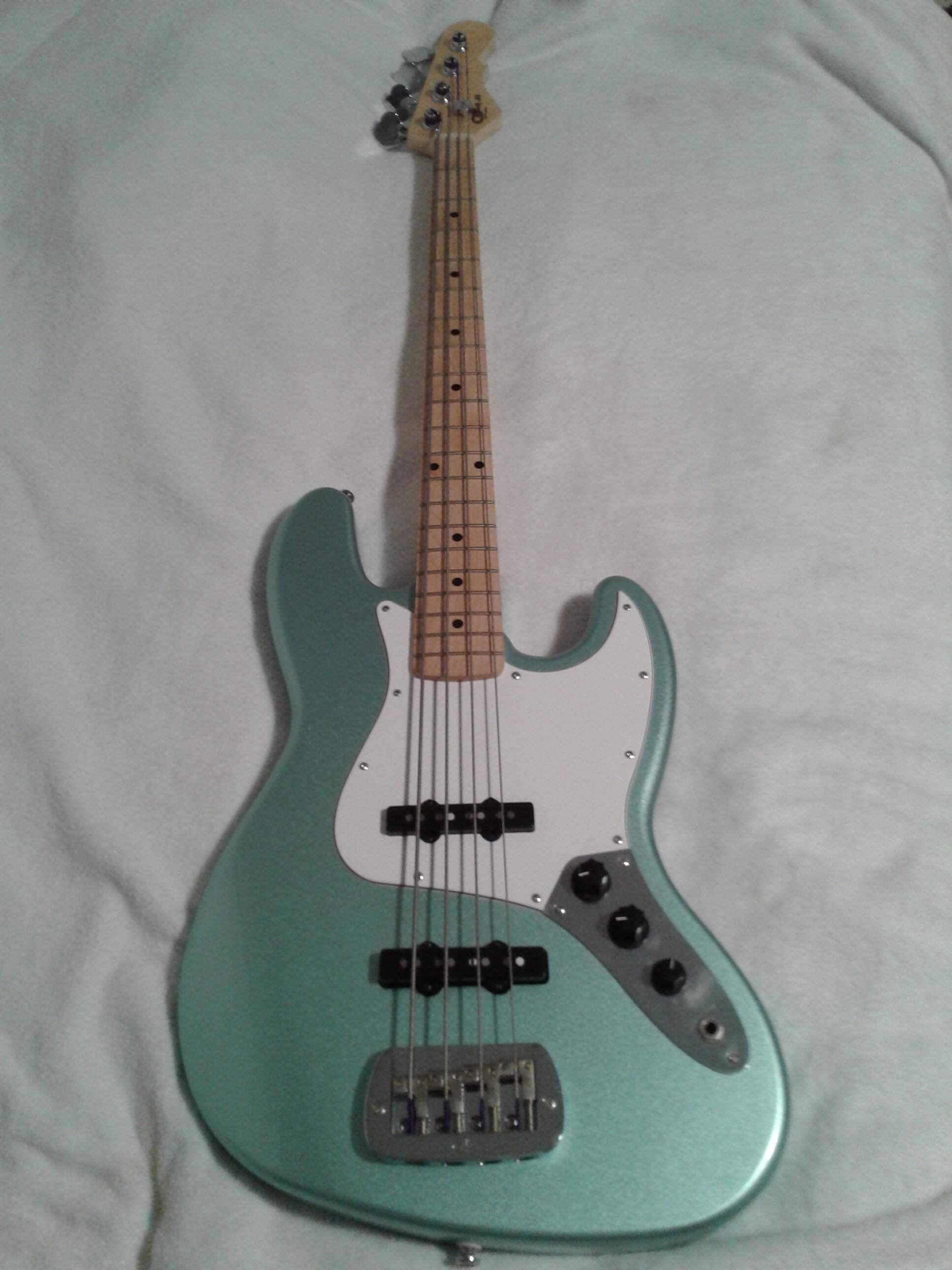
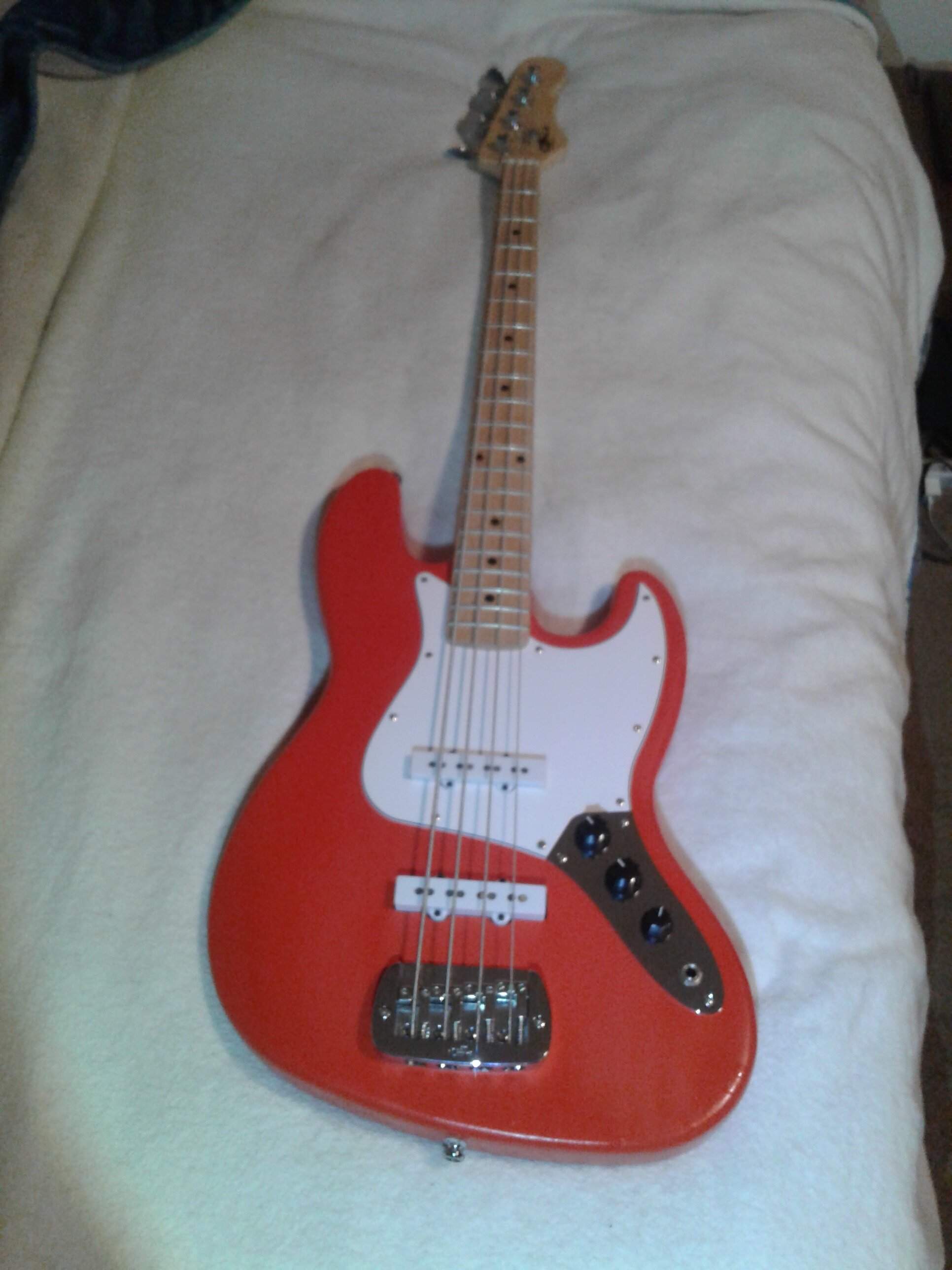

Back when the JB was released, a G&L retailer explained (on another forum) that, during development, they discovered a 20-fret neck and four-bolt attachment helped produce a more vintage J-bass tone, which they wanted for that model. IIRC, he said they were surprised how much of a difference it made. Seems like a reasonable explanation to me, because it would be more efficient to just use the same six-bolt necks as they do on other models.
Yeah I recall reading that, too. Personally I have a hard time buying into the idea that one fret difference, or 4 bolts vs 6 bolts, achieves a more "vintage" J tone (whatever that's supposed to mean). Call me skeptical but it sounds like pure marketing hype to me.
I think the real reason the JB emerged was to emulate the Fender Jazz Bass' iconic appearance, and ultimately replace the JB-2 which wasn't exactly breaking any sales records. OTOH, every maker that offers a Jazz Bass clone does so for a reason...Jazz Basses sell. Always, since forever. G&L finally figured this out, so now they make a Fender Jazz Bass themselves and can cash in on the ubiquitous classic design, same as the other cloners do.
A/B comparing a JB-2 with a JB for sound differences would be pointless because without a ginormous test sample there is no way to account for the standard deviation within each model. I can attest that JB-2's can sound a lot different from one to the next. I can't imagine why that inconsistency would be any different with the JB. What am I missing here?
Further, if G&L were mainly trying to replicate the classic Fender Jazz sound, why does the JB retain the famous G&L saddle lock bridge, which G&L has always proclaimed makes a definite tonal difference from the classic bent plate bridge? Muddy waters.
LoveThatBass
Supporting Member
Yeah I recall reading that, too. Personally I have a hard time buying into the idea that one fret difference, or 4 bolts vs 6 bolts, achieves a more "vintage" J tone (whatever that's supposed to mean). Call me skeptical but it sounds like pure marketing hype to me.
I think the real reason the JB emerged was to emulate the Fender Jazz Bass' iconic appearance, and ultimately replace the JB-2 which wasn't exactly breaking any sales records. OTOH, every maker that offers a Jazz Bass clone does so for a reason...Jazz Basses sell. Always, since forever. G&L finally figured this out, so now they make a Fender Jazz Bass themselves and can cash in on the ubiquitous classic design, same as the other cloners do.
A/B comparing a JB-2 with a JB for sound differences would be pointless because without a ginormous test sample there is no way to account for the standard deviation within each model. I can attest that JB-2's can sound a lot different from one to the next. I can't imagine why that inconsistency would be any different with the JB. What am I missing here?
Further, if G&L were mainly trying to replicate the classic Fender Jazz sound, why does the JB retain the famous G&L saddle lock bridge, which G&L has always proclaimed makes a definite tonal difference from the classic bent plate bridge? Muddy waters.
I have a Fender American Pro Jazz. Haven't played a JB-2. As far as the skinny L bridge Fender uses on their lesser expensive basses and the heavier bridge on G&L's they do add more sustain. All my basses that once had the L shaped bridge got a heavier bridge upgrade. The Fender American Pro uses a heavier bridge (not quite as heavy as the G&L) but does decent job. I love the SB-2 I now have.
I have a Fender American Pro Jazz. Haven't played a JB-2. As far as the skinny L bridge Fender uses on their lesser expensive basses and the heavier bridge on G&L's they do add more sustain. All my basses that once had the L shaped bridge got a heavier bridge upgrade. The Fender American Pro uses a heavier bridge (not quite as heavy as the G&L) but does decent job. I love the SB-2 I now have.
Right, more mass at the bridge changes the sound. Which is why G&L's claim about their 20 vs 21 frets, and 4-bolts vs 6 bolts, for a more "vintage J tone" doesn't add up. The greater mass of the G&L saddle lock bridge and how it's boss'd into the body works against how a classic (or "vintage") Jazz bass actually sounds. Same goes for modern Fender Jazz basses with hi-mass bridges...they're not going to sound exactly like the old classic Jazz basses, nor are they meant to.
Yeah, I dig my SB-2. It's amazing. However, I use a lot of that bridge pickup mixed in. In fact, I play directly through a sound system--no amp--and with the system's subs, I've often run with more of the bridge pickup mixed in than the neck pickup. That being the case, I'd like to have the MFD sound in my LB-100, but with no bridge pickup I think I'll need to be able to slightly cut the bass and boost the treble. That's where the STC-2C-BO EQ comes into play. I'm hoping 9v will do it because I can barely squeeze one battery in.
I run a lot of bridge too. That's where the "growl" really comes from for me. I think that's the genius of this bass too. Yes, the split MFD is a great sound. But placing that bridge pickup so far back and with such a different voice from the split P is what makes the SB-2 such a tonal monster. It can go big and chunky like a P, but it can go bright and growly too.

Yeah I recall reading that, too. Personally I have a hard time buying into the idea that one fret difference, or 4 bolts vs 6 bolts, achieves a more "vintage" J tone (whatever that's supposed to mean). Call me skeptical but it sounds like pure marketing hype to me.
I think the real reason the JB emerged was to emulate the Fender Jazz Bass' iconic appearance, and ultimately replace the JB-2 which wasn't exactly breaking any sales records. OTOH, every maker that offers a Jazz Bass clone does so for a reason...Jazz Basses sell. Always, since forever. G&L finally figured this out, so now they make a Fender Jazz Bass themselves and can cash in on the ubiquitous classic design, same as the other cloners do.
A/B comparing a JB-2 with a JB for sound differences would be pointless because without a ginormous test sample there is no way to account for the standard deviation within each model. I can attest that JB-2's can sound a lot different from one to the next. I can't imagine why that inconsistency would be any different with the JB. What am I missing here?
Further, if G&L were mainly trying to replicate the classic Fender Jazz sound, why does the JB retain the famous G&L saddle lock bridge, which G&L has always proclaimed makes a definite tonal difference from the classic bent plate bridge? Muddy waters.
Here's my experience on the sounding like a " vintage " JB . FWIW and YMMV LOL
I own three JB4's . They are all set up Exactly the same. Stats and strings , action, ect .The only differences are in the neck and fret material. They all three sound so different that you can pick them out blindfolded. One definitely has that 74 Fender JB sound and the others are one Darker and one Brighter . Point being, ( IMO ) is that G&L enables you to craft a JB to your personal tastes , but how it's going to sound, I feel is luck of the draw.
Ever thought about swapping necks to see if the tone moves with the neck?
I had actually given it a thought, but the color combinations would of been absolutely fugly . At least in my eyes.Ever thought about swapping necks to see if the tone moves with the neck?
Or just any color. I've only found one on reverb. Is G&L getting more popular?I've been trying to find a pharaoh gold CLF L-2000 for a couple of days now. Are they just completely out of stock?
Well said!I run a lot of bridge too. That's where the "growl" really comes from for me. I think that's the genius of this bass too. Yes, the split MFD is a great sound. But placing that bridge pickup so far back and with such a different voice from the split P is what makes the SB-2 such a tonal monster. It can go big and chunky like a P, but it can go bright and growly too.
Late 90s L2500. Its been lightly modded for outer single coil mode and also has screw inserts through the body to prevent bridge flyaway.