• TalkBass has been independent since 1998. Add your voice.
    Create a free account to reply to discussions, view embedded media, and browse with fewer display ads.
    Join freeLog in
    Want zero display ads or expanded classifieds tools? Compare plans.

Get off my LAWN! "Grumpy Old Farts"

Status
Not open for further replies.
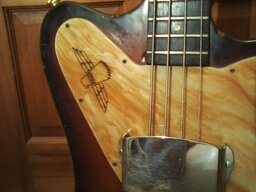
Ya mean like this(w/ custom thumbrest)
View attachment 3831112

The split pickup on the P feels designed to be maximally uncomfortable as a thumb rest. The aftermarket solution is at least functional.

Yes, they were used for that around the turn of the 20th century and well into the '30s, probably. Sleeping in "fresh" air was considered therapeutic, particularly for those thought to have TB. These days, most people don't know the term sleeping porch, even our architect either wasn't familiar with it or she had forgotten the term (perhaps architect students are not taught about that use of porches in medieval times. :smug: When preparing for the ABR and for getting the building permits we use enclosed porch to avoid the legal requirements for a "bedroom". I spec'd the window dimensions (and everything else design-wise, as usual for me) to meet egress code, for ourselves, regardless of the final use of the porch (music room, I say; bird watching observatory, she says...........).


Prior to the introduction of antibiotics, the belief that fresh air is a palliative treatment for tuberculosis was good business for people who offered fresh air cures. For the well-heeled, Swiss sanatoriums had the very best fresh air. Depending on your native culture, your tuberculosis (and consequent death) will be seen as a moral and personal failing. Yet TB was simultaneously painted as a glam disease, sort of a 19th century 27 Club. Famous People Who Died of Tuberculosis

Hard Work
is what'll cure you, some experts proclaimed. Work and fresh air ... your daily cure in some sanatoriums looks a lot like daily life in the workhouse ... Tuberculosis ravaged the poorest in society, and they didn't have a good press agent to get their stories out.
 
When cities were established they often started at a port and grew outward. I’m near a hospital/convent/sanitorium that was founded in 1645. So it’s built really well. One of many. Some were schools, others were seminaries. The nuns were nurses but many lived in seclusion as well. The walls helped with that. At the time, this location was considered out in the country. The complex is massive with a fortress with twelve foot stone walls around it.

Many of these places are being converted to condominiums for the well to do. The walls serve to keep out the riffraff.
 
Last edited:
It's the port cities where the plague takes foothold. Bordeaux comes to mind Joan of England (1335–1348) - Wikipedia, as does Genoa. The wealthy people who could afford to live by the water were the first stricken.

It's legal now to enjoy a glass of Bordeaux in Genoa. There are seaside trattoria and osteria that offer beverages and light food to pass the afternoon watch.
 
Yes, they were used for that around the turn of the 20th century and well into the '30s, probably. Sleeping in "fresh" air was considered therapeutic, particularly for those thought to have TB. These days, most people don't know the term sleeping porch, even our architect either wasn't familiar with it or she had forgotten the term (perhaps architect students are not taught about that use of porches in medieval times. :smug: When preparing for the ABR and for getting the building permits we use enclosed porch to avoid the legal requirements for a "bedroom". I spec'd the window dimensions (and everything else design-wise, as usual for me) to meet egress code, for ourselves, regardless of the final use of the porch (music room, I say; bird watching observatory, she says...........).
In the American midwest, they were where people slept in summer. The heat and humidity made bedrooms horrible. The sleeping porches were always on the back of the house for privacy, and had windows on three sides for catching any breeze that might be going. Folding metal beds were often kept there, and sheets could be hung up on overhead lines during the day to air and dry.

Edited to add....These were common in nicer middle class neighborhoods. You needed an upper story, large leafy back yard, and money for extra space in your home.
 
Last edited:
It's the port cities where the plague takes foothold. Bordeaux comes to mind Joan of England (1335–1348) - Wikipedia, as does Genoa. The wealthy people who could afford to live by the water were the first stricken.

It's legal now to enjoy a glass of Bordeaux in Genoa. There are seaside trattoria and osteria that offer beverages and light food to pass the afternoon watch.
In Spanish America, most countries had a seaport as largest city, but the capitals were inland and higher...provided protection from malaria and marauding pirates.
 
Bordeaux must stem from borde eau french for edge of the water. Bordello seems to be another variation. The port area was a hive of activity. Factories were established there. Large windows to take in the sunlight for the workers. Nice buildings today.

Near the port were canals lined with even more factories. Barges were used to transport raw materials and goods on the canals.

At the same time there were train yards. They built steam locomotives there. It was a time of expansion on a scale like never before experienced. Many of these factories were mobilized for production in WWII. After that buildings were slowly abandoned in favor of the suburbs. Here was value in the buildings so they remained. Ground floors were rented out to businesses. Even in the 80’s some areas that I’d walk in were like a ghost town in the evening. The old buildings have been renovated now and many converted into housing.
 
Last edited:
My grandmothers turn of the century house had a second floor sleeping room in the back. It was unsafe to go into for fear that it would fall off the building. The house was well built but the porch seemed to be an afterthought addition. Many houses seemed to have the same issue, also with balconies. There was rot. Perhaps because there wasn’t enough roof overhang.
 
Last edited:
My grandmothers turn of the century house had a second floor sleeping room in the back. It was usafe to go into for fear that it would fall off the building. The house was well built but the porch seemed to be an afterthought addition. Many houses seemed to have the same issue, also with balconies. There was rot. Perhaps because there wasn’t enough roof overhang.
Or perhaps built by people with hangovers.;)
 
The split pickup on the P feels designed to be maximally uncomfortable as a thumb rest. The aftermarket solution is at least functional.


Prior to the introduction of antibiotics, the belief that fresh air is a palliative treatment for tuberculosis was good business for people who offered fresh air cures. For the well-heeled, Swiss sanatoriums had the very best fresh air. Depending on your native culture, your tuberculosis (and consequent death) will be seen as a moral and personal failing. Yet TB was simultaneously painted as a glam disease, sort of a 19th century 27 Club. Famous People Who Died of Tuberculosis

Hard Work
is what'll cure you, some experts proclaimed. Work and fresh air ... your daily cure in some sanatoriums looks a lot like daily life in the workhouse ... Tuberculosis ravaged the poorest in society, and they didn't have a good press agent to get their stories out.

Yeah, that sharp edge digging into my thumb was not a highlight. The thumb rest also allows flexibility in thumb-therefore finger-placement: forward for deep/mellow, to the rear(harch!)for brighter.
 
In Spanish America, most countries had a seaport as largest city, but the capitals were inland and higher...provided protection from malaria and marauding pirates.

Malaria, Italian for "Bad Air" (mal + aria). That Bad Air / Good Air thing again.

There was a time when people with no understanding of disease and disease vectors hawked false hopes and false cures.

There's a lot of coughing in La bohème. Unaware of any operas about malaria. There's probably some pop or blues songs about malaria?

There goes papa fox again. The fox kits were at play with a field mouse or vole right outside my window a day or three ago.
 
In the American midwest, they were where people slept in summer. The heat and humidity made bedrooms horrible. The sleeping porches were always on the back of the house for privacy, and had windows on three sides for catching any breeze that might be going. Folding metal beds were often kept there, and sheets could be hung up on overhead lines during the day to air and dry.

Edited to add....These were common in nicer middle class neighborhoods. You needed an upper story, large leafy back yard, and money for extra space in your home.
Same thing on my father's childhood home, since burned down, in Harpers Ferry, WV. It was on the side of the house, completely shaded by large trees. It was a cool, delightful place for young kids to horse around when we visited my grandmother.
 
In the American midwest, they were where people slept in summer. The heat and humidity made bedrooms horrible. The sleeping porches were always on the back of the house for privacy, and had windows on three sides for catching any breeze that might be going. Folding metal beds were often kept there, and sheets could be hung up on overhead lines during the day to air and dry.

Edited to add....These were common in nicer middle class neighborhoods. You needed an upper story, large leafy back yard, and money for extra space in your home.


In Peru where I live half the year almost all buildings and especially large apartment buildings have a central maybe 10' x 10' vent that goes up from the first floor (usually parking) to the roof and the bathrooms have closeable window-vents that we leave open most of the year and the wind comes in all the bedroom, living room etc. windows and goes out the bathroom windows, it's better than AC. Individual homes also have these bathroom windows but of course the air vents they're hooked to are much smaller. We're on the ninth floor and it's always cool up here, the climate here is very moderate anyway though especially in Lima which is surrounded by mountains and is on the West coast, it goes from about the high 50's in winter to mid 80's in summer. Can be quite humid here at times though especially in the winter which makes it feel colder than it is. We're in fall now, seasons are opposite here on the other side of the equator.
 
Last edited:
I'm probably going to send out the Mikro and have the second volume control converted to a "Blend" control. I'm also thiking of having them convert the pickup covers and control knobs to cream colored. For some reason I've alsways like cream colored pickups.
My first Alembic had cream covers on their pickups (P/J style). I ordered black replacements for them! :D
My grandmothers turn of the century house had a second floor sleeping room in the back. It was usafe to go into for fear that it would fall off the building. The house was well built but the porch seemed to be an afterthought addition. Many houses seemed to have the same issue, also with balconies. There was rot. Perhaps because there wasn’t enough roof overhang.
Nothing's changed, as that is still a moderately common issue with added-on decks.

Invalid Link Removed
In Peru where I live half the year almost all buildings and especially large apartment buildings have a central maybe 10' x 10' vent that goes up from the first floor (usually parking) to the roof...
Are these strictly for ventilation, or, is there a courtyard at the base of them.
 
In Peru where I live half the year almost all buildings and especially large apartment buildings have a central maybe 10' x 10' vent that goes up from the first floor (usually parking) to the roof and the bathrooms have closeable window-vents that we leave open most of the year and the wind comes in all the bedroom, living room etc. windows and goes out the bathroom windows, it's better than AC.

Individual homes also have these bathroom windows but of course the air vents they're hooked to are much smaller. We're on the ninth floor and it's always cool up here, the climate here is very moderate anyway though especially in Lima which is surrounded by mountains and is on the West coast, it goes from about the high 50's in winter to mid 80's in summer. Can be quite humid here at times though especially in the winter which makes it feel colder than it is. We're in fall now, seasons are opposite here on the other side of the equator.

That vent sounds like a lesson we Americans can learn. I can't even imagine how much Americans spend on air conditioning. That venting idea in your building sounds like a simple brilliant solution.
 
I thought swamp coolers were the be-all and end-all in American engineering? ;)
Agreed. We have a really old swamp cooler I bought maybe 20 years ago. It's a square box with a 12" fan and a water drip system. It uses some sort of wood netting system where the water drips down behind the fan and the fan pushes out cool air. It's actually a wooden screen. I've looked online and they don't even make this model anymore. Wish I could get one more.
 
My first Alembic had cream covers on their pickups (P/J style). I ordered black replacements for them! :D

Nothing's changed, as that is still a moderately common issue with added-on decks.

Invalid Link Removed
Are these strictly for ventilation, or, is there a courtyard at the base of them.

These are for ventilation and are right in the middle of the buildings usually, the openings are in the ceilings of the parking lots beneath the buildings, they go right to the roofs, there are parks every few blocks here though, they maintain them as Lima is built on a desert, everything is irrigated. Every town here has a big park in the middle where the government buildings, hotels etc are called La plaza de armas kind of like our commons but a lot bigger.
 
Status
Not open for further replies.