• TalkBass has been independent since 1998. Add your voice.
    Create a free account to reply to discussions, view embedded media, and browse with fewer display ads.
    Join freeLog in
    Want zero display ads or expanded classifieds tools? Compare plans.

Gibson Basses - Now Even More Disappointing?

Status
Not open for further replies.
Especially since nowadays all anyone talks about is how EASY it is to just find a job.

:rollno:

and that's Gibson's fault?

davesignatureII.gif
 
and that's Gibson's fault?

No? Where did I suggest such a thing?

It's blatantly unethical for Gibson to take advantage of their workers by creating abusive working conditions during a time when their workers are faced with no option but unemployment. If you feel that ethics has no place in business, or that the free market will somehow make men out of monsters, then continue to cherish your disconnect from reality; there is nothing more for us to discuss.
 
no it is not... the company and the workers are EQUAL!

company: here is the job, take it or leave it.
worker: here are the conditions under which I will work for you, take it or leave it.

EQUAL... the company does not owe the workers anything other than an hour's pay for an hours' work. the worker does not owe the company anything other than an hour's work for an hour's pay.

davesignatureII.gif
 
You obviously have an unchangeable opinion that isn't even remotely grounded in reality or even in economic theory, since there is absolutely no version of the free market that implies equality of workers. Never in history has the employment elasticity been anything close to what you're describing, and never in any free market theory could that be the case.

I'll quit clogging up this thread with what are now becoming off-topic posts. I suggest you do some research as to the true nature of free-market economies. Whether or not they are beneficial is a totally separate discussion, but they are certainly nothing like you're describing.
 
It'd be equal if workers had an alternative career waiting for them elsewhere.

Not that this situation is Gibson's fault...

no it is not... the company and the workers are EQUAL!

company: here is the job, take it or leave it.
worker: here are the conditions under which I will work for you, take it or leave it.

EQUAL... the company does not owe the workers anything other than an hour's pay for an hours' work. the worker does not owe the company anything other than an hour's work for an hour's pay.

davesignatureII.gif

Edit: I'm going to derail a bit so I can combat the glibness in the argument of worker demands vs employer demands:

Argument: Fewer businesses are employing (whatever the reason). Workers eventually submit to working conditions of employer. Employer prospers.
Unspoken Necessity: Pay and benifits will continue to drop until employers are competitive. Employees have no choice but to go along with it, because there are no alternatives.
Unspoken conclusion: After the standard of living is ground down to competitive levels, businesses will have to compete with other businesses, and workers will then be able to take their employment elsewhere.
Unspoken conclusion: ****'s gonna suck till then.

I just remind everyone who is a dogmatic follower of the idea of an unfettered free market to remember that.

Please return to the regularly scheduled anti-gibson thread.
 
no it is not... the company and the workers are EQUAL!

company: here is the job, take it or leave it.
worker: here are the conditions under which I will work for you, take it or leave it.

EQUAL... the company does not owe the workers anything other than an hour's pay for an hours' work. the worker does not owe the company anything other than an hour's work for an hour's pay.

davesignatureII.gif

Dave. You need to get in a spaceship and visit planet Earth some day. We do things differently here.
 
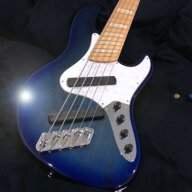
I didn't think there was anything wrong with the finish. it's just that you can see the woodgrain, like they didn't fill the grain before painting it, but it wasn't horrible. it wouldn't bother me if I owned the bass.
 
I'm not understanding the criticism of the finish as being "bad" or "poor". Because it's (apparently) not high-gloss, it's bad? Help me out here. *puzzled*

Here's where I'm coming from:

I've seen my share of Gibson guitars (in friends' collections - I don't play guitar) & they're generally smooth & glossy... I've kinda wanted a T-bird for sometime & assumed the finish would be the same smooth gloss - now I have concerns....

Basically I'm disappointed.

I completely understand hand applied finishes, translucent or even "open pore" - especially if the wood deserves to be seen. If Gibson meant to do that - as it seems is the case, I'm O.K. with their decision, it's just not for me...

I think I need help understanding Gibson's decision - was this kind of finish standard at any time in their history? does it harken back to their glory days? Maybe someone with paint experience can chime in, but it looks (to me) like an "easier" way to crank out instruments than take the extra time to fill & polish?
 
well, they certainly do things different in asia, mexico etc where most of our manufacturing jobs have fled because of this attitude of " i am the worker and you owe me!"

Good point. The problem of hugely increased profit margins because of astronomically lower standards of living in third-world countries mixed with the tax benefits of sending jobs overseas is definitely caused by the workers and not the companies.

If you ever do consider visiting earth, as smcd suggested, you're free to crash on my couch free of charge. Perhaps I can teach you something about economics as well!

 
Good point. The problem of hugely increased profit margins because of astronomically lower standards of living in third-world countries mixed with the tax benefits of sending jobs overseas is definitely caused by the workers and not the companies.

If you ever do consider visiting earth, as smcd suggested, you're free to crash on my couch free of charge. Perhaps I can teach you something about economics as well!

he admits he has lost the argument when he strikes the first blow...

instead of ad hominem attacks on me, please point out where i am wrong... oh, i'm sorry, you already admitted I was RIGHT (in that our manufacturing jobs have fled the country)

economics 101... the law of supply and demand. if i can't sell anything because my labor costs are too high, i must change something. in this case, the change is to export jobs and import products.

davesignatureII.gif


ps- edit- and please don't make the argument that it's moral... it is no more moral or immoral for a company to do what it thinks best than it is moral or immoral for a worker to do what he/she thinks best.
 
Here's where I'm coming from:

I think I need help understanding Gibson's decision - was this kind of finish standard at any time in their history? does it harken back to their glory days? Maybe someone with paint experience can chime in, but it looks (to me) like an "easier" way to crank out instruments than take the extra time to fill & polish?

They have been making them like that for YEARS. I have a 2006 with that finish (not that color) all the Faded guitars & basses are like that. You need to see it in person. The Mahogany looks nice.

Don't knock it until you have played one. The neck is as slick as can be and a true pleasure to play.
 
Here's where I'm coming from:

I've seen my share of Gibson guitars (in friends' collections - I don't play guitar) & they're generally smooth & glossy... I've kinda wanted a T-bird for sometime & assumed the finish would be the same smooth gloss - now I have concerns....

Basically I'm disappointed.

I completely understand hand applied finishes, translucent or even "open pore" - especially if the wood deserves to be seen. If Gibson meant to do that - as it seems is the case, I'm O.K. with their decision, it's just not for me...

I think I need help understanding Gibson's decision - was this kind of finish standard at any time in their history? does it harken back to their glory days? Maybe someone with paint experience can chime in, but it looks (to me) like an "easier" way to crank out instruments than take the extra time to fill & polish?


Gibson has at several times offered different finishes on Thunderbirds including ebony stain which does show the pores of the wood - so intentional. They have also in times past offered gloss colors other than the now standard S/B, they are sealed and painted so grain is not apparent.
QC is similar to any larger manufacturer, you can read any number threads here on TB about QC from various makers.
I had the opportunity to have a 2011 short scale Thunderbird for about a month earlier this year, there were no QC issues of any kind whatsoever, the bass played and sounded great -If I had kept it I would have had Mike Lull set it up to my liking - that however would have been my preference not a fault of Gibson.
 
The cost of finishing is one of the biggest if not the single largest 'manpower' costs of a shop like Gibson and Fender. It doesn't surprise me that they're going in this direction as it saves a bunch of time and manpower.

Less sanding & sealer, fewer coats of paint, less drying time, less between coat prep, and final buffing is down to a minimum. The dead time in between each of the stages is also cut down, so their production line moves faster. Add that to the 'thinner finish means my wood BREATHES, MAN!' attitude, and here we are. Fender rocked this style with the Highway 1 instruments too.

Not really my thing.
 
economics 101... the law of supply and demand. if i can't sell anything because my labor costs are too high, i must change something. in this case, the change is to export jobs and import products.

Your first economics lesson--the stuff from economics 101 is a terrible way to attempt to explain any real-world situation. Econ 101 is a particularly inefficient way to explain global economics, since it deals with single-market models and even the smallest market you can imagine can't be explained fully by a single-market model.

The second--your labor costs are cheaper elsewhere because the standard of living is lower elsewhere. You could produce the same goods in the U.S. at a much lower profit, but still profit. This model only works as long as the standard of living remains high in the U.S. though--otherwise, a company has no way to sell its goods. The market sector in the U.S. that can afford, say, Funstring Guitars is much higher than the market sector in China, since their workers are willing to do the same work for an amount of money that is barely living wage, even for them.

However, over time, we're going to face the reality that our market's ability to afford these guitars will disappear, because all of our actual wealth will be overseas. Our labor markets will diminish, and the global economy will devalue our dollar because our market, without consumers, will be totally devoid of any material wealth to back up our treasury (sounding familiar?).

It's not a "free market" when your market can leech off another weak market. No U.S. worker could live off of less than a dollar an hour. A worker in a third-world country can. The part you don't grasp is that the SAME COMPANIES who are exporting this labor are ALSO keeping prices high in the U.S. This means that our credit markets expand with high volatility (as in the housing crisis) as more and more small businesses must rely on credit or close completely, which forces even more labor out of the country, etc.

There's not one sane global economist who would argue that exporting jobs is a symptom of the free market. That's ignorant middle-school level economic thinking.
 
Status
Not open for further replies.

Latest posts