
Enjoy the benefits of a premium membership!
Upgrade Account
-
TalkBass has been independent since 1998. Add your voice.
Create a free account to reply to discussions, view embedded media, and browse with fewer display ads.
Join free Log in
Want zero display ads or expanded classifieds tools? Compare plans.
You are using an out of date browser. It may not display this or other websites correctly.
You should upgrade or use an alternative browser.
You should upgrade or use an alternative browser.
Gibson Ripper Club!
- Thread starter A. D. Fairhurst
- Start date
More options
Who Replied?

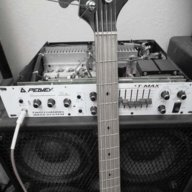
I'm going to disagree about the E string. What I am seeing is a nut slot that is too wide and a smidge deeper than for the other three strings. I think this is the cause of the open-string buzz.
As to the bridge, these are workable but require a quite different approach than from most other bridges.
As to the bridge, these are workable but require a quite different approach than from most other bridges.

I'm going to disagree about the E string. What I am seeing is a nut slot that is too wide and a smidge deeper than for the other three strings. I think this is the cause of the open-string buzz.
As to the bridge, these are workable but require a quite different approach than from most other bridges.
I was wondering about that too, but I think I need to get the long scale string on there first.
Once the wound part of the string sits properly in the groove - that groove might fit. As you see in the picture the unwound string is about 1/2 the diameter of the wound and that might account for the depth & width issues.
maybe.

I was wondering about that too, but I think I need to get the long scale string on there first.
Once the wound part of the string sits properly in the groove - that groove might fit. As you see in the picture the unwound string is about 1/2 the diameter of the wound and that might account for the depth & width issues.
maybe.
If there is a way to mount the string without going thru-body, that might buy you enough additional length to run your tests without having to buy additional strings.

I generally defend the three point bridge , I’ve got several of them . I always manage to get things exactly where I like them , and then forget about it . I’ve considered drop in replacements , but never actually purchased one . You can use a spacer at the ball end to avoid the problem with the nut .
That spacer at the ball end isn't really to alieviate nut problems, rather has more to do with having the thicker wind of the string not rest on the saddle itself.
If there is a way to mount the string without going thru-body, that might buy you enough additional length to run your tests without having to buy additional strings.
Three point bridges can be top loaded also. Which would help if you just wish to use long scale strings. However, i'll guess most of us enjoy the string through capabilities of the ripper bass, so extra long scale is needed to clear every component.
I'm going to disagree about the E string. What I am seeing is a nut slot that is too wide and a smidge deeper than for the other three strings. I think this is the cause of the open-string buzz.
With the too-short string sitting on the tapered single winding instead of the triple winding, you've effectively decreased the nut height by approximately .015. (I get this figure from taking the diameter of a typical E string and subtracting the diameter of the typical taper, then dividing by two. .105 - .75 = .30, /2 = .015.
There is plenty of argument over nut height, but I see .010-.020 as a typical range. I can't find anyone who recommends a figure over .020.
Therefore, sitting on the taper is nearly guaranteed to leave your open E sitting on the frets. (Unless your nut is cut too high, to the point of dragging your first several frets well out of tune. Sadly, a lot of basses leave the factory this way!)
Last edited:
With the too-short string sitting on the tapered single winding instead of the triple winding, you've effectively decreased the nut height by approximately .015. (I get this figure from taking the diameter of a typical E string and subtracting the diameter of the typical taper, then dividing by two. .105 - .75 = .30, /2 = .015.
There is plenty of argument over nut height, but I see .010-.020 as a typical range. I can't find anyone who recommends a figure over .020.
Therefore, sitting on the taper is nearly guaranteed to leave your open E sitting on the frets. (Unless your nut is cut too high, to the point of dragging your first several frets well out of tune. Sadly, a lot of basses leave the factory this way!)
I would agree. After my post I went back and reviewed the pic a couple more times. Only then did I see the triple wound part of the string far nearer toward the bridge than it should be. Initially I was too focused on the nut to see this.

I use super extra long d’addario chromes. I played for a long time with just the extra long strings on my ripper. I can’t remember much buzz, but the cloth at the end of the strings definitely hung over the nut. So I’m sure some the strings sucked at the the first few frets. I joined this club after reading old post of people trying to figure out string length. Super extra longs work magic. Like “butter”.

IMMusicRulz
Commercial User
One of the most well known users of the Gibson Ripper was Greg Lake of ELP, who used the Ripper in tandem with his sunburst Jazz Bass on the 1973 album Brain Salad Surgery, and on the live album Welcome Back My Friends To The Show That Never Ends.
Photobucket | The safer way to store your photos
His may have been a prototype Ripper, or a stock 1973. It was originally a natural Gibson Ripper, but Greg allegedly had it refinished black with a maple fingerboard l
Photobucket | The safer way to store your photos
His may have been a prototype Ripper, or a stock 1973. It was originally a natural Gibson Ripper, but Greg allegedly had it refinished black with a maple fingerboard l
I wish Epiphone would do an accurate reissue of the Ripper.
Would be cool if they also did the Grabber & G3 accurately (maybe the RD standard in the mix).
IMMusicRulz
Commercial User
They have a natural Gibson Ripper for $500 at my local guitar store. I think I’m gonna have to sell some of my hair to afford that Ripper! 
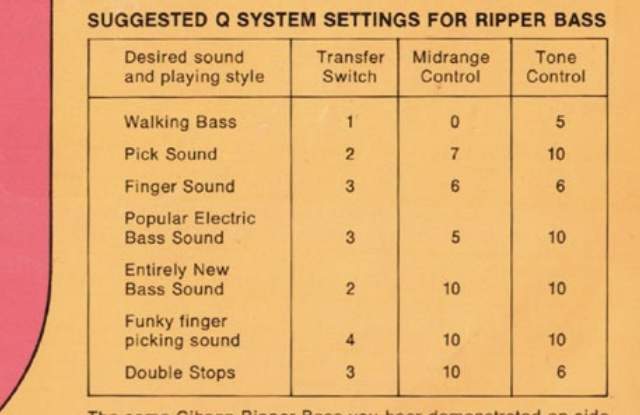
I figured whom ever hasn’t seen this would dig it, and It needs to live on this thread. From the 70’s Gibson ripper record. How do you rip your ripper?
IMMusicRulz
Commercial User
I would usually play a Gibson Ripper with a pick. Mike Dirnt of Green Day used a Ripper and a Gibson G3, and I believe Chris Squire of Yes also used a Gibson Ripper, though no photos of it exist. I do know, however, that Chris Squire also used a Thunderbird.
Did you buy the $500 Ripper?I would usually play a Gibson Ripper with a pick. Mike Dirnt of Green Day used a Ripper and a Gibson G3, and I believe Chris Squire of Yes also used a Gibson Ripper, though no photos of it exist. I do know, however, that Chris Squire also used a Thunderbird.
I would usually play a Gibson Ripper with a pick. Mike Dirnt of Green Day used a Ripper and a Gibson G3, and I believe Chris Squire of Yes also used a Gibson Ripper, though no photos of it exist. I do know, however, that Chris Squire also used a Thunderbird.
Mike Dirnt only had the G3 in that series of basses. Gene Simmons had the Grabber & Ripper (though he played the Grabber dominantly). Krist Novoselic of Nirvana played the Ripper a lot (along with his Thunderbirds, RD standard/artist, & his famed Ibanez Black Eagle).
IMMusicRulz
Commercial User
No. But I should.Did you buy the $500 Ripper?

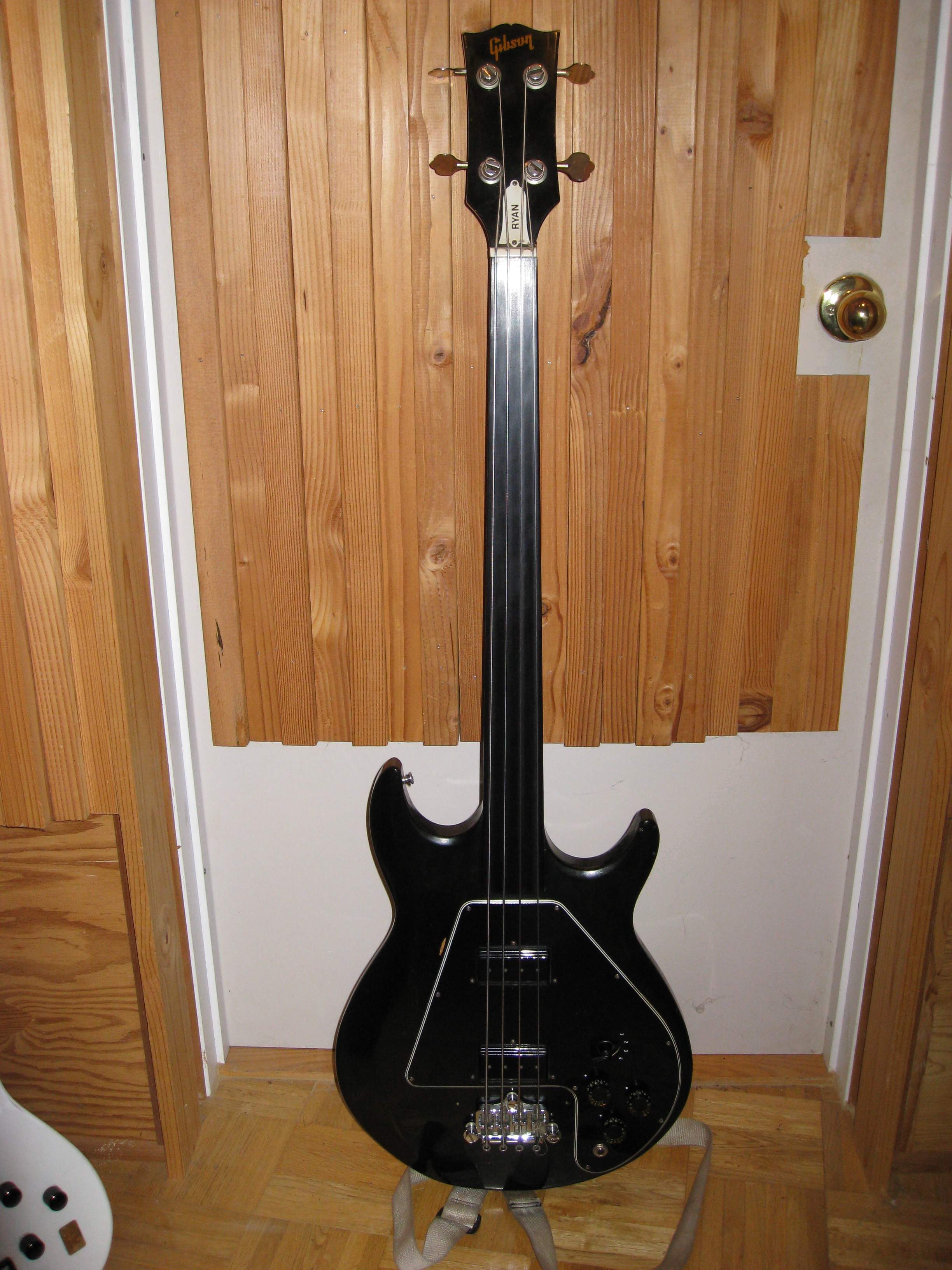
Here's my '77. First and only bass I ever bought new - from Kalamazoo!
Bought to replace a stolen '68 EB-3.
Still play it daily. A hefty axe. 

A lotta laquer worn off the back of the neck

Bought to replace a stolen '68 EB-3.
Still play it daily. A hefty axe.
A lotta laquer worn off the back of the neck
Last edited:


