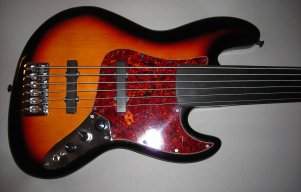
I had a love-hate relationship with my '64 for years.
I loved the way it felt and the way the tone sat in a mix, but there were little things that bugged me. I didn't like the dead spot on the G string, upper fret access was restricted (I was a soloing fool back then), it was head-heavy, and it didn't have quite enough sustain for slow ballads- I always had to keep a compressor in my gig bag.
Since nothing else seemed to work quite as well on the gig, I became obsessed with the idea of a "super P"- sticking close to the traditional Fender formula, but with exotic hardwoods, better balance, a set neck or a neck-through and a deeper cutaway. A few years later, a fifth string became part of my wish list.
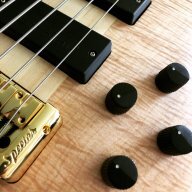
20 years later, I'm playing my dreamboat. With an EMG 40P5 in the neck, it's voiced like a P-bass, and can pass for one at times. The lockdown bridge, harder body wood and a solid neck joint improved the sustain and created a more even response across the fingerboard, just like I'd always imagined.
The funny thing is that I've come to realize that each "improvement" comes at a cost. It turns out that the wonky decay characteristics and other imperfections of Leo's design are part and parcel of that organic P-bass punch. Don't get me wrong, I'm not knocking my "hot rod". For the music I play most of the time, it's a step up from my old P. But after extensive tinkering with pickups and the rest of my signal chain, I've come to accept that it will always be a little too "polite" and compressed-sounding for some situations.
If I was back to playing straight ahead guitar-dominated rock, my coffee table bass would be tucked away in a closet, and I'd be back to a bone-stock P-bass in a flash.
Bring it all on- the neck held on with wood screws, the delicate nitro finish, a vintage bridge w/floppy threaded saddles, neck dive from vintage elephant ear tuners, the whole shebang. That setup seems to come together in a way that nothing else ever has for me...
I loved the way it felt and the way the tone sat in a mix, but there were little things that bugged me. I didn't like the dead spot on the G string, upper fret access was restricted (I was a soloing fool back then), it was head-heavy, and it didn't have quite enough sustain for slow ballads- I always had to keep a compressor in my gig bag.
Since nothing else seemed to work quite as well on the gig, I became obsessed with the idea of a "super P"- sticking close to the traditional Fender formula, but with exotic hardwoods, better balance, a set neck or a neck-through and a deeper cutaway. A few years later, a fifth string became part of my wish list.
20 years later, I'm playing my dreamboat. With an EMG 40P5 in the neck, it's voiced like a P-bass, and can pass for one at times. The lockdown bridge, harder body wood and a solid neck joint improved the sustain and created a more even response across the fingerboard, just like I'd always imagined.
The funny thing is that I've come to realize that each "improvement" comes at a cost. It turns out that the wonky decay characteristics and other imperfections of Leo's design are part and parcel of that organic P-bass punch. Don't get me wrong, I'm not knocking my "hot rod". For the music I play most of the time, it's a step up from my old P. But after extensive tinkering with pickups and the rest of my signal chain, I've come to accept that it will always be a little too "polite" and compressed-sounding for some situations.
If I was back to playing straight ahead guitar-dominated rock, my coffee table bass would be tucked away in a closet, and I'd be back to a bone-stock P-bass in a flash.
Bring it all on- the neck held on with wood screws, the delicate nitro finish, a vintage bridge w/floppy threaded saddles, neck dive from vintage elephant ear tuners, the whole shebang. That setup seems to come together in a way that nothing else ever has for me...