• TalkBass has been independent since 1998. Add your voice.
    Create a free account to reply to discussions, view embedded media, and browse with fewer display ads.
    Join freeLog in
    Want zero display ads or expanded classifieds tools? Compare plans.

Graphite necks vs. headstock tuners?

... some of the other advantages of graphite necks:
- uniform tone across the neck
- reduced twist and warp (but possibly a sterile tone)
- improved sustain and harmonics

Sterile tone on the graphits is a real long term rumor, probably by some who never played one. My XQ5A/Moses has a most dramatic spectrum to nearly any desired tone, similar to the MM Cutlass I which a friend lend me for a while in the '70s. Both have a way tremendous punch & attack, rich overtones and endless sustain.To mention is the low B that comes in 2.20m grand piano tone, i never had a bass with such unique properties before... even the L2-5 has to stand a little back but scores with its tuning stability for aeons and its petiteness.

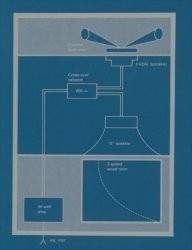
Steinberger XQ5A Moses.jpg
 
  • Like
Reactions: Spectre Gunner
Well, I've owned 3 Modulus basses since 2004 (all graphite necks obviously) and over the last couple years, used the TC Electronic head stock tuner, mostly for practice and rehearsal (just 2 Quantums these days). They still stay in tune amazingly well and are usually in tune or slightly out, both sharp and flat.. no specific pattern. I live in New England and play many gigs in super cold weather and then hot, humid seaside gigs and the stability of the Moddy necks are perfect for me. I bought two of the tuners - one for home and the other lives in my gig bag; I say check them out. They are cheap money, small, accurate and great to see in low light, bar gigs.
IMG_0044.jpg
 
  • Like
Reactions: BergerHead
Well put, @Roland GR 88 ! My sentiments exactly. I'm an old timer and that's how the old timers taught me. Also, do graphite necks make the neck heavier? I don't know, never owned one. I check my tuning every time I start playing my bass.

I recently tried a Fender Jazz that had been fitted with a graphite neck. The neck felt great, but the bass was noticeably neck heavy, for me, it was unacceptable. I'm not saying this is the case with Graphite basses in general, just in this case.

Also, agree that the TC headstock tuners are great.
 
  • Like
Reactions: alaskaleftybass
as for headless systems, they need to be extra stable or it would drive everyone nuts because unlike a regular bass you can’t really pluck a string And adjust the tuner simultaneously unless you’re plucking the string with your fretting hand or something.

I don't get ^^^this.
Regardless of where the tuning machines are located, I'm never tuning with open strings. Always harmonics.
So on a "normal" (headed) bass I'm stopping a natural harmonic with my fretting hand, plucking the string with my other hand, then reaching up to the tuning machine with the fretting hand that was stopping the harmonic.
On a headless bass I'm stopping a natural harmonic with my fretting hand, plucking the string with my other hand, then reaching down to the tuning machine with the plucking hand ...one could argue that it's actually easier on the headless instrument, but at the very least it's neither easier nor harder.
 
  • Like
Reactions: Mark Ambler
I don't get ^^^this.
Regardless of where the tuning machines are located, I'm never tuning with open strings. Always harmonics.
So on a "normal" (headed) bass I'm stopping a natural harmonic with my fretting hand, plucking the string with my other hand, then reaching up to the tuning machine with the fretting hand that was stopping the harmonic.
On a headless bass I'm stopping a natural harmonic with my fretting hand, plucking the string with my other hand, then reaching down to the tuning machine with the plucking hand ...one could argue that it's actually easier on the headless instrument, but at the very least it's neither easier nor harder.
I do use harmonics when Im checking intonation. But if the intonation is off and you only tune with a harmonics the open strings can be out of tune.
 
Which harmonic? And why?

12th fret. Because it's easier for electronic tuners to latch on to the fundamental that way.


I do use harmonics when Im checking intonation. But if the intonation is off and you only tune with a harmonics the open strings can be out of tune.

If the intonation is off you have bigger problems than just "my bass is out of tune".
 
Sterile tone on the graphits is a real long term rumor, probably by some who never played one. My XQ5A/Moses has a most dramatic spectrum to nearly any desired tone, similar to the MM Cutlass I which a friend lend me for a while in the '70s. Both have a way tremendous punch & attack, rich overtones and endless sustain.To mention is the low B that comes in 2.20m grand piano tone, i never had a bass with such unique properties before... even the L2-5 has to stand a little back but scores with its tuning stability for aeons and its petiteness.

View attachment 3763516

It’s a massive rumor/myth. There’s no denying it’s a different sound, but sterile it is not. In my experience the pickups are a huge part of the equation that could be leading to this conclusion. Everyone has their own idea of what bass should sound like, and the Bartolini pups and preamp found on many Modulus basses is just not my thing. Once I switched that over to an all EMG setup in my Q5 it was night and day better. My GG also has an all EMG setup with two J type pickups and it sounds phenomenal.
 
  • Like
Reactions: Greenstreet
It’s a massive rumor/myth. There’s no denying it’s a different sound, but sterile it is not. In my experience the pickups are a huge part of the equation that could be leading to this conclusion. Everyone has their own idea of what bass should sound like, and the Bartolini pups and preamp found on many Modulus basses is just not my thing. Once I switched that over to an all EMG setup in my Q5 it was night and day better. My GG also has an all EMG setup with two J type pickups and it sounds phenomenal.

My only experience with graphite is with the ones Ned Steinberger was making back in the 1980s, I'm sure the technology has come a long way since then, but those old Steinbergers had a very crisp attack and very little bloom- it was enough of a turn-off to me that I've never had any interest in checking out graphite any further.


.
 
Based on my experience -- I currently own three graphite-necked basses, two of which I've owned for over 35 years -- the #1 advantage of a graphite neck is consistent, uniform tone over the entire range of the instrument. Every note on the fingerboard speaks with the same clarity, authority, attack, and timbre.
And to some, that tone is consistently cold and lifeless.
 
  • Like
Reactions: JimmyM
Sterile tone on the graphits is a real long term rumor, probably by some who never played one.
I suspect much of this comes from early graphite basses being associated with rather hi tech basses with fancy electronics, Alembic, Steinberger, Modulus, Zon. We associate cause with any difference we're aware of and often miss the mark. You didn't see a lot of graphite necks with passive P pickups so we make the graphite the cause of the tone. Add to that people buying graphite necks tend to favor less traditional sounds and a new truth is born.
 
I do use harmonics when Im checking intonation. But if the intonation is off and you only tune with a harmonics the open strings can be out of tune.
No, the harmonic of the string is always a fraction of the open string. The intonation of the frets it is not touching have no bearing on that. It is impossible for a properly working string to have a harmonic be out of synch with the open string.