I recently got a Squier Jazz Bass V so it's 4+1. As I've also been playing a Fender 4 string for a few years, I sometimes twist the last top tuner expecting it to be the G, but of course it's the D. Then I remember there's another cloverleaf on the bottom. Slowly getting used to it...

Enjoy the benefits of a premium membership!
Upgrade Account
-
TalkBass has been independent since 1998. Add your voice.
Create a free account to reply to discussions, view embedded media, and browse with fewer display ads.
Join free Log in
Want zero display ads or expanded classifieds tools? Compare plans.
You are using an out of date browser. It may not display this or other websites correctly.
You should upgrade or use an alternative browser.
You should upgrade or use an alternative browser.
Headstock fivers: two by three or three by two?
- Thread starter scottfeldstein
- Start date
More options
Who Replied?
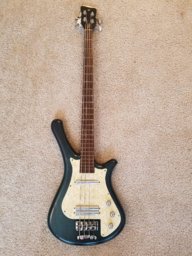


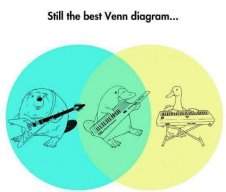

I don't own a 5 inline because that is objectively awful.
Except when it isn't

I have basses made with Warmoth necks, which you can get with 2+3 or 3+2. I made the first one 3 on top, but the rest with 2 on top. 2 on top moves the tuner for the B string a bit further out, which reduces the chance of winding the fat part of the string around it. That gives it the advantage, especially with a 34 inch scale - strings are being would with more winding length to accommodate 35 inch scales, which aggravates that issue on a 34.
I had a 5 in line Carvin in the 80’s, and was constantly running into things - that thing was awful on a tight stage.
I had a 5 in line Carvin in the 80’s, and was constantly running into things - that thing was awful on a tight stage.
My Fernandi are 3+2 as is my mid-tier Soundgear. My upper-end Soundgear is 2+3. Apparently, Ibanez can't make up its mind, either.
Riis
Riis

Except when it isn't
Was waiting for someone to post a pointy headstock, was not disappointed.
My 5 is 4+1 and I do at times reach for the D thinking it’s the E. Oops. What throws me off even more is a reverse wound J. Natural instincts always has me turning that one the wrong way.

Bryan R. Tyler
TalkBass: Usurping My Practice Time Since 2002
Staff member
Administrator
Gold Supporting Member
Supporting Member
- May 3, 2002
- 28,948
- 20,936
- Disclosures
- Reviewer: Bass Player Magazine
This unsolvable dilemma is the entire reason 6-string basses were created.

I start on the G and work down one side and up the other. Never had a problem with that system, so far.

My two cents: Sell them both and buy an MTD -you may need to sell a kidney in the process-. Problem solved.
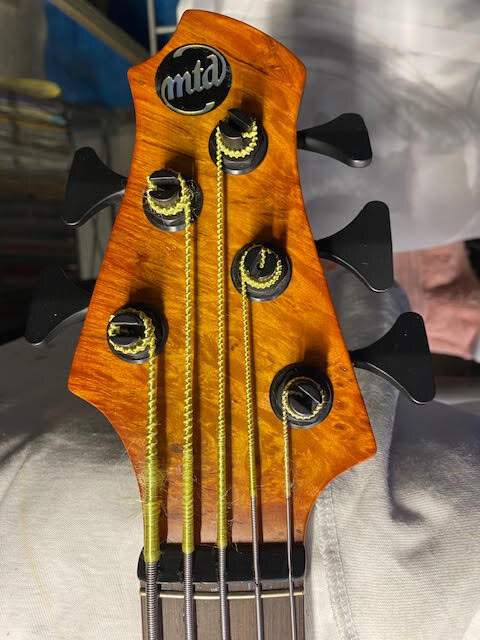

skyline_01
Endorsing artist: Nordstrand Audio, Tsunami Cables
Would I? No. But I don't own a 5 inline because that is objectively awful.
Agreed - 5 inline, for whatever reason, always put me off. I had a MIM Fender Jazz Deluxe V for a while and liked most everything about it except for the tuner config.


I had the exact same problem. 3+2 and 2+3 (Carvin LB75 and Dreizehnbass Invader5).
Tuning the A string has constantly been a problem.
Solution: I switched over to 6 strings
Tuning the A string has constantly been a problem.
Solution: I switched over to 6 strings


I don’t know how to help the OP, but other players should know they may have to wait around for him to find his A and get in tune. Might be a dealbreaker at audition. 

Over the years I've owned 5+0, 4+1 and 3+2, never 2+3. I did own a 3+2 and 4+1 at the same time and that did indeed drive me nuts when I switched basses.
Today I own a 4+1 Fender and a headless NS Design with 5 in line rotary tuners at the bridge. I suppose that the tuners being at different ends of each bass lowers the brain fart quotient.
Today I own a 4+1 Fender and a headless NS Design with 5 in line rotary tuners at the bridge. I suppose that the tuners being at different ends of each bass lowers the brain fart quotient.


