
Would you say these are okay? They have 2 day shipping on reverb, and i feel like the sooner i get them the better for the neck so I'm thinking they could do the trick.These are the ones I like, they come in gauges all the way from 90 to 110, you might want to try 95's or 100's. 100's are fairly light to me and I've had them on my 4001. They also make stainless steel strings which they call Sunbeams.
https://www.drstrings.com/bass-hi-beam

Enjoy the benefits of a premium membership!
Upgrade Account
-
TalkBass has been independent since 1998. Add your voice.
Create a free account to reply to discussions, view embedded media, and browse with fewer display ads.
Join free Log in
Want zero display ads or expanded classifieds tools? Compare plans.
You are using an out of date browser. It may not display this or other websites correctly.
You should upgrade or use an alternative browser.
You should upgrade or use an alternative browser.
Help me with this Rickenbacker
- Thread starter Komadinic
- Start date
More options
Who Replied?
Would you say these are okay? They have 2 day shipping on reverb, and i feel like the sooner i get them the better for the neck so I'm thinking they could do the trick.
View attachment 3849471 View attachment 3849472
Either one should be good, I would tune it down slightly in the meantime while you're waiting for them.
I've tuned full step down untill i swap the strings.Either one should be good, I would tune it down slightly in the meantime while you're waiting for them.
I've tuned full step down untill i swap the strings.
Does it look or play any different?
Honestly i don't think so, but it's okay we'll get there for sure!Does it look or play any different?


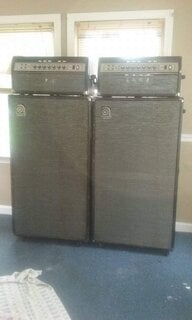
Is there a bass in that photo?

Jus' kidding! It's the minty looking Oliver Powerflex that has my undivided attention.
What beautiful amps they were! Jessie did himself proud with those.
I purchased one brand new in '74, or thereabouts, and, to this day, regret ever letting it go.
Great sound, great styling, nifty extras, and the powered screw lift was the icing on the cake.
They were the powered hard top, glass windowed king, in a ragtop world!
How long have you had yours, and if restored, who did it?


It is true actually, because if you adjust the neck-relief to 0.2 mm on the bass-side of the neck & the relief on the treble-side is 0.3 mm on a single truss-rod bass, there's nothing you can do.
On a RIC you can adjust each side.
Assuming you might be able to, why would you want to do that?
Either way, if that actually is the reason for a dual truss rod, then it’s a solution to a nonexistent problem on a 4-string sub 35-inch scale bass IMO. Virtually all standard, medium, and short scale basses use a single truss rod without experiencing any issues.
On a 6-string or extended scale bass dual truss rods definitely can make a lot of sense. But not on a medium scale Ric unless their necks are unusually unstable compared to most other basses. And I could see where the additional routing needed to install a dual truss rod might account for more instability with a wood neck.
Last edited:
Is there a bass in that photo?
Jus' kidding! It's the minty looking Oliver Powerflex that has my undivided attention.
What beautiful amps they were! Jessie did himself proud with those.
I purchased one brand new in '74, or thereabouts, and, to this day, regret ever letting it go.
Great sound, great styling, nifty extras, and the powered screw lift was the icing on the cake.
They were the powered hard top, glass windowed king, in a ragtop world!
How long have you had yours, and if restored, who did it?
I found it in a pawn shop last year. I had Bill Webb go through it at Austin Vintage Guitars. He did a fantastic job!

I don't know which model it is. Just got it in a trade, apparently it's 4003S but it has a different neck pickup and it has a cut in the middle of the bridge pup cover. I'm starting to worry that it might not be an original model. Please help me!
4003s
That’s a score - gorgeous!
Throw in a nice bottle of mt dew and you got yourself a deal partner
That sounds like a legally binding offer.
Yes, that's a long headstock.
What a flatterer!
As I am intrigued by rickenbacker now may i ask you what's the difference with the headstock design? Thanks for the lovely comment!That’s a score - gorgeous!
That sounds like a legally binding offer.
What a flatterer!

The headstock shape has changed incrementally over the years. The ‘60s models mostly had longer,thinner headstock shapes,in the 70s, they got shorter,and in the last decade,they’ve gotten considerably wider.As I am intrigued by rickenbacker now may i ask you what's the difference with the headstock design? Thanks for the lovely comment!
Even when the company was making reproductions of 60s models like yours, they somehow managed to put out some with standard headstock shapes that weren’t authentic. The Chris Squire model was basically a v63,but there are lots of those made that didn’t have the elongated headstock.
Yes; the sweet spot for me is bridge PU full and the neck PU backed off about 15-20%. This introduces some comb filtering (allegedly) and it sounds great. Basically, I just set both volumes to full, play an open D and then back off on the neck PU volume until I can hear the tone change and just keep it right where the tone changes. Works well on my Jazzes as well, as your wording would suggest. If you click on my avatar photo you can see that I happened to be using that setting when I took the photo.Rics are like Jazzes, with both volumes up to full the mids are cut which makes them sound quieter and takes away their presence somewhat depending on how the pickups are set in relation to each other, i will usually back one volume off just a little bit and usually the neck pickup. The position you like will be very touchy to get it balanced the way you like it.
I'll try to play with these parameters once i restring it, until then it's gonna chill out. That jazz bass is lovely, those ashtray covers on Fender guitars just make me feel something i can't quite explainYes; the sweet spot for me is bridge PU full and the neck PU backed off about 15-20%. This introduces some comb filtering (allegedly) and it sounds great. Basically, I just set both volumes to full, play an open D and then back off on the neck PU volume until I can hear the tone change and just keep it right where the tone changes. Works well on my Jazzes as well, as your wording would suggest. If you click on my avatar photo you can see that I happened to be using that setting when I took the photo.
Not to go too far astray in a Rickenbacker thread (although it is your thread), I added the ashtrays to both of my Jazz basses. The one in my avatar has a hand-painted silver and black PG and a 1976 fretless maple one-piece P-Bass neck. A true Frankenfender.I'll try to play with these parameters once i restring it, until then it's gonna chill out. That jazz bass is lovely, those ashtray covers on Fender guitars just make me feel something i can't quite explain
Not to go too far astray in a Rickenbacker thread (although it is your thread), I added the ashtrays to both of my Jazz basses. The one in my avatar has a hand-painted silver and black PG and a 1976 fretless maple one-piece P-Bass neck. A true Frankenfender.
I might as well put both my Rics in, I'm a lousy photographer they're not as yellowed as they look in these pictures:
1979 4001:
1985 4003FL:
They are absolutely stunning! I see how they moved the neck pickup a bit on 4001 to fix the negative neck angle issueI might as well put both my Rics in, I'm a lousy photographer they're not as yellowed as they look in these pictures:
1979 4001:
View attachment 3849604
1985 4003FL:
View attachment 3849605
They are absolutely stunning! I see how they moved the neck pickup a bit on 4001 to fix the negative neck angle issue
I like the half inch spacing better though, I've had several in the past with that spacing including two V-63's although mine were newer than your's.
As long as we're doing this...
December '72 refinished in Matte Amberglo by Paul Wilczynski:
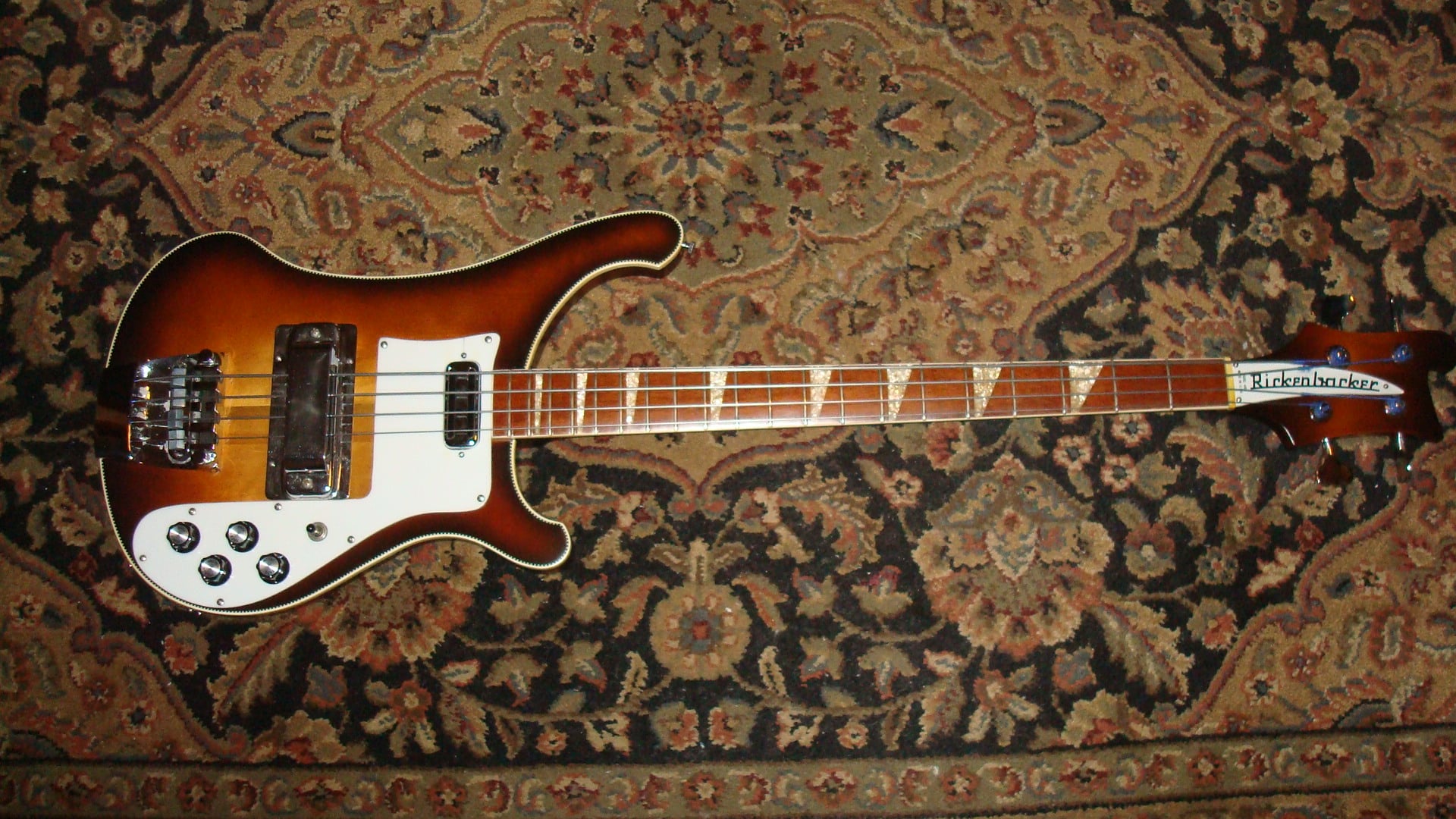
April '73 FL with the black plastic originally made by Paul for the Dec '72:
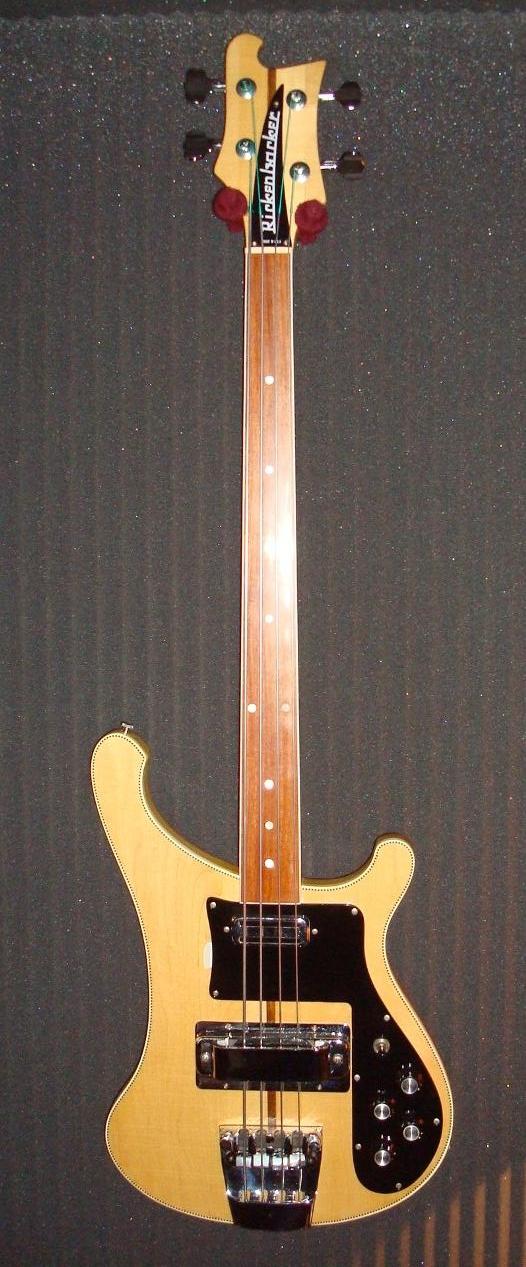
2008 4003FL in Midnight Blue with aftermarket black trim (Except for the TRC, which came from my 650D). Now fitted with a Hipshot bridge. One of the last FLs made before they went on hiatus, perhaps for good). Check the volume settings too:
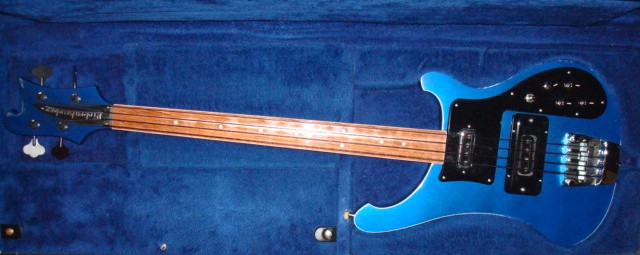
December '72 refinished in Matte Amberglo by Paul Wilczynski:
April '73 FL with the black plastic originally made by Paul for the Dec '72:
2008 4003FL in Midnight Blue with aftermarket black trim (Except for the TRC, which came from my 650D). Now fitted with a Hipshot bridge. One of the last FLs made before they went on hiatus, perhaps for good). Check the volume settings too:
This is what a 1964 RM1999 Ric sounds like with flats on it. Pete Quaife of the Kinks was the first player to buy one of these in England, 2nd was John Entwistle, then Chris Squire, those basses were pretty much identical to yours. It's in the picture but you can only see it from the side. Francis Hall gave McCartney a 4001S which were also pretty much identical in, (I think) 1965. I don't there is a difference between RM1999's and 4001S's.


