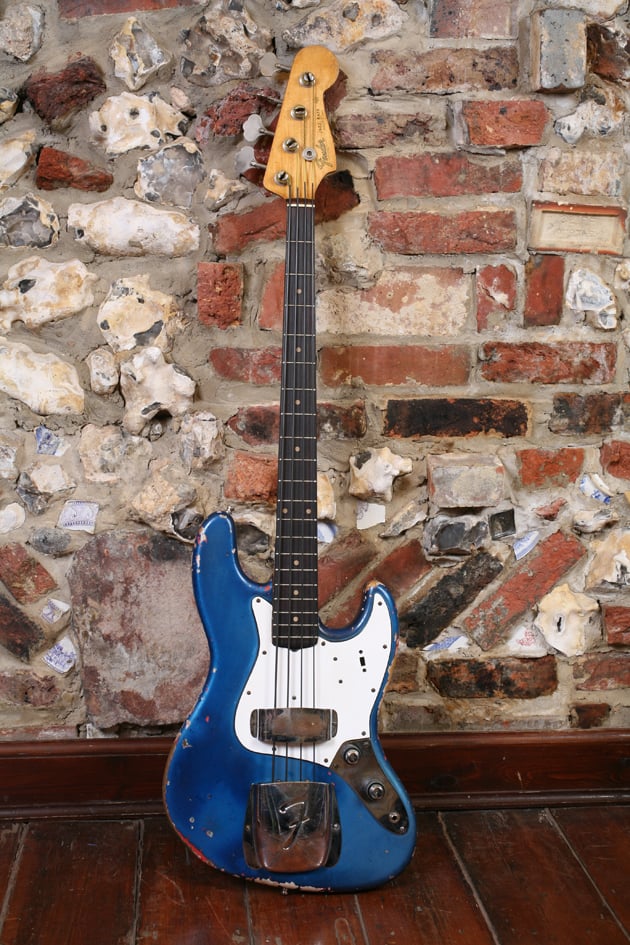
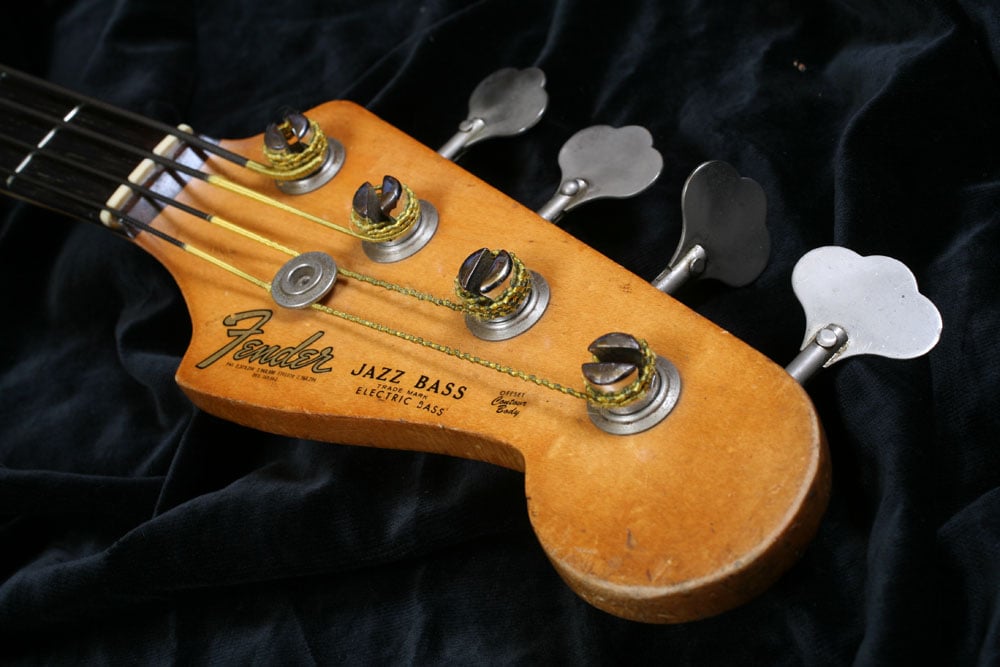
Former T Rex (among others) bassist Herbie Flowers famous 59/60 Jazz Bass is fairly well documented by Curtis Novak (who builds amazing pickups, BTW). I just found Invalid Link Removed page, some of you may have already seen it.
Yes, it is the original finish !
First, a BIG "thank you" to Curtis for sharing this information !
Now, on with the quotes and photos !
Yes, it is the original finish !
First, a BIG "thank you" to Curtis for sharing this information !
Now, on with the quotes and photos !
An original Fender finish
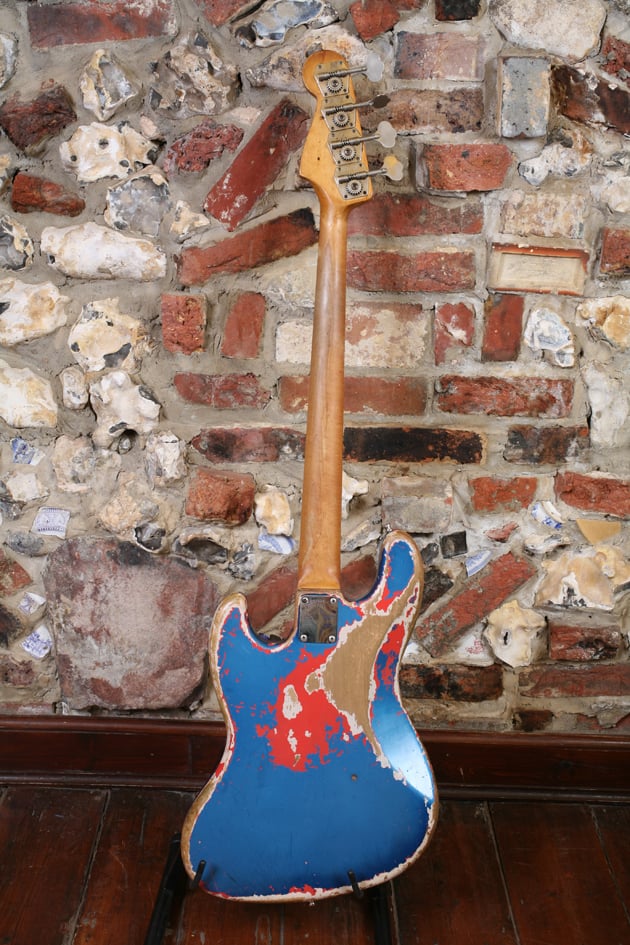
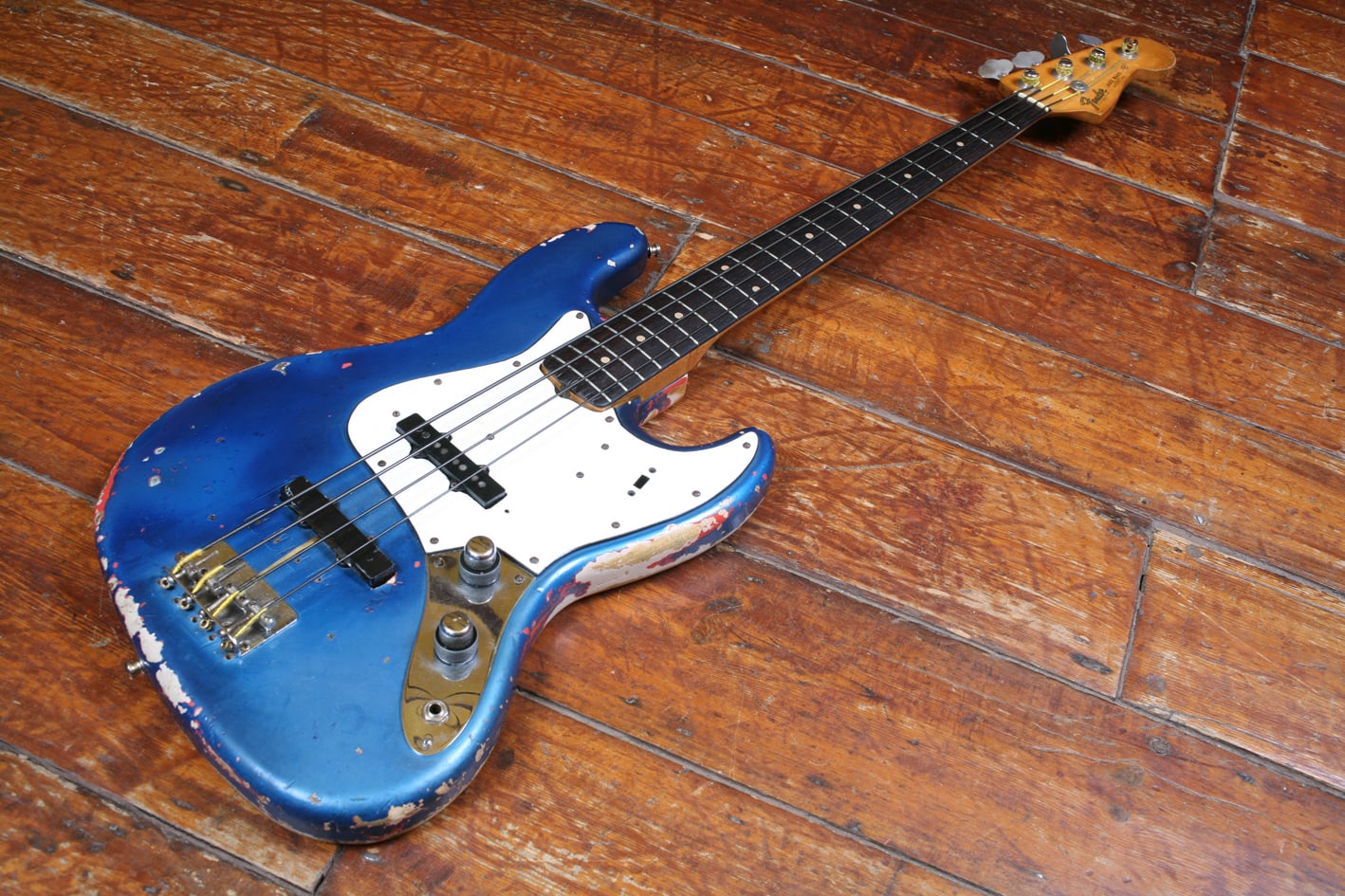
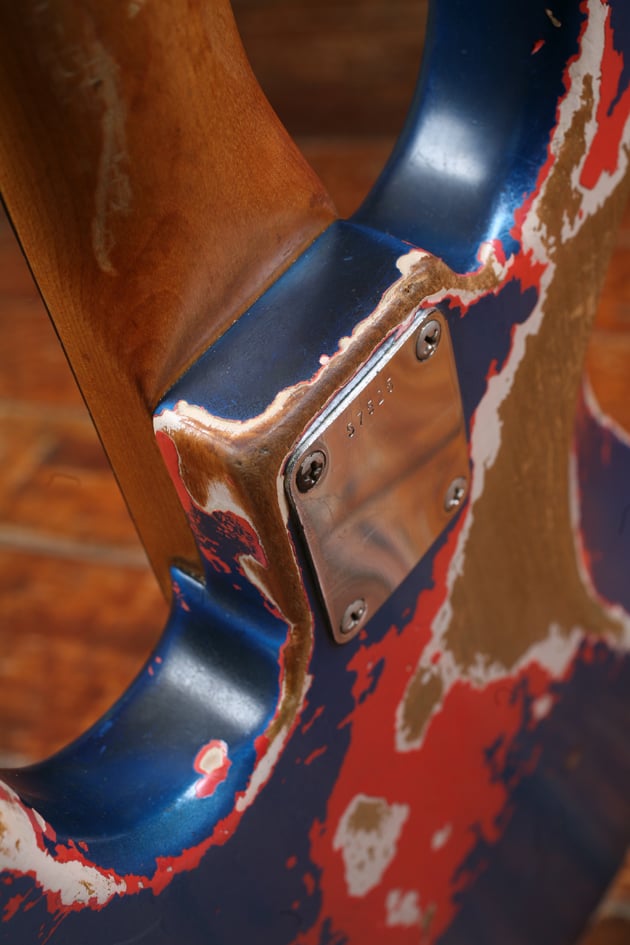
First it is always nice to deal with an instrument that has only had one owner because the information on its history tends to be more reliable. I find this bass very interesting on a number of points. From what we know of Herbie's history with this bass, and from the pictures showing the wear layers and paint colors, it is clear that this is an original Fender finish.
Fender's early finishing process
It not uncommon to have an early 60's Fender that has a totally different paint color underneath the finish color. Prior to 1961, Fender was doing custom color by request only and fit them into their existing production process. In 1961, Fender released its first official chart of Custom Color to dealers. For a 5% up charge you could get a custom color. In the early 60's, Fenders were in high demand and their production was running pretty much at capacity. When an order for a custom color came in, rather than building up a body from scratch, they would just take a body off the current production line and paint with the custom color. This sped up delivery because the body was already shaped, prepped, and sealed so it was very fast and easy to just spray over the current finish.
More about Fender finishes and this guitar
It also was quite common during this period to find a custom color finish without the sealer, white primer and/or clear coat. Fender would just spray an extra heavy coat of color and buff that out. In general the clear coat step was not skipped on the metallic finishes, because the clear coat prevented the metal flake from oxidizing.
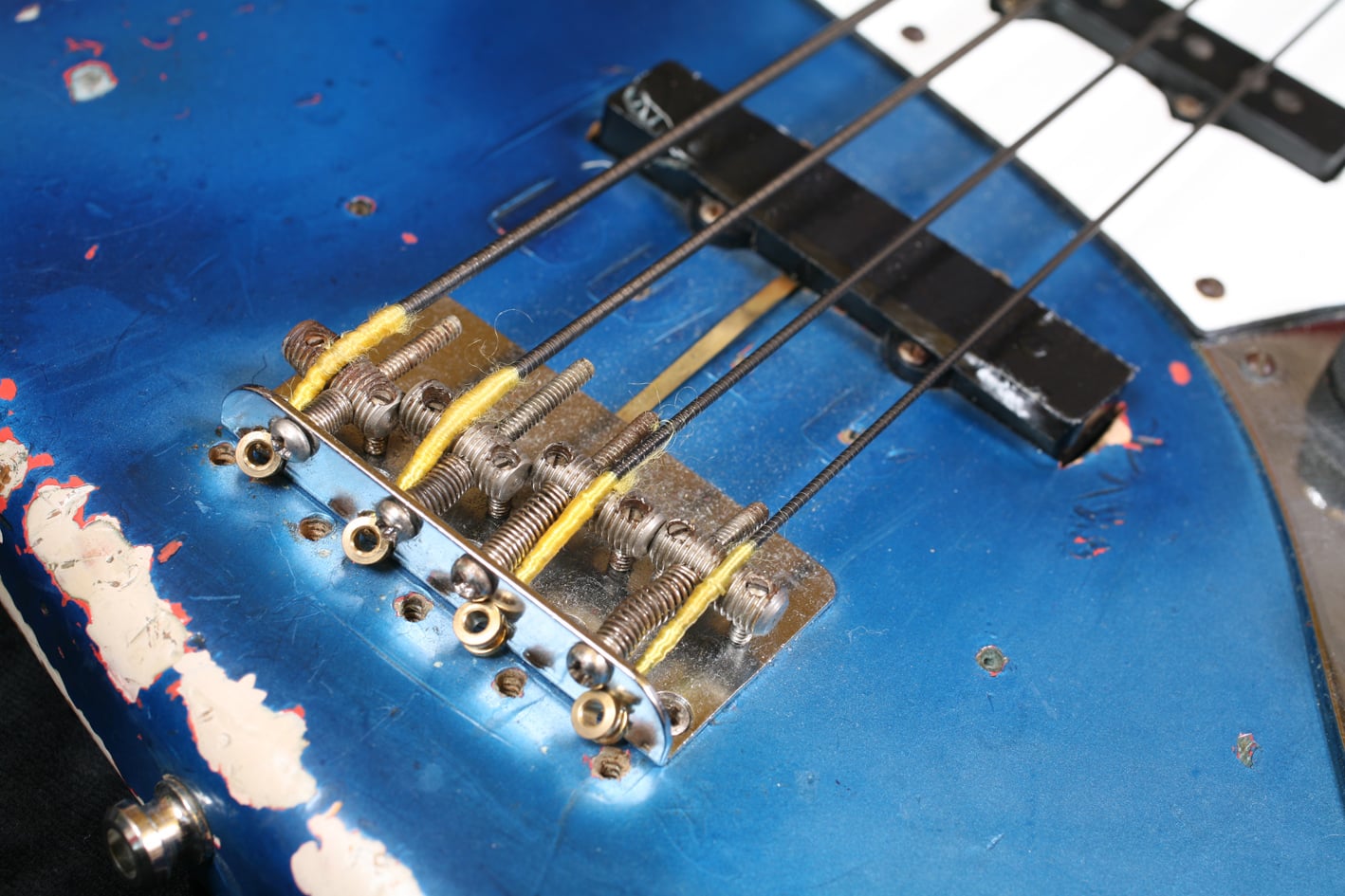
So another interesting thing to note with this bass: it was NOT clear coated! This is evident because the finish is still its original blue color, there are darker areas where the metal flake has oxidized, and there is a lack of finish checking (spider cracks running across the finish).
Most Lake Placid Blue finishes from this era have aged to more of a teal green color and the finish is checked. People that follow the vintage market know that it is nitrocellulose lacquer that causes a finish to yellow and crack. But what most people are not aware of is that from the beginning the metallic paints were never nitrocellulose based, but rather acrylic, which does not yellow or crack.
It was actually the clear coat that was a nitrocellulose furniture lacquer, and that caused the finishes to discolor and crack.
So with all that saidthe Bright Blue, the oxidization and no finish checkingit is obvious the clear coat step was skipped.
Fiesta Red
On a more ironic note, this particular bass has a sub finish color that is Fiesta Red! With of the fame of The Shadows in England, and Hank Marvin having a Fiesta Red Strat, everyone in England wanted a Fiesta Red guitar like Hank's. It is actually quite common in England to find a Fiesta Red Strat with another finish UNDER it, but in Herbie's case he bought a Blue Bass in New York City that, unbeknownst to him, was actually the sought after Fiesta Redthe color was only revealed years later through wear.




 I'm just the messenger. Curtis Novak is the guy deserving of the "thanks".