
Enjoy the benefits of a premium membership!
Upgrade Account
-
TalkBass has been independent since 1998. Add your voice.
Create a free account to reply to discussions, view embedded media, and browse with fewer display ads.
Join free Log in
Want zero display ads or expanded classifieds tools? Compare plans.
You are using an out of date browser. It may not display this or other websites correctly.
You should upgrade or use an alternative browser.
You should upgrade or use an alternative browser.
Here’s A Dumb Question For You (Enharmonics)
- Thread starter Bryan R. Tyler
- Start date
More options
Who Replied?

Bryan R. Tyler
TalkBass: Usurping My Practice Time Since 2002
Staff member
Administrator
Gold Supporting Member
Supporting Member
- May 3, 2002
- 28,949
- 20,943
- Disclosures
- Reviewer: Bass Player Magazine
A 12 note system doesn't eliminate key signatures except in even temperament, because exactly how you play a given note depends on your tonic. You still need to know where home is.
Plus the current system makes chords and intervals easier to see and consistent across keys.
How would chords and intervals be easier to see with the elimination of a double name for the same note?
How would chords and intervals be easier to see with the elimination of a double name for the same note?
I meant the current system makes them easier to see. One move in the current system is one move on the scale you're using, whether half or whole step. Three notes stacked, all on either lines or spaces, is a root position diatonic chord. All scales have the same notes A-G, with sharps or flats as appropriate.
The current system also makes it possible to transpose on the fly by looking at interval relationships, but a 12-note system would make that harder.
Not that I can transpose on the fly, but such people exist.
Not that I can transpose on the fly, but such people exist.
A simple question with a complicated answer, in fact many answers. To start with, a piano's setup is based on a traditional thing, not the other way around. The diatonic scale with accidentals predates the keyboard.

- Sep 14, 2009
- 903
- 665
- 57
- Disclosures
- Endorsing Artist: GullanskyLab pickups
Well, let's try to put things in an historical point of view.
The music theory we use today, seven note names plus alterations (sharps and flats), comes from very far away in the ages.
The Middle Age music theory is our start, although based on the greek theory (which was based on four note scales called thetrachords, named after their country of origin - dorian, ionian, lydian, aeolian, and so on, but don't get confused with the same name in jazz theory).Any music theory adds something to the one before, but without totally replacing it: that's why we have twelve notes and seven names. Even the twelve semitones partition is a "recent" decision: only in XVIII century it became a standard, making a little violence on the natural sequence of harmonics. Before (and still is today for baroque musique specialists), C sharp is not exactly like like D flat, but slightly higher (imagining an ascending passage C - C sharp - D versus a descending D - D flat - C). Equal temperament was adopted because made some things easier, both in terms of musical practice (the possibility to play in all keys) and of musical technology (keyboard instruments with just twelve keys per octave - and not 31!, take a look : Google Image Result for https://qph.fs.quoracdn.net/main-qimg-fe81686f80e09cf1b43089f856676561 ).
Now our ear is accustomed to Equal temperament, therefore most of music we produce today in western world is based on it. But just listen to some folk music (for you in the USA is enough some old Twenties' blues singer ) and you'll discover how they are "out of pitch": simply they sing to the natural scales.
Of course this a veeeeery short look at the subject. If I may help you, feel free to ask.
(and, btw, learning to read isn't difficult, and makes musical life easier in many cases)
The music theory we use today, seven note names plus alterations (sharps and flats), comes from very far away in the ages.
The Middle Age music theory is our start, although based on the greek theory (which was based on four note scales called thetrachords, named after their country of origin - dorian, ionian, lydian, aeolian, and so on, but don't get confused with the same name in jazz theory).Any music theory adds something to the one before, but without totally replacing it: that's why we have twelve notes and seven names. Even the twelve semitones partition is a "recent" decision: only in XVIII century it became a standard, making a little violence on the natural sequence of harmonics. Before (and still is today for baroque musique specialists), C sharp is not exactly like like D flat, but slightly higher (imagining an ascending passage C - C sharp - D versus a descending D - D flat - C). Equal temperament was adopted because made some things easier, both in terms of musical practice (the possibility to play in all keys) and of musical technology (keyboard instruments with just twelve keys per octave - and not 31!, take a look : Google Image Result for https://qph.fs.quoracdn.net/main-qimg-fe81686f80e09cf1b43089f856676561 ).
Now our ear is accustomed to Equal temperament, therefore most of music we produce today in western world is based on it. But just listen to some folk music (for you in the USA is enough some old Twenties' blues singer ) and you'll discover how they are "out of pitch": simply they sing to the natural scales.
Of course this a veeeeery short look at the subject. If I may help you, feel free to ask.
(and, btw, learning to read isn't difficult, and makes musical life easier in many cases)
Changing the existing [pseudo] standard of written music? That'll happen even more slowly and with less enthusiasm than the American adoption of the super-simple, oh-so-rational metric system of measurement. For my part, that will be just about the time I no longer have to look up the definition of "semiquaver" each time I see it.In the IT world, the explanation for anything that seems incredibly inefficient or unnecessarily complex is: "Things are the way they are because they got to be that way."
Tradition (in this case Pythagorus's way of thinking about music and 2000+ years of theorizing, nomenclature, and teaching based on that) forms a gravity well that effectively prevents such changes.
It's much like spelling American English. Our language has 24 distinct consonant and 20 distinct vowel phenomes for a total of 44 unique sounds. Our alphabet only has 26 letters. And although our spelling is now "standardized," that standardization is arbitrary and based mostly on tradition and convention rather than on any sytematic approach to spelling. And while it would make more sense to just create a better alphabet (several already have been created) it's a hard sell when everyone is already used to the dumb system we currently use. In the Hungarian language each letter has only one sound and all words are spelled phonetically. If you hear a Hungarian word you know how to spell it. If you see a Hungarian word you know how to pronounce it. Sweet system. And one reason why you'll never see a spelling bee in Hungary - or have a child ask "What's this word?" when learning how to read. Small wonder their adult literacy rate is 99.4%. Better notation systems, such as alphabets, are a big help.
So yes, shoehorning a chromatic well tempered twelvetone scale into a diatonic just tempered eight note theoretical framework (because the number eight had a mystical significance) makes little sense. If each tone had its own note, sharps and flats and all the confusion they create would go away. Key signatures would become unnecessay. And…the list of benefits goes on. But it ain't gonna happen.

Thinking a bit more....
The existing system is optimized for writing music based on WWHWWWH and the permutations (modes) thereof. the tonic is controlled by the key signature, one step (from line to space or space to line) is always one scale degree regardless of key, and deviations from these intervals are noted as accidentals. It is neutral as to temperament and a bit of a mess if you want to use a finer-grained set of intervals such as WWHHHWWH or something like that (works fine for pentatonic since you just skip some notes). I don't even know how you'd notate microtonal stuff.
That is, the existing system is really quite excellent for playing Western music. It's almost as if it was designed for that purpose.
A system based on 12 individual named notes is optimized for semitones, only really makes sense in equal temperament, and does not correspond to the way music is played, well, anywhere, really.
The existing system is optimized for writing music based on WWHWWWH and the permutations (modes) thereof. the tonic is controlled by the key signature, one step (from line to space or space to line) is always one scale degree regardless of key, and deviations from these intervals are noted as accidentals. It is neutral as to temperament and a bit of a mess if you want to use a finer-grained set of intervals such as WWHHHWWH or something like that (works fine for pentatonic since you just skip some notes). I don't even know how you'd notate microtonal stuff.
That is, the existing system is really quite excellent for playing Western music. It's almost as if it was designed for that purpose.
A system based on 12 individual named notes is optimized for semitones, only really makes sense in equal temperament, and does not correspond to the way music is played, well, anywhere, really.
I find standard notation easy to read- it's a great system that works everywhere on Earth.It's neither here nor there as far as enharmonics go as you could still use a five line staff without them by just changing the symbol. You could probably change a lot about standard notation to make it easier to read anyway. Color coded notes anyone?

Well said!!!!In the IT world, the explanation for anything that seems incredibly inefficient or unnecessarily complex is: "Things are the way they are because they got to be that way."
Tradition (in this case Pythagorus's way of thinking about music and 2000+ years of theorizing, nomenclature, and teaching based on that) forms a gravity well that effectively prevents such changes.
It's much like spelling American English. Our language has 24 distinct consonant and 20 distinct vowel phenomes for a total of 44 unique sounds. Our alphabet only has 26 letters. And although our spelling is now "standardized," that standardization is arbitrary and based mostly on tradition and convention rather than on any sytematic approach to spelling. And while it would make more sense to just create a better alphabet (several already have been created) it's a hard sell when everyone is already used to the dumb system we currently use. In the Hungarian language each letter has only one sound and all words are spelled phonetically. If you hear a Hungarian word you know how to spell it. If you see a Hungarian word you know how to pronounce it. Sweet system. And one reason why you'll never see a spelling bee in Hungary - or have a child ask "What's this word?" when learning how to read. Small wonder their adult literacy rate is 99.4%. Better notation systems, such as alphabets, are a big help.
So yes, shoehorning a chromatic well tempered twelvetone scale into a diatonic just tempered eight note theoretical framework (because the number eight had a mystical significance) makes little sense. If each tone had its own note, sharps and flats and all the confusion they create would go away. Key signatures would become unnecessay. And…the list of benefits goes on. But it ain't gonna happen.
I read bass and treble pretty well, but now I need to add 4 moveable clefs and , honestly, this crap needs to be brought into the 21st century.
A while back, I suggested that we ought to dump everything except the treble scale with an identifier above the staff for the range on the keyboard (C1,C2, C3, C4). Want to read bass...its the treble clef with C2 or C3 as middle C. People's heads exploded. I heard some of the most lame excuses for why not to do this. The real reason, they didn't want to unlearn an outdated system. The fact that now everybody spoke a mutually understandable language without any need for translation was totally overlooked. Imagine how much easier reading an orchestral score would be.
I recently developed some musical software to identify all the common scales and which scales match a particular set of chord tones. PS, there are about 235 scales commonly used out of 2048 possibilities in a twelve tone system.
In this software, I used numbers/letters in a base 12 system instead of letters (0,1,2,3,4,5,6,7,8,9,A,B). So if we assign C as 0, C# is 1, D is 2, ...B=12=B. Whats the interval between F# and C. Well, F# is 6, so there are 6-0=6 semitones. Interval from B to F# going down is 12-6 =6 semitones. Easy Easy Easy.
Want to expand this to the digital age, assign letters to the range. So middle C (C4) on the piano is D0, on the bass is C0 (bass sounds an octave lower than written).
Want to write out music? Use 6 lines. It won't kill you. Folks read guitar tab all the time.

Changing the existing [pseudo] standard of written music? That'll happen even more slowly and with less enthusiasm than the American adoption of the super-simple, oh-so-rational metric system of measurement. For my part, that will be just about the time I no longer have to look up the definition of "semiquaver" each time I see it.
I agree. It's not going to happen. The current confusing illogical system works good enough. An whenever the choice comes down to "disruptive but smarter" vs "adequate but sillier," the status quo almost invariably prevails. Especially in situations where something doesn't need to be done well as long as it gets done.
Like the saying goes: Not everything worth doing is worth doing well. Sometimes "good enough" is good enough.
Once upon a time they had to have a keyboard in every key imaginable because step between notes are vastly different in different key so they created the 8 note system with accidentials

- Jan 26, 2014
- 1,525
- 1,946
- Disclosures
- I teach lessons and perform live music in and around San Diego CA. Sometimes I even make money doing it!
Something probably most of you know but I've never had a clue- is there a benefit to having five enharmonics rather than a system of twelve distinct notes (A-L for example), or is it just a traditional thing based on a piano's setup?
7 unique notes in the diatonic scale are most efficiently notated with 7 unique pitch classes (letters) per scale. A lot of the system of written music has evolved out of efficiency, as copying and/or printing music was historically very time consuming or expensive. Basso Continuo was a system of writing bass lines with a few numbers under the staff to fill in the rest of the chords (the original "lead sheets," only for bass lines), to save ink and typesetting time. Other systems of thinking of music and notation are of course possible and used throughout the world, but for our 7 note diatonic system, I'm not aware of a better option. Also, we're stuck with the one we have, so pretty much, resistance is futile

The idea of "rationalizing" musical notation reminds me of this:
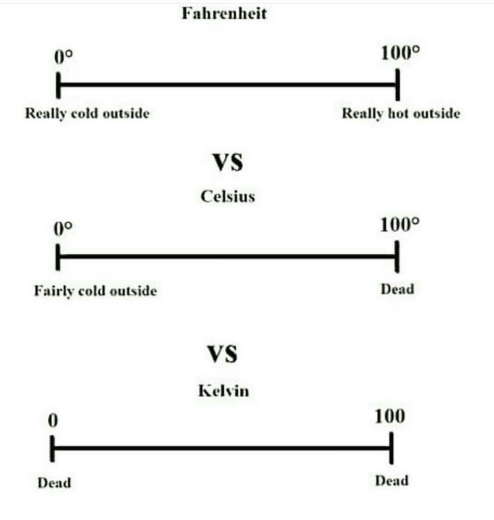
Fahrenheit is actually a good system for describing the temperature outside, which is what most of us care about each day. Celsius is very good for describing liquid water, which...isn't actually all that important to most of us, most of the time. Kelvin is essential for doing calculations involving ideal gasses, which is fine if you are into that sort of thing.
"Rationalizing" music around semitones, as proposed, is Celsius here. It doesn't correspond to the way Western music is played, yet it is tied to the Western semitone for traditional reasons even as the proponents rail against tradition. So it's accomplishing a not-very-important task. Going with frequencies is Kelvin: it's truly universal (works for any musical tradition, doesn't create temperament problems, corresponds well to the physics of vibrating strings and air columns).
Traditional "irrational" notation is Farenheit: it matches what most of us do, most of the time.
Fahrenheit is actually a good system for describing the temperature outside, which is what most of us care about each day. Celsius is very good for describing liquid water, which...isn't actually all that important to most of us, most of the time. Kelvin is essential for doing calculations involving ideal gasses, which is fine if you are into that sort of thing.
"Rationalizing" music around semitones, as proposed, is Celsius here. It doesn't correspond to the way Western music is played, yet it is tied to the Western semitone for traditional reasons even as the proponents rail against tradition. So it's accomplishing a not-very-important task. Going with frequencies is Kelvin: it's truly universal (works for any musical tradition, doesn't create temperament problems, corresponds well to the physics of vibrating strings and air columns).
Traditional "irrational" notation is Farenheit: it matches what most of us do, most of the time.


This is hilarious

That is, the existing system is really quite excellent for playing Western music. It's almost as if it was designed for that purpose.
exactly
music notation has evolved to serve the western diatonic music it notates, it's not simply an arbitrary accident.
It makes our system of scales and chords easier to read and write.
The vast majority of the time we deal with pitch as it relates to the major scale -as a special subset of 7 out of 12 notes
this reality is provided for by the system of enharmonics, accidentals & key signatures
we are dealing with pitch that relates harmonically, in thirds , fifths, sevenths
this reality is provided for by structure of the lines and spaces
It only seem nonsensical if you ignore the underlying theory of those 7 out of 12 notes.
There's no "I" in MUSIC.............no, hang on..There is no J flat- it would just be in I then
Want to write out music? Use 6 lines. It won't kill you. Folks read guitar tab all the time.
This.

Whenever I think of music I think in a base-12 number system, one number per chromatic scale tone:
123456789XΔ0
(one, two, three, four, five six, seven, eight, nine, dec, del, doh)
If you use numbers, Sweet Home Alabama is in the key of 2, the guitarist usually plays blues in the key of 4 or 8, and a ii V I is a ...well.. 2 6 0 ...or a 3 7 1 or a 4 8 2.....
Or you could just use Nashville notation and not get overly technical.
The numbers I'm using are the intervals in the scale - not the tones. The notes heard will vary based on the starting tone. But a major chord is always 157 and a minor 147. Easier (to me) than thinking "root-major third-perfect fifth" or "root-minor third-perfect fifth"
I don't pretend my approach is a universal solution. It just makes sense to the one person I came up with it for (me) to think of everything as simple standard semitones, and do any analysis I want to do from there. No need to get bogged down in things like: major/minor/augmented/ diminished/ or dominant.
Just numbers. It's all numbers.
Last edited:

I think in a base-12 number system, one number per chromatic scale tone:
123456789XΔ0
A very interesting system. drool
Now, start promoting it.


