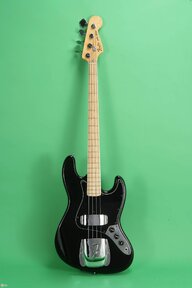
Stock instruments are designed to appeal to as large a market as possible which increases demand. Modded instruments, no matter how much money is pumped into them to implement "upgrades", appeal to a relatively smaller smarket, which drives down demand and thus, average selling price.
On the other hand, you would think that parts basses built from firing together all the top third-party upgrades would be worth a pretty penny. That's how I've built my parts gig basses... and they absolutely blow away any stock bass that I've ever owned... and I've owned A LOT. But, as we all know, musicians gonna musician... so, the popularity contest always leans toward stock instruments, even if it lesser than the parts bass (and in many cases it *is* lesser). So, the parts bass won't typically command the value as a whole that a stock instrument might, and may not even command a value that is simply the sum of the costs of its parts.
For these reasons, if I were to sell any of my modded basses, I would return them to stock and sell the parts separate... and if I were to sell any of my parts basses, I would part them out.
On the other hand, you would think that parts basses built from firing together all the top third-party upgrades would be worth a pretty penny. That's how I've built my parts gig basses... and they absolutely blow away any stock bass that I've ever owned... and I've owned A LOT. But, as we all know, musicians gonna musician... so, the popularity contest always leans toward stock instruments, even if it lesser than the parts bass (and in many cases it *is* lesser). So, the parts bass won't typically command the value as a whole that a stock instrument might, and may not even command a value that is simply the sum of the costs of its parts.
For these reasons, if I were to sell any of my modded basses, I would return them to stock and sell the parts separate... and if I were to sell any of my parts basses, I would part them out.





 whatever you say...i think...it depends!