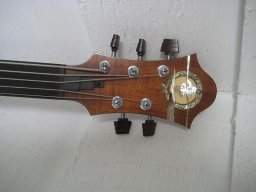
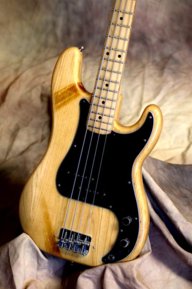
I had this problem for a long time too, it made me stand up while practicing more than sitting in fact. But last year I took lessons and the teacher had me switch to more of a classical style while seated, like described in this thread, with the bass resting on my left leg. It changed everything, especially for the right hand. In that position, the wrist was much straighter on both hands, and with the strap height adjusted to where it would be the same seated and standing, you've got a really consistent position either way. It took a week or two to get used to it, but it's worth it!
There you go. It's different from sitting down and standing up. The dimension and size and length for a regular P or J bass won't change anytime soon, and will not accomodate to if you're a very tall person, or a very short person or anything in between. They will are require different solutions for playing angle. If I have to sit down while practicing I've bought one of these ergo chairs where you sit like on a horse saddle and the leg will not be placed in an almost 90 degree angle. Sort of "dentist" chair. I remember the days I tried classical guitar, and you should use a footchair from it. No matter how "correct" I sat one of my legs fall asleep within 20 minutes, and I went "well, what the h*ll is the point with this then?" A leg shoved up in the air, just to compensaten for inane dimension and design of any acoustic classical guitar. It's the classical guitar that needs to be redesigned, so you don't have to use than peculiar foot-rest that'll give you sleepy legs within 15 minutes. Also never ever it is learned out on classical guitar that your wrist shouldn't be angled, and that you shouldn't rest your forearm on the upper bout of the guitar. I think it's very very strange that all of a sudden, when you move to bass, the muscles starts to require other positions not to get fatigued. Beats me. It's the same muscles and rationale behind it as in Willis video. No difference at all. But nuff of this.
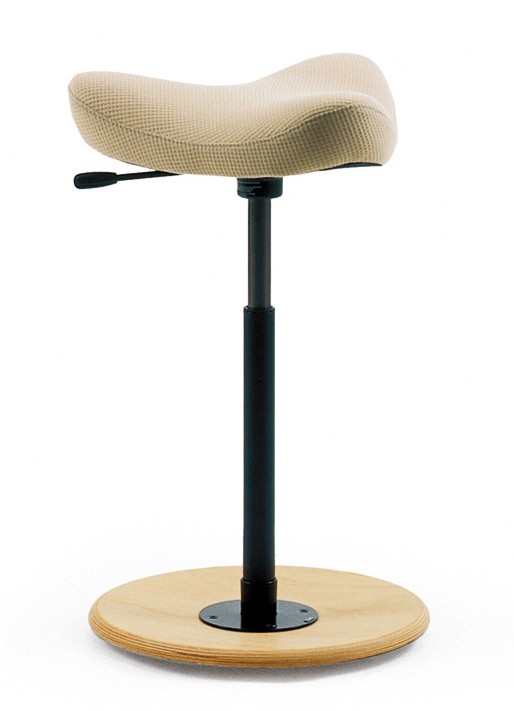
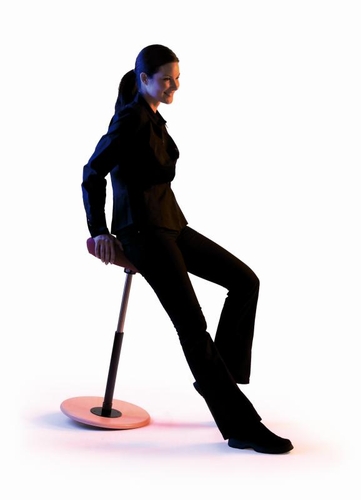
Which means you can raise it quite high so the legs are not at a severe angle, and you can keep the bass strapped on and it will hang about the same as you're standing up while playing. You can shift very easily from standing and seated, without the bass changing balance, and you have to "perk up" your back and you can't slouch anything in this position, you have to sit with your back straight. I can sit on this one for ages, and since the blood flow is increased towards the legs, they will not ever fall asleep, and you get itchings in them due to blood strangulation. Of course, the bass body "intendation" for make it stick between the thighs and lock it in position will not be possible, but then again, saves blood flow to the legs anyway.
Now this ERGO STOKKE MOVE chair is expensive, but not more than any boutique pedal. I use this when playing keys as well because you can lean forward and reach things, outside the normal range. You don't have to get up from the chair. I get not tired ever in the back, and don't need no back rest. Remember, a piano chair did never ever had back rest too, so go figure. Since it it adjustable, this chair fits tall and short persons alike.
If you look at the pic with the girl sitting on you see how a bass would fit in, it resides with the back part of the body at her right thigh, and will produce about the same posture as when standing up. Ok you don't lean that much forward all of the time, but you can set the chair to make your legs fall down JUST for keeping balance, and they are more straight there. I am a stickler for ergonomics, hence my use of headless, and Klein like bodied basses.
- - - - - -
This with wrist. When playing upright I've always seen people with their fretting wrist at an angle. The thing I've found out, is whenever people play either way, floating thumb, straight like Willis, or anything in between, you can ALWAYS tense your shoulders. Inadvertently! Both shoulders. And I think that, is way more important to buck and be THE bad habit you should get rid of as soon as possible, than anything of what or how you're picking, fretting and holding the bass down below. I had initial problems with this, when sitting down, because the "big" bass forced me to raise shoulders in order to play. The bass dimensions and design inadvertently pushed my shoulders upwards, and then I kept that very bad habit when standing up playing. It takes some muscles to raise shoulders and keep them there for a long time, and it will get fatigued in no time, and draws energy from the playing muscles ones. Play in front of a mirror and be vigilant and wary of those shoulders. I have discovered the same with some neck diving basses, that the muscles in the wrist gets to work at holding the peghead up to the right angle all of the time, when all of their energy should be directed at fretting only. Bad habit, and bad design ideas. Hence my pencant for headless (again). But, headless with paddle bodies are equally a work of the devil...

You have no place to rest your picking arm, and go ahead, to take time with a timer until you feel that "free floating" and not anchored forearm will be a tad fatiguing...