
Enjoy the benefits of a premium membership!
Upgrade Account
-
TalkBass has been independent since 1998. Add your voice.
Create a free account to reply to discussions, view embedded media, and browse with fewer display ads.
Join free Log in
Want zero display ads or expanded classifieds tools? Compare plans.
You are using an out of date browser. It may not display this or other websites correctly.
You should upgrade or use an alternative browser.
You should upgrade or use an alternative browser.
How many 5 string players actually use the B?
- Thread starter EAdanikDG
- Start date
More options
Who Replied?

The OP's question is only meaningful if you're erroneously viewing the five-string as four-plus-one. If you understand position playing, the question is as meaningless as asking how many four-string players actually use the 'E?'

If you understand position playing, the question is as meaningless as asking how many four-string players actually use the 'E?'
Unfortunately, most don't.

The OP's question is only meaningful if you're erroneously viewing the five-string as four-plus-one. If you understand position playing, the question is as meaningless as asking how many four-string players actually use the 'E?'
At this point, I view my bass both ways depending on the style of music, and whether you mean the low B note or the string itself. My answer is a qualified "all the time."
Sure, I almost never use the open string. But then I'm dropped a step on most of the basses. So, another way of looking at it is that a low B wouldn't even be sufficient for anything we play in my originals band. (Granted, I could just take it up an octave and nobody would care except for me, but that's not really the question, is it?)

My B-string gets used...mostly as a thumbrest while I'm plucking the E-string.  Seriously, I don't play the B often, but it does get played. However, most times, I prefer the tone of an open E versus fretting the 5th fret of the B (as an example).
Seriously, I don't play the B often, but it does get played. However, most times, I prefer the tone of an open E versus fretting the 5th fret of the B (as an example).My B-string gets used...mostly as a thumbrest while I'm plucking the E-string.
I brought that very point up in a thread a while back and got my head bitten off.
Bottom line, if you want/need those notes, you're going to want/need a 5er.
Personally, it gets in the way for me. And no, it isn't a matter of practice. I just have the need for those notes 99.9% of the time. If and when I do, I'll break out the bass with low B. So, I don't see it as a big controversy.
I play a 4 string and I use the low B quite often.
The low C note in particular seems to get a lot of use.
I play folk, country and alternative ('90's onward) rock covers mostly.
If something calls for a riff that is rooted on the A I'll typically invert it and drop it an octave.
I mean, we ARE meant to be playing bass....right?
The low C note in particular seems to get a lot of use.
I play folk, country and alternative ('90's onward) rock covers mostly.
If something calls for a riff that is rooted on the A I'll typically invert it and drop it an octave.
I mean, we ARE meant to be playing bass....right?

I use it "most" of the time...I play alot around the 5th fret for comfort etc...nice to be able to hit low notes without moving far....also i am not an open string guy so I can play a nice LOW E now!
lastly - I play in a prause band and we do alot of music in flat keys etc so the B string REALLY comes in handy.....
lastly - there are a few songs where the bass lines get a little monotonous so being able to move up and down the the scales helps break the monotony for me AND the listener!
I'd kinda like to actually hear your band at some point. You know that I'm definitely not of the faith, but I'm not a hater, either.
For me, I'm always on that string because, like Doug, I treat the 5th fret as someone with bigger hands would treat an open E string. I just find that the stretch isn't as uncomfy up there.

It really depends on what style of music I'm playing at the moment. In my Classic rock band I only take a 4 string with me. the low B gets in the way and I really don't need to hang on to that big neck all night if I'm not going to use it.
If you notice 90% of the really great solo type players out there use a 4 string and nothing else. Though there are your 5-6 banger players out there. Most bassist don't know what to do with the low B and stick to the standard 4 sting bass.
If you notice 90% of the really great solo type players out there use a 4 string and nothing else. Though there are your 5-6 banger players out there. Most bassist don't know what to do with the low B and stick to the standard 4 sting bass.
But what's the best thumbrest for metal?
Great question. I have been on a long seach for the best string retainer for metal. I found a Swedish company that makes string retainers specifically tailored for metal/grindcore/speedcore, but its $125. I have been saving for 2 months now and cant stop daydreaming about how brutal my sound will be when I finally save up enough $$. The Swedish metal bass co. also makes a polish w/ goat's blood that is guaranteed to automatically drop your D to C#.
Personally, it gets in the way for me. And no, it isn't a matter of practice. I just have the need for those notes 99.9% of the time. If and when I do, I'll break out the bass with low B. So, I don't see it as a big controversy.
That's why I started the thread. When I tried a 5 string, the B string got in the way, and I was just wondering how often I would use it. That's why I wanted to get other people's opinions on if/how they use their B string.

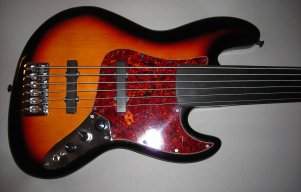
That's why I started the thread. When I tried a 5 string, the B string got in the way, and I was just wondering how often I would use it. That's why I wanted to get other people's opinions on if/how they use their B string.
So how long did you "try" the 5 string? Seriously. 1 year? Two? Do you know how to start on ANY note on the neck and play a variety of major and minor scales across the neck in that key and at that position? Did you learn that much as part of your "trial"? If you didn't then it's no wonder you find the B string "in the way". Personally when slapping, I find the B string in the way. And when doing "old school" I find the B string just sitting there unused. But what does that have to do with you?
What I'm getting at is that when all I hear in the forum is your praise and worship bassist buddies asserting that they can't play the music they play without a 5 er, I'm wondering why you'd go ask some Jamerson tribute bassist how much he uses his B string and think it applies to you? I did say that the bass has to support the music. But I don't play in a praise and worship band, so how would my B string usage apply to anything you are doing? My opinion or even experience is irrelevant to your question.

I don't know how this thread has gotten to be so long. Now that I think about it, it's not a particularly compelling topic to begin with, lol.

When you see someone playing a 5 or 6 string bass, and not playing the extremes of the instrument a lot, that is called 'taste' and 'being a professional'. Watch Anthony Jackson.... he uses the whole instrument, using only the extreme range when appropriate, which is often just a few times or never in a given song.
And, as others have pointed out, the B string is not just for 'going low', but rather to open up other fingering options and also eliminating any need to detune.
+1
Great post. Sums it up perfectly.
So how long did you "try" the 5 string? Seriously. 1 year? Two? Do you know how to start on ANY note on the neck and play a variety of major and minor scales across the neck in that key and at that position? Did you learn that much as part of your "trial"? If you didn't then it's no wonder you find the B string "in the way". Personally when slapping, I find the B string in the way. And when doing "old school" I find the B string just sitting there unused. But what does that have to do with you?
What I'm getting at is that when all I hear in the forum is your praise and worship bassist buddies asserting that they can't play the music they play without a 5 er, I'm wondering why you'd go ask some Jamerson tribute bassist how much he uses his B string and think it applies to you? I did say that the bass has to support the music. But I don't play in a praise and worship band, so how would my B string usage apply to anything you are doing? My opinion or even experience is irrelevant to your question.
30 minutes.
I just wanted to hear other people's opinions on the matter. I agree with you, I probably felt that it was in the way because I don't have experience playing a 5 string and I don't know how much I would use it, hence the question asking how people use it and for what.
Basically, if I only need four strings, why have one sitting there in the way?
PS: The majority of my playing is not P&W.
That's why I started the thread. When I tried a 5 string, the B string got in the way, and I was just wondering how often I would use it. That's why I wanted to get other people's opinions on if/how they use their B string.
When I bought my first 5-string, I was messed up by the extra string for a few days, but I gigged it five days after buying it with virtually no problems. But I played it like I played my 4-strings before: up and down the neck. As time went on, I learned new songs the way a 5ver plays them: across the neck. I went 5 in the beginning as a way of dealing with the hella-big stretch that occurs south of fret 5. On songs that I learned after making teh switch, I play them that way. Older stuff I've been playing forever, I still play up and down the neck.
This post doesn't really mean anything; the thread just reminded me of when I bought my first 5ver is all.

Rickett Customs
Commercial User
I recall reading an interview with Ron Wickersham, where he said he could tell if someone was fairly new to a 5 with a B string, having a tendency to overuse it while it's still new, then falling in line after some time with it.


