
• TalkBass has been independent since 1998. Add your voice.
    Create a free account to reply to discussions, view embedded media, and browse with fewer display ads.
    Join freeLog in
    Want zero display ads or expanded classifieds tools? Compare plans.
Double Bass humidity question

My post could have been a little clearer....Nick is correct, 50% in the winter is higher than optimal. Usually in the winter mine is around 40% When that Hawk comes swoopin' in from the north, the humidity usually takes a dive...and if I'm not mistaken, most of the guys who know around here have said that when the humidity dives like that, it's a dangerous time for (double)basses.
 
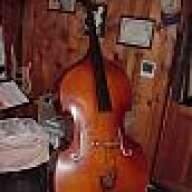
Looks like that Bass was hit AND the tail wire snapped at the connection. Ribs crushed, Sound post and Bass bar cracks and plenty other 'puzzle' cracks n splits. I hope you have insurance because to restore that Bass properly from to looks of it, it may exceed it's Value.

Fill out your profile and tell us what kind of Bass it is or at least what you think it is. That will be Expensive to repair. Even if it's a 20k or more Bass, the two cracks up and under the Bridge feet kills the re-sale value on a new Bass. At least to me it does.
 
Last night I experienced my first NorthEast style humidity dive. It has been hovering between 37-40% in my home for a few weeks, but last night I walked in from work and the humidity had dropped to 20%. Boiling a pot of water in my home will take the humidity from 20% to 45% in 10 minutes, but I'm about changing the humidity that drastically in such a short period of time. The bass is in it's bag. How slowly should the humidity be adjusted back to normal? With the door open, the room temperature stays at about 64 degrees, closed it drops into the 50s overnight.

 
Ben Rose said:
Last night I experienced my first NorthEast style humidity dive. It has been hovering between 37-40% in my home for a few weeks, but last night I walked in from work and the humidity had dropped to 20%. Boiling a pot of water in my home will take the humidity from 20% to 45% in 10 minutes, but I'm about changing the humidity that drastically in such a short period of time. The bass is in it's bag. How slowly should the humidity be adjusted back to normal? With the door open, the room temperature stays at about 64 degrees, closed it drops into the 50s overnight.

But how fast does it drop from 45% back to 20%? You need consistency and not a push and pull scenario. Buy a warm-air room humidifier, keep it at 35%-40%.
 
Thanks, Nick. I hung a damp towel on a music stand and that seemed to help regulate keep it in the 30s through the night. I'm going to get a humidifier at lunch today. I think I will put the humidifier in the room next to my practice room at first.

 
Ben Rose said:
Thanks, Nick. I hung a damp towel on a music stand and that seemed to help regulate keep it in the 30s through the night. I'm going to get a humidifier at lunch today. I think I will put the humidifier in the room next to my practice room at first.


I have had good results with an evaporative humidifier. I stay away from the "misting" types that can leave residues.

 
I bought one of those big floor units at Sears and it was working fine but the other day the humidity in the house dropped and now it's working hard to keep the humidity at 35%. I'm not worried at 35% but it's not even the coldest part of the winter yet.

Perhaps I need to build a walk in humidor. :hmm:
 
DRURB said:
I have had good results with an evaporative humidifier. I stay away from the "misting" types that can leave residues.


Depending upon the type of water used in the humidifier (mineral content, etc.), a fine white "dust" can be left on furniture (and basses) in the room. If you use distilled water there's no problem.
 
This website talks about moisture diffusion through the exterior walls of the home and how to prevent it. It stands to reason that if moisture can't leave, then it must stay. Just an idea on maintaining humidity.

Link Removed
Vapor barrier" paints are also an effective option for colder climates. If the perm rating of the paint is not indicated on the label, find the paint formula. The paint formula usually indicates the percent of pigment. To be a good vapor diffusion retarder, it should consist of a relatively high percent of solids and thickness in application. Glossy paints are generally more effective vapor diffusion retarders than flat paints, and acrylic paints are generally better than latex paints. When in doubt, apply more coats of paint. It's best to use paint labeled as a vapor diffusion retarder and follow the directions for applying it.