• TalkBass has been independent since 1998. Add your voice.
    Create a free account to reply to discussions, view embedded media, and browse with fewer display ads.
    Join freeLog in
    Want zero display ads or expanded classifieds tools? Compare plans.

I made up my mind: I prefer lined fretless.

203ED88B-BF32-4FD6-98C9-EEBD6AD1C96E.jpeg
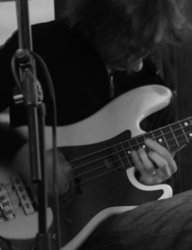
This is my humble Fretless Jazz. I could careless that it has lines. I sing lead vocals, so I rarely look down. lol
 
I have a lined fretless--which I do prefer & was hoping to find (I didn't see many unlined in my search--I think they were all out of my price range, but I may ave forgotten something)
If I got another I wouldn't be as concerned with it--and it wouldn't be high on my list--but hey--if that's what you want or if you want unlined

Go for it!
 
I have no problem with anyone who prefers no lines. Christian McBride, Pino Pallidino, Percy Jones, and Tony Franklin, like lineless fingerboards, who am I to criticize them?

Jaco, Mark Egan, and Marcus Miller, like lines. I think they are pretty good too.
If I played fretless, I would prolly want lines.. but a neck with no lines just looks so sexy. Right?

:cool:

T$
 
  • Like
Reactions: Dr. Cheese
I haven't heard an unlined eBass played in tune yet. Anything on youtube? I'm a professional orchestral bassist and my two fretless eBasses are lined for good reason. The vertical shifts on the upright lend themselves to muscle memory for positions. I don't find the horizontal nature of eBass neck shifts to be as consistent. One of my fretless basses is a Gary Willis. He said he got so used to one of his scale lengths that playing on another one threw him off. Same is true on upright. I have a 7/8 for orchestra and a 3/4 for all other styles. Same string length, but shoulders are different. I'm used to both, but have to watch out on the little one that I play less. I hope someone can reply with a youtube link of an unlined fretless really dead center in tune all the time. Lines look fine on an eBass. Only thing ever distracting to me is an out of tune note.
 
Regarding vertical vs horizontal shift orientation, I'll add that I think there is something about the proximity to the eye and ear, or head. So a violin is horizontal but close to the head. An eBass is usually way out there for the hand, not along the line of vision. I guess some folks play an eBass with the neck on a diagonal. That might help intonation.
 
Yeah, I can agree with original post. It would be nice to have an unlined board with fret markers on the side....a best of both scenario. I'm not sure if I've seen anything quite like that....correct me if I'm wrong?
 
...
...She can't look and I don't understand how she does it.
...

To my eyes her fingertips seem to move in a very similar way to someone reading braille. If you watch closely you can see how she is continually feeling for and checking tactile references - the nut, fret edges, locating frets by feeling between the strings, and so on. Once the required reference is found she then stabilises her consistent hand posture around a firmly located thumb. Consistent posture is essential for reliable shifting and, for fretless players, good intonation - far more so than visual references, IME. A large proportion of bass guitarists don't have consistent posture which means there is no coherent unit (wrist/thumb/fingers) for the forearm to manipulate. Rather like trying to drive a car with your seat not locked in position and with the pedals moving around in the footwell...
 
Last edited:
  • Like
Reactions: Jaribu and Papageno
Yes to lines. I don't play fretless enough to develop the consistent muscle memory and inner ear intonation sensitivity required of unlined. I'm doing good to hold tune and intonation when I'm looking at the lines, and even that can be a challenge with certain passages. And working the mwah in there, it's a different skill set for sure.

And yes to unlined looking sexier, but prolly mostly to musos.
 
Consistent posture is essential for reliable shifting and, for fretless players, good intonation - far more so than visual references, IME.
This is also how I view it. The need for a consistent hand shape is the reason for which I prefer using Simandl technique on fretless BG, as it allows the hand to be consistently in relaxed, unstretched, shape. The stretching needed to play with 1234 technique (for me at least) makes intonation more challenging.
 
  • Like
Reactions: SteveCS
I haven't heard an unlined eBass played in tune yet. Anything on youtube? I'm a professional orchestral bassist and my two fretless eBasses are lined for good reason. The vertical shifts on the upright lend themselves to muscle memory for positions. I don't find the horizontal nature of eBass neck shifts to be as consistent. One of my fretless basses is a Gary Willis. He said he got so used to one of his scale lengths that playing on another one threw him off. Same is true on upright. I have a 7/8 for orchestra and a 3/4 for all other styles. Same string length, but shoulders are different. I'm used to both, but have to watch out on the little one that I play less. I hope someone can reply with a youtube link of an unlined fretless really dead center in tune all the time. Lines look fine on an eBass. Only thing ever distracting to me is an out of tune note.

Hi. This guy is pretty decent. While I'm sure it's possible to find a few notes a tiny bit off (other than those that are deliberately more expressive), to my ears, he's pretty much on it. YMMV.

 
I haven't heard an unlined eBass played in tune yet. Anything on youtube? I'm a professional orchestral bassist and my two fretless eBasses are lined for good reason. The vertical shifts on the upright lend themselves to muscle memory for positions. I don't find the horizontal nature of eBass neck shifts to be as consistent. One of my fretless basses is a Gary Willis. He said he got so used to one of his scale lengths that playing on another one threw him off. Same is true on upright. I have a 7/8 for orchestra and a 3/4 for all other styles. Same string length, but shoulders are different. I'm used to both, but have to watch out on the little one that I play less. I hope someone can reply with a youtube link of an unlined fretless really dead center in tune all the time. Lines look fine on an eBass. Only thing ever distracting to me is an out of tune note.

the best is probably Steve Bailey. He's the only one I've ever heard with good enough control that you don't climb the walls when he plays further up on the neck. Such as myself for example, where things start sounding like an angry cat above about the 10 th fret, especially on my tony franklin.

There are others but SB is probably the best one around right now:


L
 
I am so glad I bought the Glarry instead going in the deep end with a Tony Franklin. I can play unlined fretless and I can stay in tune, but frankly, I don't need the challenge of an unlined fingerboard. Lined or not, it is very easy to go out of tune playing fretless. The lines make it much easier for me to self correct. Your mileage may vary, but I have no shame in my game:we get no bonus points for difficulty of execution, so I am happy to have the help of lines.

the issue I found playing unlined fretless on stage was glare from the stage lights making it difficult to see the fingerboard properly. A lined fretless is much better.
 
  • Like
Reactions: Lackey
Proper technique is all about reducing the chances for error. Once you have shifted successfully, playing in position ensures that you have command of every note within reach of that position. Learning to stay in contact with the fingerboard is essential. For some of you self-taught folks, try this a few minutes a day.
Begin in a position which doesn't require stretching. I suggest D on the G string. Place your 1st finger on D. While leaving your 1st finger down, play the Eb with your 2nd finger. Ibid the 3rd and 4th finger making sure you leave all other fingers in place. Do this slowly and carefully on all strings. Once this is comfortable, try some combinations. 1-4-3-4; 1-4-2-4; 1-3-2-3; 2-4-3-4. It may takes some time to reprogram your muscle memory if you did not begin this way. This is why lessons at the beginning is probably more important than any other time because unlearning is harder than learning. Folks who bean like this in fretted bass find the transition to fretless pretty simple. (Playing just behind the fret).
For half (and probably 1st position), I recommend upright fingering. 1st finger on G#, 2nd finger on A, 4th finger on Bb. (See Simandl or similar). Avoid stretching until your body has memorize these. Depending on the size of your hands and the size of your fingerboard, this will very. Many people prefer J style Basses for this reason.