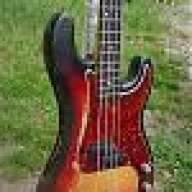
rotero said:Sadowsky Metro 4 string- Maple on Alder - Sweetly balanced. Blindfolded I would have said Rosewood.
That is impossible, as Metros are not sold in that wood combination. They are only Maple/Ash or Rosewood/Alder.

TalkBass has been independent since 1998. Add your voice.
Create a free account to reply to discussions, view embedded media, and browse with fewer display ads.
Join free Log in
Want zero display ads or expanded classifieds tools? Compare plans.
rotero said:Sadowsky Metro 4 string- Maple on Alder - Sweetly balanced. Blindfolded I would have said Rosewood.
Fuzzbass said:Rosewood has more mass than maple. That leads to an obvious conclusion...


Sean Baumann said:But then what would it sound like if we were playing under a different gravity than the earth, like the moon? Thats the real question here, I think.
Sean Baumann said:What?? My strings never touch the fingerboard (fretted bass). If they did, there would be dents/scrapes/whatever in the fingerboard. You all are crazy.I mean sheesh, what are you fretting the string right between the two frets (or even closer to the fret behind) to be able to bend it all the way down to the fingerboard?? And I have some seriously tiny frets on my MTD, and any sideways vibrato is only putting pressure on the fret. If not, man you have a whack technique or are trying to bend the note by pushing the string into the fingerboard. I'l start calling you the hulk.

If you have an electric tuner try it with the bass plugged in. you'll see it makes your strings go out of tune.alanbass1 said:I would guess that many players who read this post will do likewise; on depressing the string behind the fret the string makes contact with the fingerboard. I can't see any issue with this.

AerospaceGuy said:yea the neck isn't aluminum. Imagine a full graphite neck. with a VERY thing sheet of aluminum over the fingerboard.
Sean Baumann said:What if it this is all just related to mass. Can we all agree that a bass with more mass will be brighter?
Sean Baumann said:I guess that would be the selling point for those hefty bridges such as BAII, etc. Which fingerboard would have more mass? A maple or rosewood?
</post-fest>
Geoff St. Germaine said:I doubt it. I've played some warwicks that were way heavier, but not as bright as the F Bass I owned.
The specific gravity of maple is about 0.75 and Rosewood is (depending on species) 0.85 - 1.2.
Sean Baumann said:Shrug. I'm not insulting or insulted. Just expressing my opinions. Take it as you will. Notice the ducking icon. I am no expert in anything bass related, but I know in my (which I would assume is normal) technique, no way I would be pushing the strings that hard. I've owned dozens of basses, majority of which are used, and I've seen worn frets but never worn fingerboards. I think I'll get the feeler guages out tonight to check and see if I can get the strings to touch the fingerboard on my MTD.
Sean Baumann said:So much for that theory!
Geoff St. Germaine said:It also depends what the height of the frets are on your bass. I have Banjo frets (0.040") on my Dingwall and they are available with Mandolin frets (0.037") as well. Jumbo fretwire is around 0.053".
My MTD is pretty tiny fretwire. I've had plenty of basses go through my "collection" so I know the difference 

SteveD said:Hey Fretless Freak: My pads do touch the fingerboard, especially on the D and G strings, and when I am bending or"warbling" a note. I've got pretty long fingers for a 5' 8" guy, but not fat fingers. Fingers not currently in use on a note will also touch areas of the neck as I play and mute. I notice a "feel" difference between necks. I'm currently playing a fretted 64 Jazz and a fretless 2001 MIM Jazz, both with Rosewood. The two Rosewood necks even feel different. I've played bass for 32 years. I don't like the way maple fingerboards feel.

Sean Baumann said:That is impossible, as Metros are not sold in that wood combination. They are only Maple/Ash or Rosewood/Alder.
NecroticImbecil said:Are we arguing about not arguing about the maple vs rosewood argument? I'll argue it's arguable.