• TalkBass has been independent since 1998. Add your voice.
    Create a free account to reply to discussions, view embedded media, and browse with fewer display ads.
    Join freeLog in
    Want zero display ads or expanded classifieds tools? Compare plans.

I'm Afraid of Set Necks

FingerDub

Inactive
Jan 8, 2016
2,811
5,919
As far as I understand them, set necks are a dovetail joint attaching the body and neck together along with some sort of adhesive. I have read that this is supposedly just as strong as a bolt on but I'm not so sure. Even with glue I feel like the wood could move or bend or compress even just a little bit and compromise the joint. I'm definitely more comfortable with bolt on at this point.

I guess I'm asking for my mind to be set at ease. There is a bass I really think I want except for its set neck.
 
  • Like
Reactions: Brent Arrowitz
If thousands and thousands of mass produced instruments produced by builders the world over isn’t enough proof for you what could we possibly say to change your mind? :roflmao:

I get that, but if you were to grab a bass by his neck and moving around a little bit or swing it or grab it are you telling me that would not lose its Integrity the same way as a bolt on?

If so, why are so few basses made this way?
 
1. I can't truthfully answer this, because I can't imagine why I would ever swing a bass around by its neck. If I was suddenly threatened while holding a bass and needed to defend myself, my first instinct would, sadly, probably be to safely put the bass away first. Then be eaten by a lion or whatever, while thinking "That was stupid."

2. It's more work and expense to build than a bolt on.
 
Some very famous electric guitars models like the Gibson Les Paul and the ES series (ES335, etc.) feature set necks. They aren't considered flimsy. Some Gibson basses have set necks, too. The problems most of them had were broken headstocks due to falls. If the set neck system was weak, more would have broken at that point rather than near the nut. One drawback to that design is the difficulty in changing necks.
 
As far as I understand them, set necks are a dovetail joint attaching the body and neck together along with some sort of adhesive. I have read that this is supposedly just as strong as a bolt on but I'm not so sure. Even with glue I feel like the wood could move or bend or compress even just a little bit and compromise the joint. I'm definitely more comfortable with bolt on at this point.

I guess I'm asking for my mind to be set at ease. There is a bass I really think I want except for its set neck.
There is no reason to worry about the basic integrity of a set neck. Glued joints in wood are stronger than the surrounding wood; since wood is a porous material, the glue soaks in a bit and so forms somewhat of a wood/glue composite.

Depending on the type of glue used, it may be possible to "undo" the glue joint using heat, making neck replacement possible in some set-neck designs. That's a somewhat expensive operation so it's not as common as replacing a bolt-on neck, but it's also not uncommon to see neck replacement in higher value guitars like Gibson Les Pauls, etc.
 
I get that, but if you were to grab a bass by his neck and moving around a little bit or swing it or grab it are you telling me that would not lose its Integrity the same way as a bolt on?

That’s what we’re telling you.

If so, why are so few basses made this way?

Costs more. Harder to fix if you screw up. People no longer care if the instrument has a bolt-on neck.

That wasn’t always the case. There was a time when most guitarists and bassists felt a screw on (even today most most “bolt-ons” still use woodscrews rather than actual bolts and collets) neck was a bad idea and preferred to get a set neck instrument if they could afford one.
 
That wasn’t always the case. There was a time when most guitarists and bassists felt a screw on (even today most most “bolt-ons” still use woodscrews rather than actual bolts and collets) neck was a bad idea and preferred to get a set neck instrument if they could afford one.

And a fair number of us still strongly believe that.
Yel_wink.gif
 
The OP seems to have the idea that the glue used in attaching set necks is weak. It isn't. They don't use Elmer's for that work. Besides, most guitar bodies are made from multiple pieces of wood. A typical Fender body is at least two, sometimes as many as seven separate pieces of wood glued together. Some necks, also, are made from two or more pieces of wood glued together for greater stability than a single piece of wood would provide. The stability and strength of the adhesives used to hold these instruments together is really not something to worry about.
 
Set necks have been the "right" way to do it for hundreds of years. Bolt-ons were a Leo Fender idea (pretty sure) from 1948.

The amount of engagement surface in a set neck joint is substantial and on multiple planes, so there's a LOT of glue in several directions.
It's ridiculously strong compared to a bolt neck. I have never even heard of one failing under any condition short of catastrophic. I've handled bolt-on instruments where the neck pocket is poorly made, and the neck shifts position easily, throwing out the tuning and intonation. Never happens with a glued neck. Have you noticed how many basses these days use 5 or 6 bolts instead of four? To make the connection stronger and more stable. Because bolt-on necks aren't perfect.

When guitarists and bassists used to smash their instruments on purpose, the neck bolts would often give out early and the neck would stay intact until hit again separately. Trying to smash a Gibson wasn't done, because the neck joint was too strong. (And were too expensive, I bet).

Google around for photos of set neck instruments under construction. It's nothing like what you would get by gluing a Fender neck to the body.
There's some old-world knowledge and craftsmanship involved that gets the job done correctly.
And as mentioned, quality glue joints are much stronger than the surrounding wood. This is why laminated necks are so much stiffer than 1 piece, for example. I believe a set neck is every bit as strong as a neck-through, for all practical purposes. You would have to be seriously trying to kill a guitar on purpose to have a problem with one.

The headstock breakage on Gibsons is well-documented. It's a design flaw related to the direction of the wood's grain at that point.
The solution that many other companies now use on similar designs is called a scarf joint. The headstock and first few inches of the neck are made using wood whose grain goes in a different direction than the rest of the neck. The 2 parts of the neck are glued together, and a scarf joint is not going to fail in any way.

In the early days, airplanes were made of wood. Much of the construction used glues rather than bolts because it IS stronger. People bet their lives on it.
 
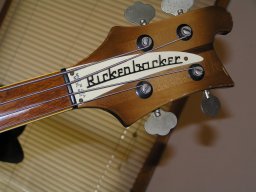
For smashing up guitars on stage, Pete Townshend favored hollow-bodied set-neck Rickenbackers. You don't want the neck joint to fail, because then the body would just fly off rather than get smashed, and you want a hollow body because it smashes more easily. That's probably why nobody smashed Les Pauls on stage, and why Jimi Hendrix set Stratocasters on fire rather than smashing them.
 
A set neck joint is very strong, far far stronger than three or fours small screws that hold a bolt on neck. As has been said a few times above, bolt on necks are purely a means of making guitars very quickly and cheaply, and a convenient way of being able to change a neck that hasn't had quite so much care put into it's manufacture should the occasional one warp badly enough to warrant the change.
 
Even tho' I've seen some people having to reset some necks (mostly in VERY OLD instruments, made with less than state of the art glues), modern PVA wood glues (and others such as epoxy) create a bond that's way stronger than wood itself. I've pressed longboard decks (still do occasionally) with PVA glue and, provided a good pressing (i.e. not trying extreme, difficult to press bends to the sheets) delamination was never a problem. I in fact know first hand a guy who got his Gibson SG's headstock knocked off once. He had it repaired but, thru' the years, had it knocked off again 2 other times. It never broke by a previous glue line, the glue lines were the strong points in that headstock indeed (after 3 breaks, probably most of that headstock was glue :facepalm:).

A set neck joint should be stronger than a bolt on. Bolt on is a reasonable compromise (the bigger the contact patch the better, some extra bolts also help "bonding") that simply allows for modularity and cheaper replacement of a neck.
 
Set necks have been built for years and they're of no concern when it comes to basses. I'd be far more leery of older bolt-neck basses that have had the neck taken off more than a few times only to be re-attached with the same hardware store wood screws into a possibly too dry / brittle neck. Why no one ever went to the bolt/collet method I'll never know. Although in a strangely sad way, it's funny to see the occasional pic of the wrong length replacement screws poking through the fingerboard.

(Of course, I'm quite sure I'm fixing to get told why no one did . . . . . Ed.)
 
  • Like
Reactions: Korladis
my husband glued to pieces of wood - i think spruce - together with titebond. a week later, we tried to force the two pieces of wood apart. when the two pieces of wood finally separated with a lot of force, the titebond had held - one of the pieces of wood's facing part peeled away instead.

Yes indeed. I've heard many luthiers and woodworkers comment that a well done wood joint can be significantly stronger than the wood around it. Compare that with a bolt on where, if you hold the top horn of the body and give the neck a bit of a shove you can pretty easily move the alignment of the neck - seen a few folks do this while setting up a bolt on neck bass or guitar (don't try this at home kids)
 
Hendrix smashed his strats as well as burned them,Townshend smashed whatever he played and his instrument wasn't chosen for smashability (I know it's not a real word)....my take is the modern bass was essentially invented by Leo Fender,so there was no "right way" to make a bass until he came along. He intended the instruments to be bolt on. There is a reason bolt on or neck through basses sell more than set neck models. In my experience with set neck basses (Gibson) the necks warp a bit easier,but that's just my experience. It doesn't really matter how much craftsmanship and old world knowledge it takes to make (it's all cnc now anyway). There is a reason more are done in bolt on (aside from easy production,but again its cnc so its far less work even if it's set). Thats like saying a battleship from 200 yrs ago is just as effective as one built in the last 20 yrs because it takes more "old world craftsmanship" to build and is proven to float. Also bolts dont deteriorate over the years like glue can.Thats my rant.