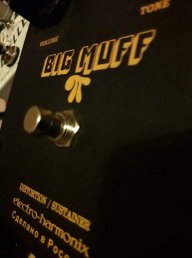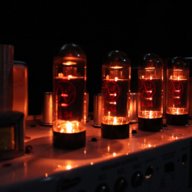
Technically not just bass related, the internet, talkbass, you tube, etc... changing the way information and ideas and are disseminated, gear is purchased and new music is discovered. Sometimes for the better, sometimes for the worse.

TalkBass has been independent since 1998. Add your voice.
Create a free account to reply to discussions, view embedded media, and browse with fewer display ads.
Join free Log in
Want zero display ads or expanded classifieds tools? Compare plans.

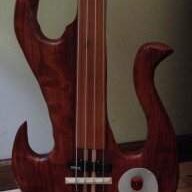

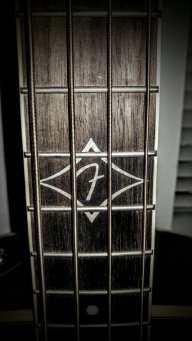
Kind of cool but I don't know if I like them or not.Check this out...
Stonefield | The Bass You've Always Wanted. Hand made in Christchurch
I have no affiliation.
<sigh> Fine, I'll concede it's full of standard parts. There's your "gotcha!" moment you've obviously been craving.But I'll still stick to my guns on the idea of "innovation" also being the inventive use of pre-existing technology. So, in that context, and to keep the topic rolling, I'll move on to something I feel was, at least, a little innovative…in my own opinion, even though it was the cobbling together of a number of pre-existing bits o' tech, yadda, yadda, yadda. It's a particular wiring harness put together by Santellan Sounds/Elek-Trix that I've written about on several occasions.
Truth be told, it's not very flashy (not like a Lightwave system or other, borderline-sci-fi stuff like that), but I found it to be an ingenious combination which really opened up the capabilities of my last parts-bass project. Here's what they crammed into one, contiguous package…
On their own, none of these are a big deal, 'cept maybe the dip-pin-chip part. The only thing I've come across with those are the Guitar Fetish REDactive EQ-switchable pickups. (Question for Y'all; are there other electronic systems that use dip-pin-chips for tweaking and shaping their sound?) Personally, I feel putting all three of these technologies together in one, easy-to-use package is downright brilliant!
- Series/parallel switchable
- Solderless terminal block connections (for someone who's all-thumbs with a soldering iron, that's a very big deal!)
- A dip-pin-switchable chip that allows one to adjust the capacitance with minimal effort. (again, no soldering required…yay!) I especially love that it's separate from the tone control, unlike a Stellartone Tonestyler. I can set the "cap value" and still tweak the tone independently.
Sadly, the guy who runs Santellan Sounds sold the company to someone who doesn't seem interested in producing more units. Thank Bob I bought a second unit before the sale went down!

This EverTune bridge seems like the real deal...I wonder how many manufacturers are offering it, and if the answer is "not many", I wonder why not?EverTune Bridge | Keep Your Guitar in Tune Forever
If these guys ever manage to make a version that works on bass, I'll be all over that. Never going out of tune, all mechanical? That's such a cool piece of engineering.
I always thought Kramer/Electrical Guitar Company instruments with aluminium necks were cool. Super thin, and from what I've heard of the full aluminium bodied EGCs, they have a very unique tone.
Oh, and the Gibson RD Artist. Bob Moog electronics, those things are beasts.
I know you can get it on some ESP models like the Ben Weinman Signature, but I haven't seen any other brands offer it as stock. I've seen a lot of bands get them fitted aftermarket though. It's a shame they haven't figured out how to get a bass version to work yet, but I've heard they're working on it.This EverTune bridge seems like the real deal...I wonder how many manufacturers are offering it, and if the answer is "not many", I wonder why not?

I know you can get it on some ESP models like the Ben Weinman Signature, but I haven't seen any other brands offer it as stock. I've seen a lot of bands get them fitted aftermarket though. It's a shame they haven't figured out how to get a bass version to work yet, but I've heard they're working on it.

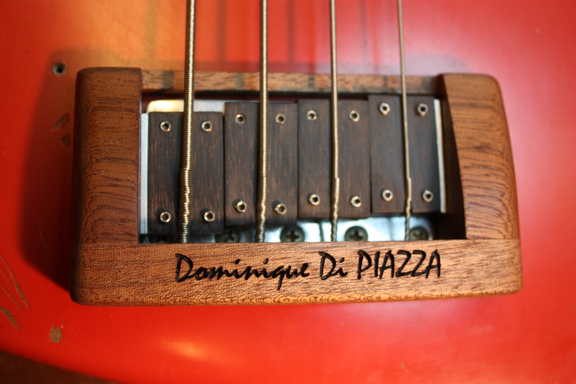
By the way, this fretless bridge is a very cool innovation!

Gotta disagree, with respect. Alembic invented active electronics in the early 70's, which are a much bigger innovation than what Steinberger did. Oh... the graphite neck was also first used in a production bass by Alembic.Apart from being aesthetically questionable, the Steinberger was - by far - the biggest innovation in bass guitars. D

Gotta disagree, with respect. Alembic invented active electronics in the early 70's, which are a much bigger innovation than what Steinberger did. Oh... the graphite neck was also first used in a production bass by Alembic.
Well, it might be interesting to have a foot pedal that would raise or lower the frets so you could be fretless for couple of notes and then not, or vice-versa. Another foot pedal innovation might be something that affected the sustain, like a limiter or compressor.
Gotta disagree, with respect. Alembic invented active electronics in the early 70's, which are a much bigger innovation than what Steinberger did. Oh... the graphite neck was also first used in a production bass by Alembic.
 ...I think you may be missing how truly innovative the original Steinberger bass was.
People complain about low B strings all the time, but I have no problem with them on my BEAD tuned basses.Headless. Being able to throw a bass into a guitar gig bag is quite nice. Hopefully Hipshot's hardware catches on this time. I respect Steinberger and have a really nice Steinberger guitar, but I think a perceived drawback with headless was that it had a certain sound, which was more due to EMGs and a graphite neck. Throw a headless system on a wood guitar with desired electronics and the tonal impact of the headless hardware is minimal.
A good low B string. This is a combo of good construction and strings. I'm under the impression that part of the resistance to 5+ string basses is that the cheap/old ones don't sound very good. Ok, another part is that a lot of guys want to grip the neck like a baseball bat, which does not fly on slimmer and/or wider necks, not that anyone would admit to technique issues.The stiffer necks can sometimes help the neck resist warping or as much movement with humidity swings.
Coated or synthetic fingerboards. They protect the neck against roundwound abuse and add a certain coolness to the sound.
Truss rod access without removing the neck. Anyone who lives in the Midwest could probably tell ya how fun it is to adjust all of your guitars twice a year due to the extreme shift in humidity.