
Enjoy the benefits of a premium membership!
Upgrade Account
-
TalkBass has been independent since 1998. Add your voice.
Create a free account to reply to discussions, view embedded media, and browse with fewer display ads.
Join free Log in
Want zero display ads or expanded classifieds tools? Compare plans.
You are using an out of date browser. It may not display this or other websites correctly.
You should upgrade or use an alternative browser.
You should upgrade or use an alternative browser.
Inside The Secret Underground Laboratory
- Thread starter Bruce Johnson
- Start date
More options
Who Replied?

sondich
Commercial User
- Oct 19, 2011
- 53
- 44
- Disclosures
- General Manager: Commercial Forest Products
Unfortunately, some very sad news today. My friend and fellow Luthier Mike Lipe died yesterday.
It's still sinking in for me that he's gone and it's all ended.
Rest in peace, man.
View attachment 3262619
So sorry for your loss. Mike was one of the most down-to-earth people I've ever met in this business. He never named-dropped even though he worked with major talent over the course of his career. I never knew he was a Vietnam vet, yet I did know that he donated guitars to the Wounded Warrior project. When my wife asked how old he was, I said mid-fifties which really made no sense had I thought about it but he just had a really young energy about him. RIP.


So sorry for your loss. Mike was one of the most down-to-earth people I've ever met in this business. He never named-dropped even though he worked with major talent over the course of his career. I never knew he was a Vietnam vet, yet I did know that he donated guitars to the Wounded Warrior project. When my wife asked how old he was, I said mid-fifties which really made no sense had I thought about it but he just had a really young energy about him. RIP.
Hi Steve;
It's good to hear from you! Yeah, Mike and I just made a batch of necks from your wood a few weeks ago. And Keith and I just made up three bass necks last week, that Pat Wilkins ordered from Mike, out of boards from you. Those basses will be at the NAMM show in Pat's booth. Those are officially the last three necks in my order book from Mike. Serial numbers ML715, ML716 and ML723. Keith stepped in to help finish them up for Pat, while Mike was in the hospital. We assumed that he'd be back home by now.
A quick update on Mike Lipe's estate:
Mike's daughter Michelle Lipe is the sole heir. She has no plans to continue Mike's Luthier business, but she hopes to move into his house in Tujunga, and take some time sorting through the shop in the garage there. She's working with several of us to finish up a few of the outstanding guitar orders, and get them to the customers. There will also be about six instruments that he was getting ready for the NAMM show. Keith Horne is going to get them put together and finished up, and they will be put up for sale sometime soon.
I'm taking care of cleaning out Mike's shop here in the Lab. I'm taking responsibility for selling off most of the machines, with the money going to Michelle. There are about six general woodworking machines. There will also be some lumber and some smaller power tools. I'll be selling these things for what I consider to be fair prices, putting them up on CraigsList if no immediate friends want them.
At this time, we are not selling any guitar parts, necks, bodies, templates, tooling, or specific Luthier supplies. Maybe later, after Michelle has a chance to go through the shop in Tujunga.
Please don't ask me to list items and prices here. This is not the place. But any of you Luthiers who are around this area can contact me if you are interested in the machines.
Mike's daughter Michelle Lipe is the sole heir. She has no plans to continue Mike's Luthier business, but she hopes to move into his house in Tujunga, and take some time sorting through the shop in the garage there. She's working with several of us to finish up a few of the outstanding guitar orders, and get them to the customers. There will also be about six instruments that he was getting ready for the NAMM show. Keith Horne is going to get them put together and finished up, and they will be put up for sale sometime soon.
I'm taking care of cleaning out Mike's shop here in the Lab. I'm taking responsibility for selling off most of the machines, with the money going to Michelle. There are about six general woodworking machines. There will also be some lumber and some smaller power tools. I'll be selling these things for what I consider to be fair prices, putting them up on CraigsList if no immediate friends want them.
At this time, we are not selling any guitar parts, necks, bodies, templates, tooling, or specific Luthier supplies. Maybe later, after Michelle has a chance to go through the shop in Tujunga.
Please don't ask me to list items and prices here. This is not the place. But any of you Luthiers who are around this area can contact me if you are interested in the machines.

- Jan 28, 2009
- 2,929
- 4,152
- Disclosures
- Owner: Moonshine Custom Guitars
A quick update on Mike Lipe's estate:
Mike's daughter Michelle Lipe is the sole heir. She has no plans to continue Mike's Luthier business, but she hopes to move into his house in Tujunga, and take some time sorting through the shop in the garage there. She's working with several of us to finish up a few of the outstanding guitar orders, and get them to the customers. There will also be about six instruments that he was getting ready for the NAMM show. Keith Horne is going to get them put together and finished up, and they will be put up for sale sometime soon.
I'm taking care of cleaning out Mike's shop here in the Lab. I'm taking responsibility for selling off most of the machines, with the money going to Michelle. There are about six general woodworking machines. There will also be some lumber and some smaller power tools. I'll be selling these things for what I consider to be fair prices, putting them up on CraigsList if no immediate friends want them.
At this time, we are not selling any guitar parts, necks, bodies, templates, tooling, or specific Luthier supplies. Maybe later, after Michelle has a chance to go through the shop in Tujunga.
Please don't ask me to list items and prices here. This is not the place. But any of you Luthiers who are around this area can contact me if you are interested in the machines.
Cool Bruce. Very respectful... Prayers, positive thoughts and good vibes to Michelle; She definitely needs time to take all of this in.
Rick

A quick update on Mike Lipe's estate:
Mike's daughter Michelle Lipe is the sole heir. She has no plans to continue Mike's Luthier business, but she hopes to move into his house in Tujunga, and take some time sorting through the shop in the garage there. She's working with several of us to finish up a few of the outstanding guitar orders, and get them to the customers. There will also be about six instruments that he was getting ready for the NAMM show. Keith Horne is going to get them put together and finished up, and they will be put up for sale sometime soon.
I'm taking care of cleaning out Mike's shop here in the Lab. I'm taking responsibility for selling off most of the machines, with the money going to Michelle. There are about six general woodworking machines. There will also be some lumber and some smaller power tools. I'll be selling these things for what I consider to be fair prices, putting them up on CraigsList if no immediate friends want them.
At this time, we are not selling any guitar parts, necks, bodies, templates, tooling, or specific Luthier supplies. Maybe later, after Michelle has a chance to go through the shop in Tujunga.
Please don't ask me to list items and prices here. This is not the place. But any of you Luthiers who are around this area can contact me if you are interested in the machines.
thanks for taking care of the family bruce
character matters
Back on the happier subject of machines and building basses:
In exchange for my work in cleaning and sorting out Mike's shop, I am taking over ownership of this monster:
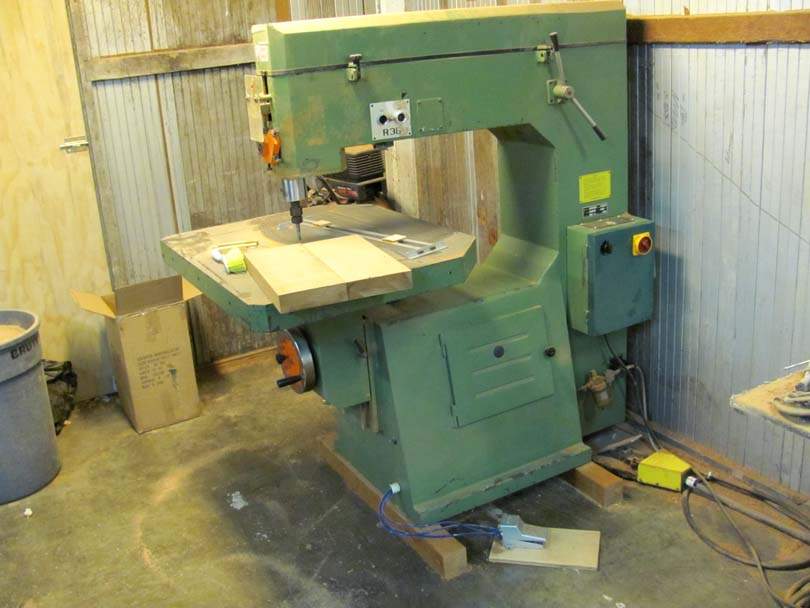
This is The Pin Router. Not just any pin router, it's The Pin Router. We always referred to it with due respect. It's a 1980's ITTM machine, made in Italy. It weighs about 3000 lbs and has a 7 1/2 hp motor, 3 phase. We called it the Ferrari of pin routers. Strange and cranky sometimes. But when it's roaring, it plows through wood like you wouldn't believe. It's quite intimidating to fire this thing up. It was Mike's main machine for many years, and had a history in the guitar business before him. It has cut out untold thousands of guitars.
I have a long personal history with it. I've been its main mechanic for at least 17 years. I know it inside and out. Back around 2001, it was owned by Jim Dugan, when Jim and Mike were sharing a shop in North Hollywood. Mike used it most of the time. Over the years, they would often call me when it would misbehave, and I'd drive over from Burbank to fix it. Neither of them would touch it internally. When they closed that shop down around 2011, the pin router went into storage in a container in Sun Valley.
A side note: My "Monster Table Saw", the 1938 Baxter Whitney 16" saw that you may have seen around here, also came from Jim and that shop, and it shared the container with the pin router.
Mike moved into a smaller shop in another part of North Hollywood for a few years. He had a smaller pin router there, which I also worked on for him. Meanwhile I had moved up here to Fillmore, and was getting settled in. In early 2015, Jim ran into financial problems and couldn't afford to pay the storage costs any more. The pin router and the table saw were going to get sent to the scrapyard. Mike and I intervened. He bought the pin router and I bought the table saw from Jim. I drove down there with a rented truck and trailer and hauled them both up to Fillmore. I stored them both here. The monster twins.
Then I convinced Mike to open a "remote" shop here. The main reason was to have the capability of the big pin router. He had a small pin router in the garage shop next to his house in Tujunga, but it was pretty lame. He rented a space here, down the hall from me, and I moved the monster pin router in there and wired it up. For three years, he would drive up to Fillmore two or three times a week for a few hours to do the heavy woodworking. It was a regular thing for me to hear that machine winding up to speed.
And I still kept working on it for him. It was still tempermental. But here, Mike could just walk down the hall to get me when it was acting up. Just this October, I replumbed most of the pneumatic system and fixed some of its longstanding problems.
With Mike gone, what are we going to do with it? It would be very difficult to sell. Modern woodworking shops don't use pin routers any more. Old fashioned and dangerous. OSHA inspectors have seizures when they see them. And way too big for a home shop. It would just go to a scrap metal dealer.
I don't really have need for a pin router. And I honestly don't have much experience running them. I've developed my processes with handheld collar routers. But what could I do? How could I abandon a fine old machine with a history like that?
So, The Pin Router is mine now. I've figured out how to shuffle some benches around and make a spot for it. I'll be moving it in here in a few weeks. It'll be a few feet away from its old buddy, the Monster Table Saw. Keith and I have already been thinking about operations that we might use it for. Fixtures to build....
When I get it installed and wired up and running, I'll probably start a new thread on here about pin routers. It'll be a learning experience for me too.
In exchange for my work in cleaning and sorting out Mike's shop, I am taking over ownership of this monster:
This is The Pin Router. Not just any pin router, it's The Pin Router. We always referred to it with due respect. It's a 1980's ITTM machine, made in Italy. It weighs about 3000 lbs and has a 7 1/2 hp motor, 3 phase. We called it the Ferrari of pin routers. Strange and cranky sometimes. But when it's roaring, it plows through wood like you wouldn't believe. It's quite intimidating to fire this thing up. It was Mike's main machine for many years, and had a history in the guitar business before him. It has cut out untold thousands of guitars.
I have a long personal history with it. I've been its main mechanic for at least 17 years. I know it inside and out. Back around 2001, it was owned by Jim Dugan, when Jim and Mike were sharing a shop in North Hollywood. Mike used it most of the time. Over the years, they would often call me when it would misbehave, and I'd drive over from Burbank to fix it. Neither of them would touch it internally. When they closed that shop down around 2011, the pin router went into storage in a container in Sun Valley.
A side note: My "Monster Table Saw", the 1938 Baxter Whitney 16" saw that you may have seen around here, also came from Jim and that shop, and it shared the container with the pin router.
Mike moved into a smaller shop in another part of North Hollywood for a few years. He had a smaller pin router there, which I also worked on for him. Meanwhile I had moved up here to Fillmore, and was getting settled in. In early 2015, Jim ran into financial problems and couldn't afford to pay the storage costs any more. The pin router and the table saw were going to get sent to the scrapyard. Mike and I intervened. He bought the pin router and I bought the table saw from Jim. I drove down there with a rented truck and trailer and hauled them both up to Fillmore. I stored them both here. The monster twins.
Then I convinced Mike to open a "remote" shop here. The main reason was to have the capability of the big pin router. He had a small pin router in the garage shop next to his house in Tujunga, but it was pretty lame. He rented a space here, down the hall from me, and I moved the monster pin router in there and wired it up. For three years, he would drive up to Fillmore two or three times a week for a few hours to do the heavy woodworking. It was a regular thing for me to hear that machine winding up to speed.
And I still kept working on it for him. It was still tempermental. But here, Mike could just walk down the hall to get me when it was acting up. Just this October, I replumbed most of the pneumatic system and fixed some of its longstanding problems.
With Mike gone, what are we going to do with it? It would be very difficult to sell. Modern woodworking shops don't use pin routers any more. Old fashioned and dangerous. OSHA inspectors have seizures when they see them. And way too big for a home shop. It would just go to a scrap metal dealer.
I don't really have need for a pin router. And I honestly don't have much experience running them. I've developed my processes with handheld collar routers. But what could I do? How could I abandon a fine old machine with a history like that?
So, The Pin Router is mine now. I've figured out how to shuffle some benches around and make a spot for it. I'll be moving it in here in a few weeks. It'll be a few feet away from its old buddy, the Monster Table Saw. Keith and I have already been thinking about operations that we might use it for. Fixtures to build....
When I get it installed and wired up and running, I'll probably start a new thread on here about pin routers. It'll be a learning experience for me too.
Last edited:
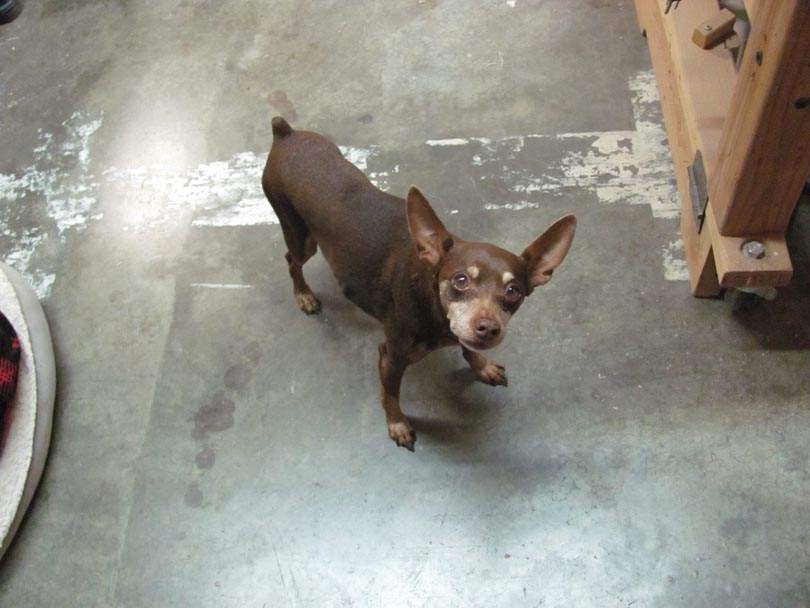
Unfortunately, another bit of sad news around here: Our little buddy Chip is gone. Chip was a Miniature Pincher owned by Keith Horne and his wife Kiera. Most days, Keith would bring Chip in and let him hang around his shop. Chip was our official Chief Of Security of the Secret Underground Lab. And he took the job seriously. Nobody got inside without Chip's inspection and approval! He protected his people. I don't think he actually ever bit anyone, but he scared a few with ferocious barkstorms. But, once you were approved for entrance, he was a sweet friendly little guy.
Keith and Kiera got him at a shelter and had him for many years. He had recently turned 13, getting elderly. He'd been sick on and off for the last several months with some kind of intestinal problem. Back and forth to the Vet, tried all kinds of medications. But it turned worse, and they finally made the tough call, and had him put to sleep at home.
Rest in Peace little buddy. You protected us from many threats that we didn't even know.
Keith and Kiera got him at a shelter and had him for many years. He had recently turned 13, getting elderly. He'd been sick on and off for the last several months with some kind of intestinal problem. Back and forth to the Vet, tried all kinds of medications. But it turned worse, and they finally made the tough call, and had him put to sleep at home.
Rest in Peace little buddy. You protected us from many threats that we didn't even know.

Very sorry there also. We had to put our dog to sleep at the end of November. Even knowing it’s better for them to not suffer it still is rough.

Well, tonight I moved The Pin Router from Mike's shop about 60 feet down the hall into its new home in my shop. I did the move all by myself, using two pallet jacks and some wood blocks. It took me about an hour and a half, including disconnecting everything and moving stuff out of the way. The actual move took maybe 20 minutes.
I paused here for a picture of it coming in the gate to my shop. As I've mentioned many times before, a pallet jack is the easy, safe way to move around machines on a concrete floor. This beast weighs 3000 lbs, and it's no problem for me to wheel it around by myself.
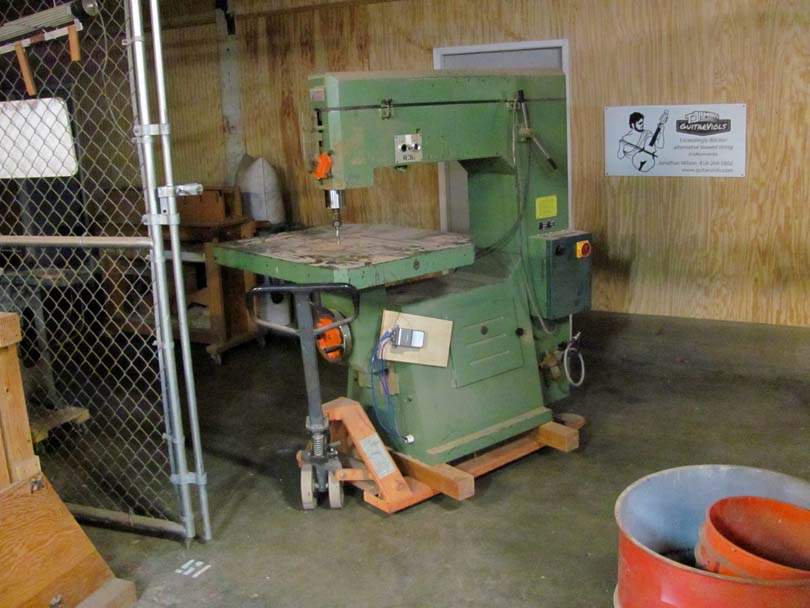
Note the two 4 x 4 timbers which its base is lagged to. They need to go crosswise like that, for stability. The small pallet jack will fit between them, to basically lift it and move it around. But here, I needed to bring it in lengthwise to get it through the aisles and around the corners.
So, first I used the narrow pallet jack coming in from the side, between the timbers. I lifted it up with that, and put other smaller 4 x 4 blocks under the four corners. Set it down on them, pulled the narrow pallet jack out. Then I slipped the wide orange pallet jack in from the front, between the blocks, and lifted it up under the cross timbers.
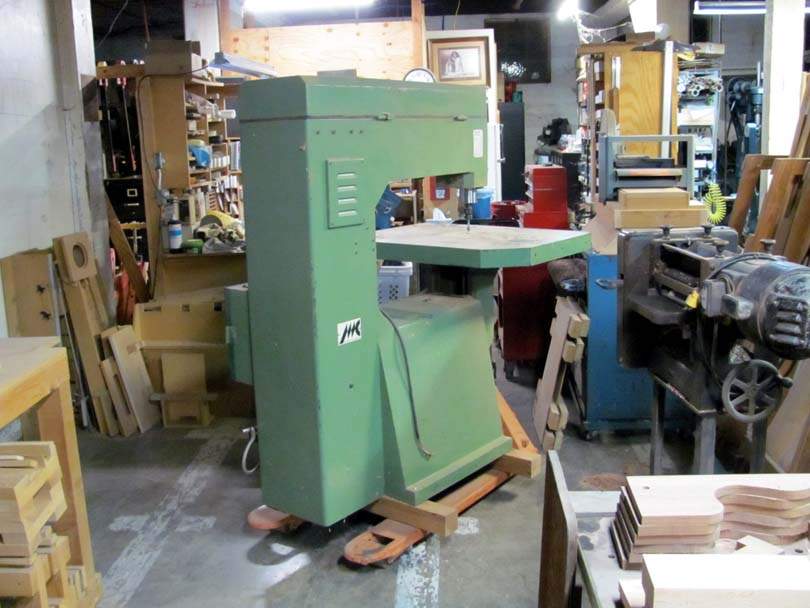
That's how I moved it, on the wide orange pallet jack. Down the hall, slowly, and into the shop. I still had to wheel a lot of stuff out of the way to get it in and maneuver it into position.

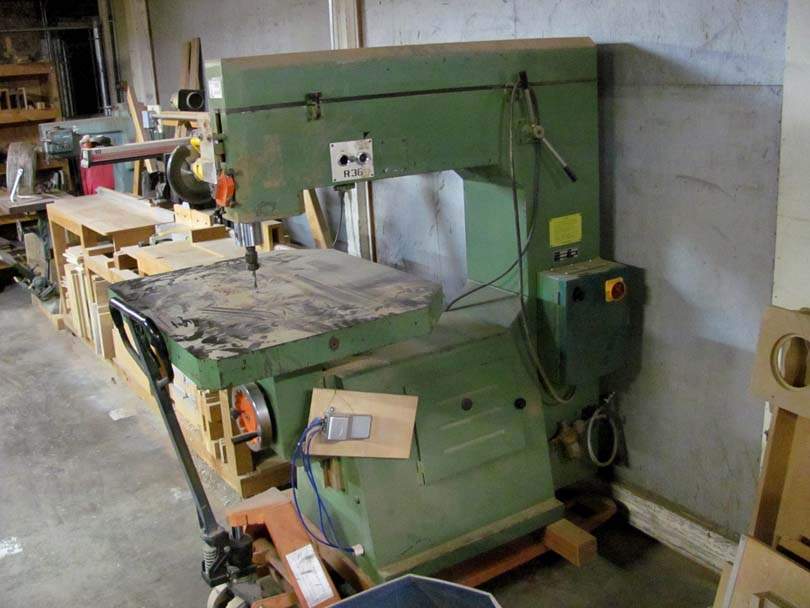
Once it was in place, I reversed the trick with the two pallet jacks to set it down on the floor on the two cross timbers. Some more machine tonnage added to my shop! That's a good thing.
It'll be a few weeks before I get it wired up and hooked up to air. Then I'll get to hear that glorious whine right here in my own shop. This thing sounds like a jet engine when it's running. A belt drive that runs 20,000 rpm is an amazing thing.
I'm in the final days of cleaning out Mike's shop. Most of the smaller things and the stacks of lumber are sold and gone. I have several of the remaining machines on CraigsList now. It's been a lot of work.
I paused here for a picture of it coming in the gate to my shop. As I've mentioned many times before, a pallet jack is the easy, safe way to move around machines on a concrete floor. This beast weighs 3000 lbs, and it's no problem for me to wheel it around by myself.
Note the two 4 x 4 timbers which its base is lagged to. They need to go crosswise like that, for stability. The small pallet jack will fit between them, to basically lift it and move it around. But here, I needed to bring it in lengthwise to get it through the aisles and around the corners.
So, first I used the narrow pallet jack coming in from the side, between the timbers. I lifted it up with that, and put other smaller 4 x 4 blocks under the four corners. Set it down on them, pulled the narrow pallet jack out. Then I slipped the wide orange pallet jack in from the front, between the blocks, and lifted it up under the cross timbers.
That's how I moved it, on the wide orange pallet jack. Down the hall, slowly, and into the shop. I still had to wheel a lot of stuff out of the way to get it in and maneuver it into position.
Once it was in place, I reversed the trick with the two pallet jacks to set it down on the floor on the two cross timbers. Some more machine tonnage added to my shop! That's a good thing.
It'll be a few weeks before I get it wired up and hooked up to air. Then I'll get to hear that glorious whine right here in my own shop. This thing sounds like a jet engine when it's running. A belt drive that runs 20,000 rpm is an amazing thing.
I'm in the final days of cleaning out Mike's shop. Most of the smaller things and the stacks of lumber are sold and gone. I have several of the remaining machines on CraigsList now. It's been a lot of work.
Last edited:

Hi Bruce. I'm fascinated by this. Even though I've been around woodshops since infancy and know about a lot of power tools, even commercial types not seen in the home shop, I have to admit I've never even heard of a pin router. I briefly searched the net but didn't find anything truly helpful. Would you mind briefly explaining what this magnificent-looking machine is?
Hi Bruce. I'm fascinated by this. Even though I've been around woodshops since infancy and know about a lot of power tools, even commercial types not seen in the home shop, I have to admit I've never even heard of a pin router. I briefly searched the net but didn't find anything truly helpful. Would you mind briefly explaining what this magnificent-looking machine is?
Hi Teacher;
Pin routers have been around for a long time. I'm not sure when they first appeared, probably in the late 1800's, but they became the mainstay for woodworking in factories from the 1920's up through the 1990's, when CNC routers started replacing them. In those days, the pin router was the fastest way to make 2-D shaped wooden parts, with repetitive accuracy. Fender's factory had a hundred of them in the '60's. Up until recently, most of the operations shaping a guitar body or neck were done on a pin router.
A pin router is a 2-D pattern follower. The basic design is a large rigid C-frame and a flat table. On the upper side of the C-frame is the spindle, which holds the router bit and spins at 10,000 to 20,000 rpm. Think of it as a hand router mounted on the end of big sturdy arm. On the bigger machines, like this one, the spindle is driven by a belt drive, and the motor is mounted back in the frame somewhere. A belt drive that can transmit 7 1/2 hp to a spindle going 20,000 rpm is a scary thing! The belt itself is called a Panther Belt; it's about 2" wide and 1/16" thick, and costs $195. We've blown two of them over the years.
Inside the big green housing is a steel frame that holds the whole spindle assembly and bearings, the motor and the belt drive. That whole assembly weighs several hundred pounds, and it raises up and down about 3" by two synchronized pneumatic cylinders. With a foot pedal on the floor, you can make the the spindle raise up and down fairly quickly. At the down position, it's stopped against a rotating turret of adjustable stops. Working the pedal looks like it's just moving the spindle, but actually, the whole subframe inside is moving up and down.
That's the upper half of the machine. The lower half is a big flat cast iron table with a steel pin in the middle of it. The pin is accurately and rigidly in alignment with the router bit right above it. The pins are interchangeable, and normally, you use a pin that's the same diameter as the router bit that you are using for the job. There's a small lever under the front edge of the table which retracts the pin down below the table top surface, or pops it back up. The entire table is mounted on an elevating knee, like a milling machine. That's the big crank that you see under the front of the table. It raises and lowers the table precisely over a couple inch range, and locks. That's used for the fine adjustment of the cutting depth.
So, how does the whole machine work? Suppose you want to rout the control cavity in a bass body. Or, a hundred identical bass bodies stacked up on that pallet. You build a fixture, a big flat wooden thing that slides around on the table surface. On the top side of the fixture are cleats and lever clamps to lock the body down in an accurate position. On the underside of the fixture is a slab of 3/4" MDF with an actual size cutout of the control cavity shape. That template is accurately lined up with the clamps and cleats above, to get the control cavity in the right position on the body. The pin fits up inside that cutout on the underside of the fixture. As the router bit is cutting, you manually slide the whole fixture around on the table. The pin inside the cutout sets the limits of movement and creates the shape of the control cavity.
As the worker in the Fender factory, you start with the spindle raised up and the pin retracted down. Grab a body blank from the stack, set it into the top of the fixture, and lock it down with the clamps. Slide the fixture over underneath the spindle, and flip the lever to raise the pin up into the cavity on the underside of the fixture. Click the turret stop to the first depth position, and hit the switch to fire up the spindle. It whines up like an aircraft engine.
Hold securely onto the fixture, take a deep breath, and tap the foot pedal. The spindle drops down and the router bit ploughs down into the wood to the depth set by the turret stop. Do Not let go of the fixture! Slide the fixture around by hand, carving out the cavity, feeling the perimeter of it by the pin riding around the perimeter of the cutout on the underside. Streams of wood chips arcing up and away. When it's all cut away, release the foot pedal and the spindle raises up. That's the first pass. Click the turret stop to the second position and tap the pedal again. Go around again at the second depth. Repeat until you finish the last pass, at the final depth set by the turret stop. Release the pedal, the spindle goes up, flip the lever to drop the pin, slide the fixture off to the side. Unlock the body, set it on the stack, grab the next one.
That's what a pin router is for: Fast repetitive woodcutting in a production environment. If the fixture is made well, and the operator has decent training, parts cut on a pin router can be just as accurate as on a CNC machine. And almost as fast. Of course, a human operator has to run a pin router. The human is doing what the computer does on the CNC router; hitting the buttons and steering it around.
The key part of the speed is horsepower. This pin router has 2-4 times the horsepower of a hand-held router. It's capable of routing that control cavity in maybe 3 depth passes, instead of 6 or 8 that you'd need with a handheld router.
When I get this machine up and running in a few weeks, I'm going to start a new thread just about pin routers. We'll get into more details about how they run, building fixtures, etc.
Thanks for that explanation, Bruce. I had read some of how a pin router works, but didn't have all the operational details; I understand now why you called it an OSHA inspector's nightmare.
Ive seen those behemoths in old factory tour videos. They still have one at a cabinet shop i buy lumber from, but its semi-retired now that they have a CNC setup. They also have the biggest jointer ive ever seen, they call it the USS Enterprise, because it kinda looks like an aircraft carrier. 1940's heavy iron.
Yes, pin routers can be dangerous! They won't tend to kill you, but they can easily take off a couple of fingers. An exposed spinning cutter, and your hands are nearby manipulating the fixture. You can lose your concentration and reach into the bit. It's a similar danger to a bandsaw. The key thing is to make the fixture fairly large, and you hold it out at the outer edges, away from the bit.
Mike used to operate this machine with no guards, and sometimes with his fingertips just a few inches from the cutter. It used to scare the hell out of me watching him, but I don't remember him ever significantly injuring himself on it. I am not going to do that. I've already got ideas going in my brain for a plexiglas guard/box to add some safety, and to hook up a dust collector. The way Mike ran this thing fully open, it made an incredible mess. Wood chips piled up in a 15' circle around it. I'm going to work out some solution to that.
Mike used to operate this machine with no guards, and sometimes with his fingertips just a few inches from the cutter. It used to scare the hell out of me watching him, but I don't remember him ever significantly injuring himself on it. I am not going to do that. I've already got ideas going in my brain for a plexiglas guard/box to add some safety, and to hook up a dust collector. The way Mike ran this thing fully open, it made an incredible mess. Wood chips piled up in a 15' circle around it. I'm going to work out some solution to that.
Bruce
Do you have an elaborate dust collection system in place now? This is something I never took seriously enough, the shop I share with my brother has a fine coating of dust on every surface, and I know I’m breathing it. I try to be vigilant about wearing a dust mask, but.... sometimes I blow it off. I pay for it later with a stuffed up head and runny nose as my body tries to expel the dust. Can’t be good. On a long list of shop topics, I’m hoping you’ll address that eventually. Maybe you already have and I overlooked it.
Do you have an elaborate dust collection system in place now? This is something I never took seriously enough, the shop I share with my brother has a fine coating of dust on every surface, and I know I’m breathing it. I try to be vigilant about wearing a dust mask, but.... sometimes I blow it off. I pay for it later with a stuffed up head and runny nose as my body tries to expel the dust. Can’t be good. On a long list of shop topics, I’m hoping you’ll address that eventually. Maybe you already have and I overlooked it.
Bruce
Do you have an elaborate dust collection system in place now? This is something I never took seriously enough, the shop I share with my brother has a fine coating of dust on every surface, and I know I’m breathing it. I try to be vigilant about wearing a dust mask, but.... sometimes I blow it off. I pay for it later with a stuffed up head and runny nose as my body tries to expel the dust. Can’t be good. On a long list of shop topics, I’m hoping you’ll address that eventually. Maybe you already have and I overlooked it.
Yes, I have a dust collection "system" of two dust collectors and several smaller shop vacs. You can see some of it earlier in this thread, on page 3 & 4. I recently reworked the main cluster plumbing.
I should start a new thread specifically about dust collection systems. It's important, and there are many ways to build them.


