A few more pictures from the big move 5 years ago:
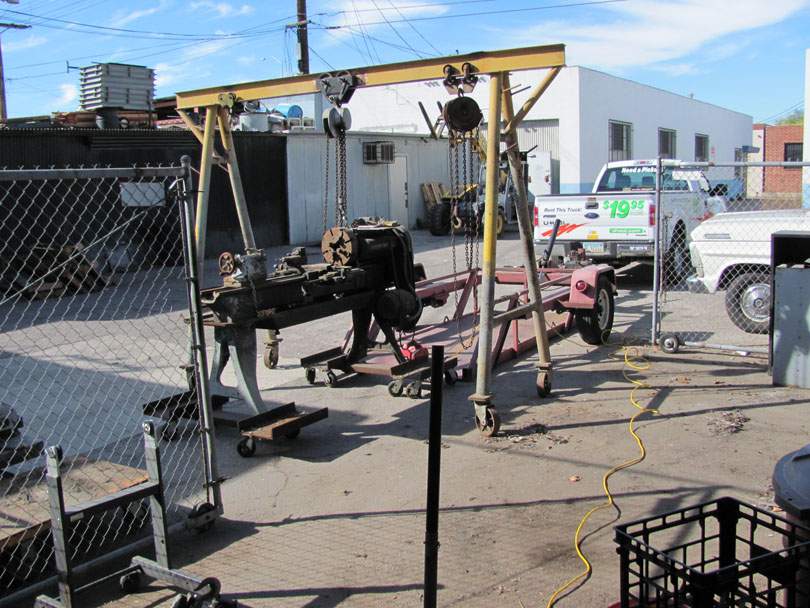
Loading the LeBlond 13 lathe onto the trailer. This hydraulic-lift trailer was so handy for moving the big machines. You can see that the bed drops right down to the ground. I used my gantry crane to lift each end up onto the bed, then pulled it on with an electric winch. I really did do all of this working by myself. That's what machines are for!
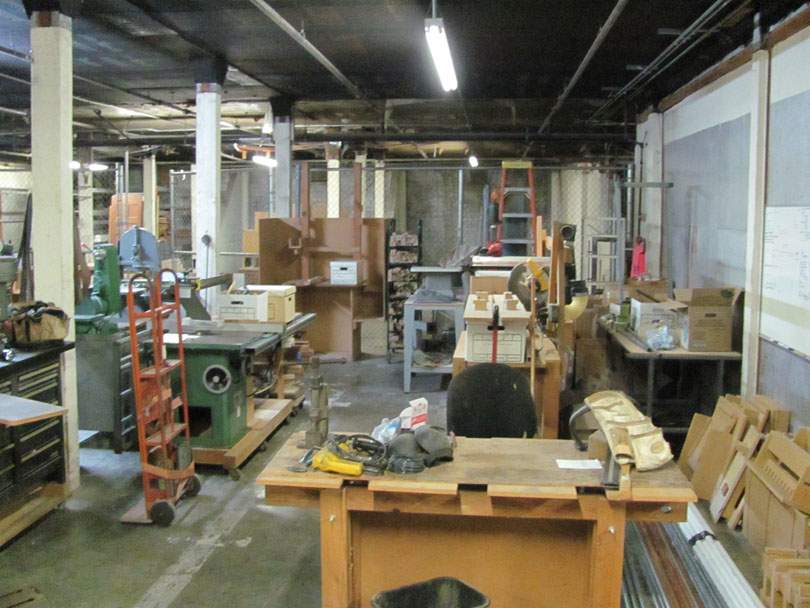
Filling up bay 14. Lots of things in random positions. The routing bench is in place.
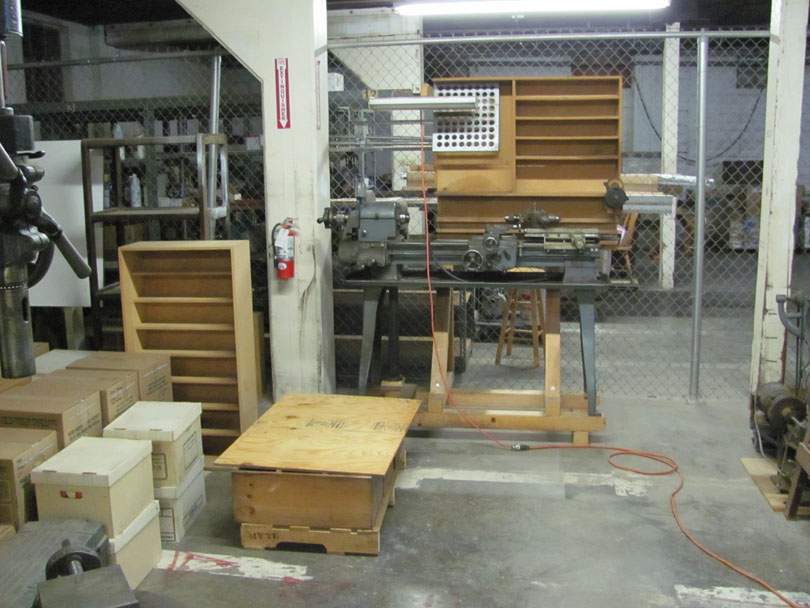
My faithful Logan lathe in its final position. That whole base frame and cabinet behind all moves as one unit with a pallet jack.
Bandsaws, drill presses, stuff.....
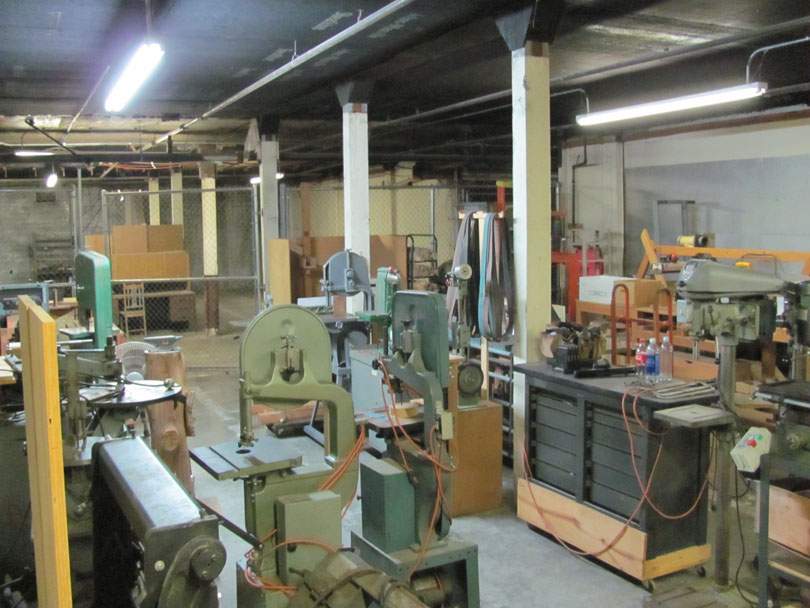
This was Christmas day 2013, as I was assembling my couch/sleeping pod. I had designed it and cut all the parts down in Burbank, before pulling out all the saws. The first job on Christmas day was to put it together.
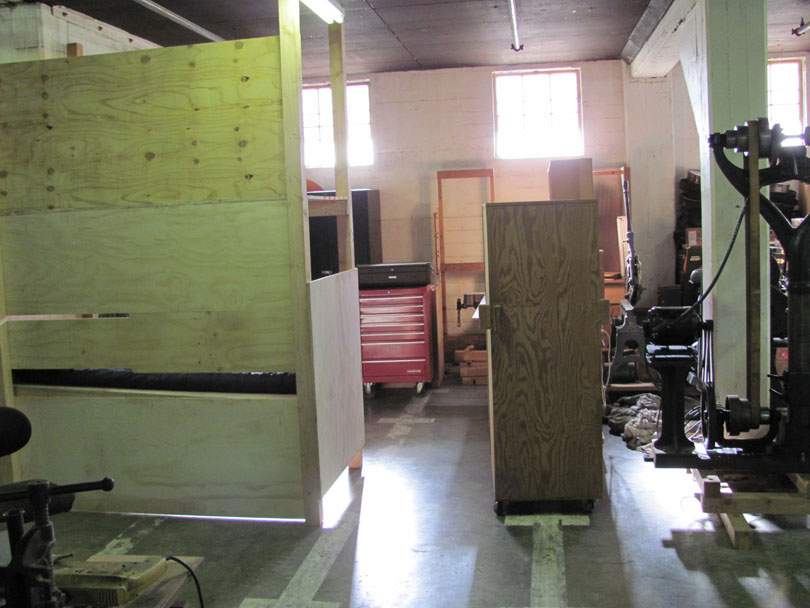
A day or two later, the whole pod and office are roughly assembled.
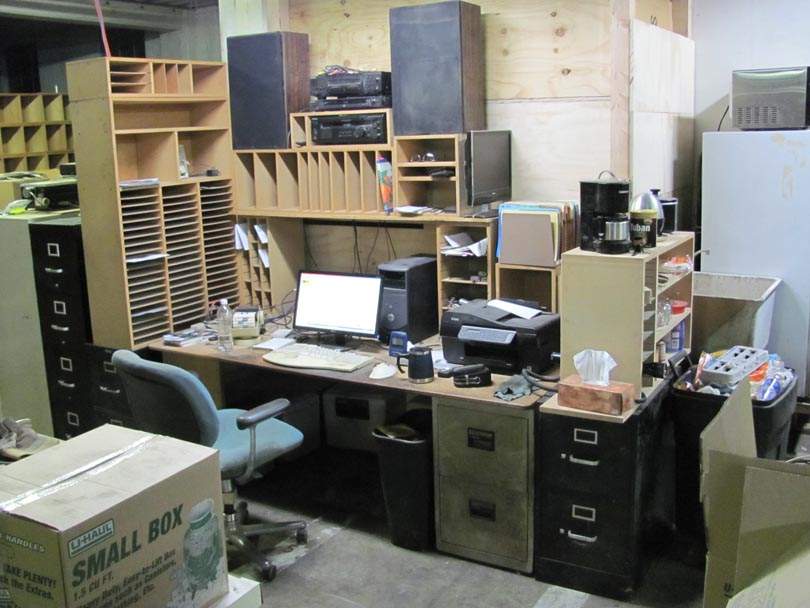
Around New Years Day 2014, the whole shop is starting to come together. Getting most of the machines and workbenches shuffled around into their proper places. Yes, I did actually plan out the shop layout pretty carefully back in September/October. And most of it fit together well as planned. Only a few changes on site.
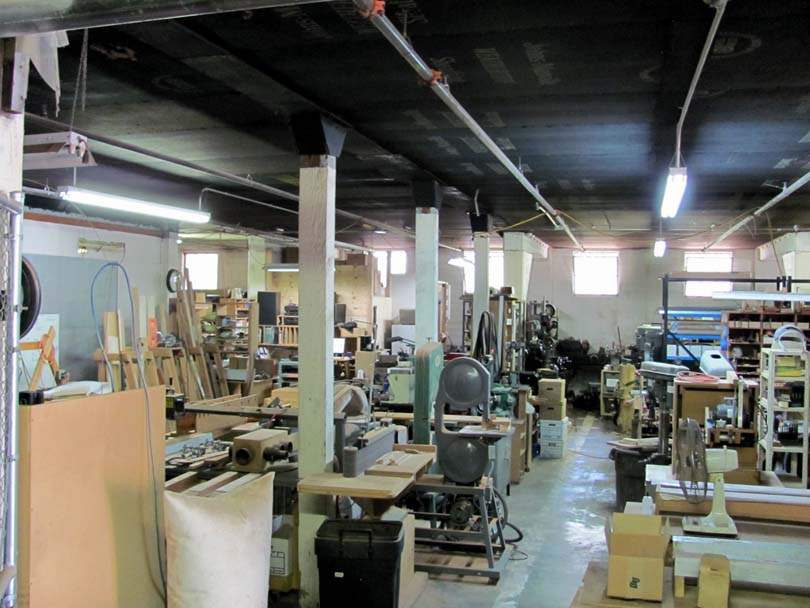
Most of the shop coming together, but still a lot of extra machines and junk parked temporarily across the hall.
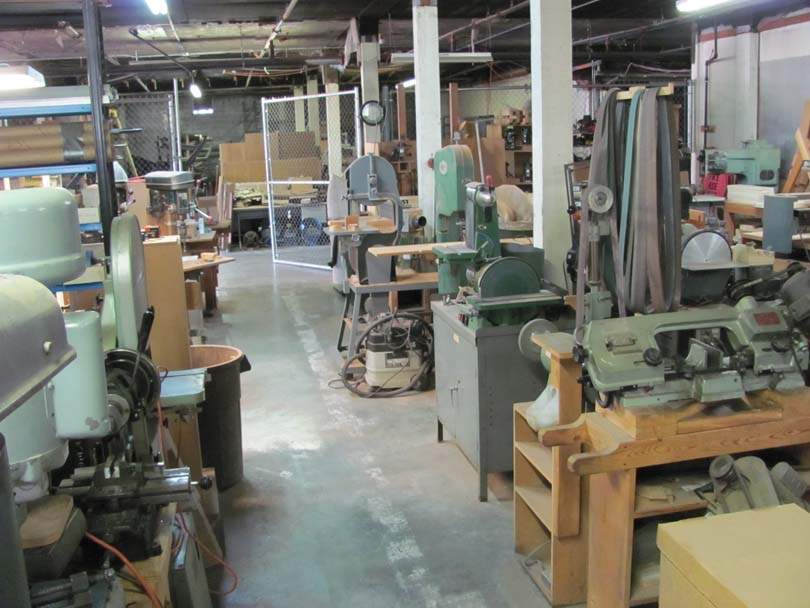
And here's the shop by around the end of January 2014. Most of the main machines operational, running on extension cords. It was around August before I had everything packed in and running.
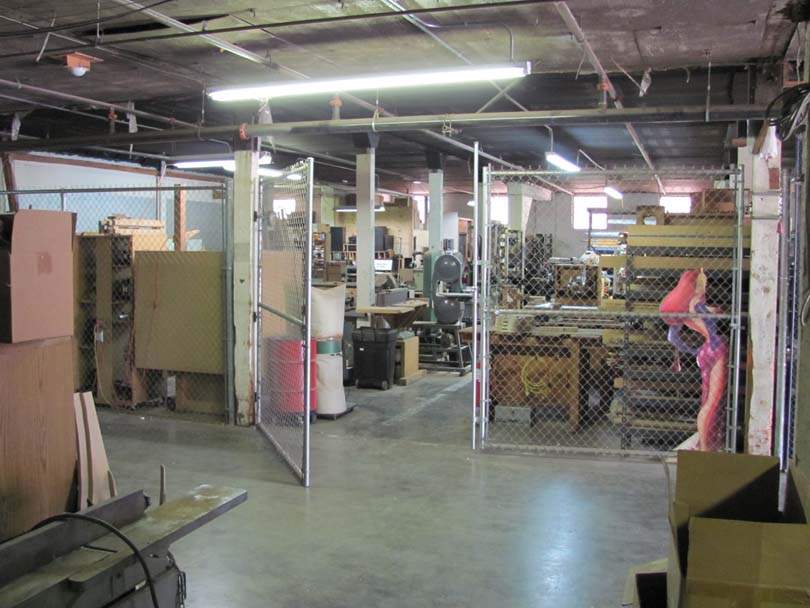
Since then, I've added a few more machines and made a few changes to the layout. But most of it remains as it was in mid 2014.
Loading the LeBlond 13 lathe onto the trailer. This hydraulic-lift trailer was so handy for moving the big machines. You can see that the bed drops right down to the ground. I used my gantry crane to lift each end up onto the bed, then pulled it on with an electric winch. I really did do all of this working by myself. That's what machines are for!
Filling up bay 14. Lots of things in random positions. The routing bench is in place.
My faithful Logan lathe in its final position. That whole base frame and cabinet behind all moves as one unit with a pallet jack.
Bandsaws, drill presses, stuff.....
This was Christmas day 2013, as I was assembling my couch/sleeping pod. I had designed it and cut all the parts down in Burbank, before pulling out all the saws. The first job on Christmas day was to put it together.
A day or two later, the whole pod and office are roughly assembled.
Around New Years Day 2014, the whole shop is starting to come together. Getting most of the machines and workbenches shuffled around into their proper places. Yes, I did actually plan out the shop layout pretty carefully back in September/October. And most of it fit together well as planned. Only a few changes on site.
Most of the shop coming together, but still a lot of extra machines and junk parked temporarily across the hall.
And here's the shop by around the end of January 2014. Most of the main machines operational, running on extension cords. It was around August before I had everything packed in and running.
Since then, I've added a few more machines and made a few changes to the layout. But most of it remains as it was in mid 2014.





 Especially this time of year. Heart and mind is with you...