

Enjoy the benefits of a premium membership!
Upgrade Account
-
TalkBass has been independent since 1998. Add your voice.
Create a free account to reply to discussions, view embedded media, and browse with fewer display ads.
Join free Log in
Want zero display ads or expanded classifieds tools? Compare plans.
You are using an out of date browser. It may not display this or other websites correctly.
You should upgrade or use an alternative browser.
You should upgrade or use an alternative browser.
Isobaric cab?
- Thread starter spwath
- Start date
More options
Who Replied?
I agree. There are several iso cab configurations and they come with different sets of compromise. Google the12volt I think its the12volt.com but not sure. There is information there if you can find it. Line drawing of different band pass sub cabs but is or was more... Car stereo is alway a fight for space. SPL is less of a concern there because it takes less to be loud.

The Ampeg DD-12. Of all the cabinets I regret selling that was "the one". Build one with neo speakers though. It was heavy. Here is a link to a thread regarding the cabinet.Ampeg DD-12 rejuvenation, AKA Baby Dinosaur rrrRRAARRrr!!!
Yeah, I mean, if space is higher in the OP's list of priorities than weight or maximum performance, and - important - he already has the drivers*, why not? (In principle at least: devil's in the details, as always.)I agree. There are several iso cab configurations and they come with different sets of compromise. Google the12volt I think its the12volt.com but not sure. There is information there if you can find it. Line drawing of different band pass sub cabs but is or was more... Car stereo is alway a fight for space. SPL is less of a concern there because it takes less to be loud.
*Sure, another option is to sell them to someone else and, market allowing, have the money for something better for his needs. Hassle aside, Hoffman's iron law predicts he'll get "inefficient" since he wants "small" and "low", but he might get "sturdy" and circumvent "inefficient" by throwing more watts at it (power being important at that point, and needing being taken care of if he hasn't a powerful amp handy yet).
Last edited:

4 sring bass tuned in 5ths, so just down 2 steps I guess.
C, g, d, a, low to high
Then the first harmonic is 64hz, so you dont need to shoot for 40hz at all.

I feel like it wouldn't add that much more weight, it adds 20lb of woofer, but less wood.Yeah, I mean, if space is higher in the OP's list of priorities than weight or maximum performance, and - important - he already has the drivers*, why not? (In principle at least: devil's in the details, as always.)
*Sure, another option is to sell them to someone else and, market allowing, have the money for something better for his needs. Hassle aside, Hoffman's iron law predicts he'll get "inefficient" since he wants "small" and "low", but he might get "sturdy" and circumvent "inefficient" by throwing more watts at it (power being important at that point, and needing being taken care of if he hasn't a powerful amp handy yet).
Idk though, I might just build a big 150l cabinet. Shouldn't be too bad if it's light and on wheels.

Really, that high?Then the first harmonic is 64hz, so you dont need to shoot for 40hz at all.
From what I found it said a standard bass goes down to like 50hrz, mine would go to 40. But I guess not. I'll do some comparing with my low c and a frequency generator.
But then I could probably make it smaller. Not isobaric, and sell the other woofer, or build another cab for it.
I feel like it wouldn't add that much more weight, it adds 20lb of woofer, but less wood.
Idk though, I might just build a big 150l cabinet. Shouldn't be too bad if it's light and on wheels.
Honestly the cab shouldnt weigh that much. If you are building out of 1/2" void free ply with bracing, it will fairly light weight, and stronger than 3/4" ply.
Really, that high?
From what I found it said a standard bass goes down to like 50hrz, mine would go to 40. But I guess not. I'll do some comparing with my low c and a frequency generator.
But then I could probably make it smaller. Not isobaric, and sell the other woofer, or build another cab for it.
40hz doesn't benefit you though. You trade so much to get there, and you wouldnt even use it with your tuning. Like I said before 90L tuned to 55 hz for a single driver will get you great performance, be pretty stout down low, and optimize your size/weight concerns.

- Feb 12, 2006
- 60,952
- 5
- 220,597
- Disclosures
- Development Engineer-Mesa Boogie, Development Engineer-Genzler (pedals), Product Support-Genz Benz
Ok, I'll just do a smaller cab then.Honestly the cab shouldnt weigh that much. If you are building out of 1/2" void free ply with bracing, it will fairly light weight, and stronger than 3/4" ply.
40hz doesn't benefit you though. You trade so much to get there, and you wouldnt even use it with your tuning. Like I said before 90L tuned to 55 hz for a single driver will get you great performance, be pretty stout down low, and optimize your size/weight concerns.
Anything will be better than my horn loaded 120lb Yamaha pa cab.
90l would be a nice size.
I already need a mid and crossover, but I'll probably just go with a standard cab build.Can't think of a bigger waste of time and effort for no real increase in performance, plus the need for a mid driver, crossover and the size continues to grow...
Actually, one more question, how high does a bass go? Mine is tuned in 5ths, c g d a,low-highHonestly the cab shouldnt weigh that much. If you are building out of 1/2" void free ply with bracing, it will fairly light weight, and stronger than 3/4" ply.
40hz doesn't benefit you though. You trade so much to get there, and you wouldnt even use it with your tuning. Like I said before 90L tuned to 55 hz for a single driver will get you great performance, be pretty stout down low, and optimize your size/weight concerns.
Actually, one more question, how high does a bass go? Mine is tuned in 5ths, c g d a,low-high
As high as you play it. I find extension up to 5-6Khz useful, some people really like the airy feel of 10-20khz.
The mid I found goes up to just over 5. I think that will be fine for now.As high as you play it. I find extension up to 5-6Khz useful, some people really like the airy feel of 10-20khz.

Idk, I might just go for a no compromises 150l cab tuned to 38hrz
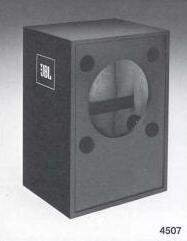
good idea it's pretty close to what jbl uses, with symetrical vent
design 38/40Hz is spot on
Attachments
If you model an isobaric in WinISD it assumes that the speakers are mounted face to face (clamshell) and that there is no air space in between the cones. There is airspace between the cones, and that affects the result. In a bass cab you wouldn't clamshell mount the speakers either, so there's going to be a considerable air mass between the two cones. In order to get a valid simulation you have to add that volume of air to the volume of the main chamber. That would be the parameter shift that completely changes the result.Among experts, not everyone agrees that the output of an iso cab is equivalent to that of the single driver:
Year ago I built and carefully measured theoretically equivalent isobaric and conventional enclosures and got results that were significantly different from what the current theory predicts. My measurements indicated a parameter shift that isn't part of the current theory, which resulted in significantly deeper low-end extension than expected for the isobaric box.
I think I'm going for a standard cab.If you model an isobaric in WinISD it assumes that the speakers are mounted face to face (clamshell) and that there is no air space in between the cones. There is airspace between the cones, and that affects the result. In a bass cab you wouldn't clamshell mount the speakers either, so there's going to be a considerable air mass between the two cones. In order to get a valid simulation you have to add that volume of air to the volume of the main chamber. That would be the parameter shift that completely changes the result.

BFM Simplexx 15 or a fearful.
The only problem going with a Greenboy fEARful design is that it's very specific about the drivers being used in those cabs. The Greenboy site flat out says not to substitute.

I've always thought it strange that greenboy doesn't list a range of acceptable T-S specs the way BFM does. Not everyone has access to the same speakers, and not everyone needs top of the line either. The 2226 is a perfect match with the Simplexx 15, BFM doesn't mention it specifically because the current $500 USD price is pretty ridiculous.


