please prove it as much as I can and then we'll talk cos I'm into $5 basses!

TalkBass has been independent since 1998. Add your voice.
Create a free account to reply to discussions, view embedded media, and browse with fewer display ads.
Join free Log in
Want zero display ads or expanded classifieds tools? Compare plans.
please prove it as much as I can and then we'll talk cos I'm into $5 basses!

that's a classic $5 bass!
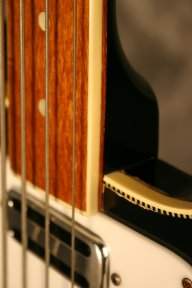
I concur, it's stunning looks are surpassed by everything else except the lack of an upper fretboard.That's a gorgeous single cut! (With extended lower bout.)


Massive? Sure a few I've seen a pretty big, (though none bigger than any of Gibson's Ripper style body shape, those things are as big as a semi hollow, but are solid Maple...) but most are no greater in body length and width than a Fender P or J, they just have the upper cutaway filled in. Quite a few of them are actually quite small bodied and probably weigh less than the average FSO.
View attachment 4660252

beats them at what exactly?I'm both fine with them cos it's a bass and detest the whole concept behind it all unless there is some sonic benefit to the mass, which is likely moot to me cos I bet my $200 #1 beats them hands down.

How would your $200 #1 “beat” one that costs $2000? What exactly are the determining factors that could be “beat”?I'm both fine with them cos it's a bass and detest the whole concept behind it all unless there is some sonic benefit to the mass, which is likely moot to me cos I bet my $200 #1 beats them hands down.

And were they valid?
Or where they poo and jokes?
Those who are looking for jokes and negatives will find hundreds.
Those who are looking one advantage need no more than one.
http://www.melvinleedavis.com/images/Contrabass Conception.pdf
This above article is the total sum of all the advantages.
This topic has been resolved a while ago.
One advantage is that it makes those with a double cut bass feel threatened and spew snark.
 ($
($
No I don't own one either.Instead of getting all defensive and gaslighting people, how about providing a link to a bona fide study with some actual science in it?
I’d prefer to reach no conclusion at all until I can get something a little more solid than assertions, an anecdotal interview, and snark to back it up. To me at least, the jury is very much out on any point except cosmetics insofar as it has a look that apparently appeals to some people. Proof being that some people are buying that type of bass.
So no, I don’t think you can argue the topic has been resolved.
Quick question, do you own and play a bass of this design? I don’t, although I have had the opportunity to try a couple. Both were six strings. And while they were very nice basses (boutique custom builds tend to be very nice) I didn’t hear or feel anything extraordinary in the design itself other that the upper bout didn’t interfere at all with playing the upper frets. That much did surprise me.


View attachment 4659705
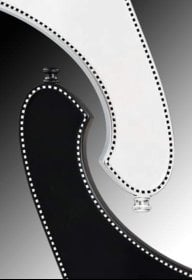
What is the advantage to this shape? Why are there so many boutique basses that are shaped like this? Seems massive to me, but there has got to be a reason. At the prices they go for, they have to be great instruments, or there would be no demand, so no criticism implied. Just curious. (Image pulled from Brubaker Guitars)
No I don't own one either.
It just galls me that so many immediately discount them on the basis of looks.
Other than that it adds extra stiffnes,no one has ever said that something extraordinary has been accomplished.
All I can and will provide is that same link to the site that explains Anthony Jackson's reasoning for his basses..
His reasoning was between Himself and Fodera.
It's on the PDF.
Weather they did a science study on it,I don't know.
I don't know...
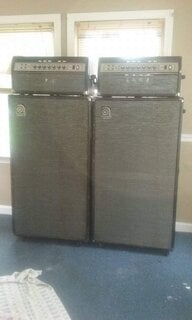
I could probably find a place for this one if it fell in my lap. View attachment 4660188
View attachment 4660193

beats them at what exactly?
the quick n simple answer is TONEHow would your $200 #1 “beat” one that costs $2000? What exactly are the determining factors that could be “beat”?
I see a claim that nearly 4 decades ago that it improves neck rigidity, but see no actual evidence of it. I'd also like to point out that materials engineering has advanced a long way in the intervening decades. Where was CF in use in instruments back then for example? Steinberger and I think Status and definitely Gould, but almost nowhere else.This above article is the total sum of all the advantages.
Not really, just unproven assertions and a very old article that's really only interesting from a historical perspective. I'm glad Anthony went down the development path with the 6s, but if it weren't for him, someone else would have eventually.This topic has been resolved a while ago.
I don't in the least feel threatened by SCs, I just don't find them attractive, yet also in my first post O commented that they allowed strap pin placement on the neck end closer to the neck line potentially helping with ergonomics.One advantage is that it makes those with a double cut bass feel threatened and spew snark.