Reading is fun-damental. It's very important to read charts as a starting point in Jazz. I never leave home without my Real Books. LOL...

Enjoy the benefits of a premium membership!
Upgrade Account
-
TalkBass has been independent since 1998. Add your voice.
Create a free account to reply to discussions, view embedded media, and browse with fewer display ads.
Join free Log in
Want zero display ads or expanded classifieds tools? Compare plans.
You are using an out of date browser. It may not display this or other websites correctly.
You should upgrade or use an alternative browser.
You should upgrade or use an alternative browser.
Jazz Audition reject
- Thread starter jacohead
- Start date
More options
Who Replied?Here's what I wrote in post #17: Combo jazz is of course a different story -- players have varying levels of reading ability. You can get away without reading if you know tunes, have a killer ear, or can call which tunes are played.
What am I failing to imagine?
You are able to play jazz because you play a relatively beginner-friendly style in a sheltered environment in which your skills are sufficient. How does that help the OP, who just flunked an audition?
Your comments are reminiscent of beginners who protest that jazz is supposed to be about free expression, upon discovering that jazz is dense thicket of knowledge, rules, and traditions, with a steep learning curve. Improvisation is just part of it.
Now, you can go ahead and tell me that if I want rules, and written-out charts, then I might as well play classical. It turns out that I love classical music too, as do a lot of jazz players. I know a lot of jazz players who really don't care what jazz is, or even whether they are referred to as jazz musicians.
I would hardly consider that Hard Bop is beginner friendly. The changes are often complex and sophisticated, and more often than not played at fast tempos.
And no, I'm not one of these "theory is useless" guys advocating so called freedom, I actually said that theory is indeed important and that you have to know what to do with the chord charts. We were not talking about the need for rules or theory, just about reading. Again, you can learn a great deal about theory whithout reading notes on a staff.
Now I admit that what I said is about my own experience, and it is limited to gigging with people that I know well, playing a certain jazz style. I guess my point is that for some jazz styles, reading less important than for others. I understand that some bands cannot hire someone that can't read, as it can indeed create unecessary problems.
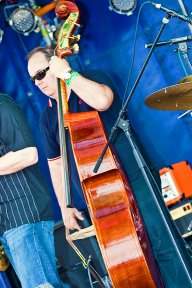
Now if you play bass in a jazz band where some one else writes the part that you have to play, that's another story. But if that's the case then it's not really jazz anymore in my book. Jazz is every musician doing their own thing, improvising within the context of a tune (among other things).
I have played in several Jazz groups where members of the band - trumpet player, pianist etc. - have written original tunes with some written parts, which necessitated sight reading - although the tune/head was followed by group improvisation.
I considered this whole project Jazz and if you look at photos from some classic Jazz recordings you will see charts with some written parts...

If you want to hang with a traditional combo and not read, you're going to need to have a couple hundred essential standards memorized. You don't need to read to memorize tunes.
If it's a group that plays originals then you are probably going to need to read their tunes unless the composer is willing to teach you the charts.
It surprised me that no one took the position that it is not necessary to read to play jazz. I play with an awesome piano player every weekend. He sounds like a recording artist but can't read his way out of a paper bag. The trick is, he knows several hundred tunes that he learned from records. Remember, jazz was a folk music before it was accepted in academia.
I wish my ears were better. I get overly dependent on reading and thinking through scales and chords. I'm trying to get past all that and just play by ear.
Learning to read music will help with everything. Even if you have shows that don't require it you should still learn because most good teaching material and learning tools require some type of reading. It certainly is not that hard. Children playing instruments in grammer school know how to read music. Just take some time each day and every week you'll be better at it. Then get a Real Book and start practicing. Lots of times you may just have to read chord charts and make your own basslines also. Just practice it and you'll get better.
Also, blind musicians obviously can't read and some of them are the best musicians around. They have incredible ears and can play almost anything and they know a huge amount of material. Just a thought.

From experience, not to many things ruin the flow and efficiency of a rehearsal like having one member of the band slowly and painstakingly teach the chords/melody/song to the weakest link.
In some rock/pop/jam groups it might not be an issue, but in many of the groups I play with, wasting valuable rehearsal time is NOT an option. If you are serious about getting into groups that play demanding music, you gotta be more prepared.
In some rock/pop/jam groups it might not be an issue, but in many of the groups I play with, wasting valuable rehearsal time is NOT an option. If you are serious about getting into groups that play demanding music, you gotta be more prepared.
I wonder what happened to the OP...well I hope he's studying how to read because I think it's such a waste of technique and good ears without the fundamental skill of reading.
Roy Vogt
Supporting Member
- Sep 20, 2000
- 4,433
- 537
- Disclosures
- Endorsing Artist: Kiesel Basses, Ampeg Amplification, Hotone Ampero II effects
I have been playing for about 13 years and have real good technique and improv skill, not the best but better than average. I can basicaly play anything as long as someone sings hums or plays it on a piano. I auditioned for this jazz band and was rejected. I have been wanting to learn how to read music but havent, and dont even know where some of the notes are on the bass. I know how important it is to be able to read when playing in a jazz band, but would you reject that musician even though they are not limited to what they can play with their technique? Jazz players... any other hints or tips on how i can prevent from being rejected at another audition ? thanks guys
I think you've answered your own questions:
"I can basically play anything as long as someone hums it or plays it on piano"
"I have been wanting to read but haven't and don't even know where some of the notes are on the bass".
I'd find a teacher and start addressing this stuff. You've just told me you're an "ear-driven" player. That's not bad, it's just where every good Rock Bassist in a band starts. I have no idea from your post whether or not you know what any chord is (example Major 7th, Dominant 7ths, half-diminished, Minor 7th, Augmented and fully Diminished for a start) but there's no way to interpret a chart or fake a tune in the most basic manner without this.
Most Jazz material requires you to read if you wish to learn. I'd recommend The Evolving Bassist as a basic guidebook, but if you can't read it's a closed door to you.
I learned a lot from rejections as a younger player. If it drives you to study and address your deficiencies that's not a bad thing. You have to make the adversity a motivator. Allegedly, the difference between the words "crisis" and "opportunity" in Chinese is one brush stroke.
"Chops" are not fast hands and tricky licks, but being able to negotiate ideas on your instrument with fluency and total control. Some of my most miserable gigs have been with drummers who have incredible speed but Time is a Magazine as we Oldtimers say....
Wow, Im surprised at how many people are telling TS that he doesnt need to learn how to read. I think TS's blotched audition is enough to prove that reading is an important skill for any musician. TS, I recommend getting a good teacher if you can, and ask about reading music. If you cant get a teacher, the Mel Bay books are a good starting point for learning to read music.
To all the nay sayers about reading music, can I ask a question. If you really loved your instrument, wouldnt you want to learn everything about it you could? Including reading music? And another thing to think about. You might get turned down from a gig because you cant read music, but will you ever be turned down from one because you can?
To all the nay sayers about reading music, can I ask a question. If you really loved your instrument, wouldnt you want to learn everything about it you could? Including reading music? And another thing to think about. You might get turned down from a gig because you cant read music, but will you ever be turned down from one because you can?
To all the nay sayers about reading music, can I ask a question. If you really loved your instrument, wouldnt you want to learn everything about it you could? Including reading music?
As I was saying - when you meet other musicians apart from guitarists - like Sax Players, Trumpeters etc. then they just take it for granted that they will be reading tunes from sheet music all the time...
As I was saying - when you meet other musicians apart from guitarists - like Sax Players, Trumpeters etc. then they just take it for granted that they will be reading tunes from sheet music all the time...
That's because most bass, guitar and drum players want to be rock star first and learn their instrument on their own while other players begin in school.
- Apr 1, 2000
- 17,398
- 9,828
- Disclosures
- Endorsing Artist: Roscoe Guitars, DR Strings, Aguilar Amplification
As I was saying - when you meet other musicians apart from guitarists - like Sax Players, Trumpeters etc. then they just take it for granted that they will be reading tunes from sheet music all the time...
exactly, they're all learning to speak the same language. Then some bass player or drummer walks in and doesn't speak the language and wants to communicate, because someone taught him how to say Ou est le biblioteque....
- Jul 8, 2009
- 1,612
- 11
- Disclosures
- A&R, Soulless Corporation Records
Reading is a pivotal part of functioning in a big band. Your typical wind/brass/keys player was raised on charts. It's like the Conquistadors arriving in the New World and saying to the Native Americans "me puede ayadar". You have to understand the local language. The band's just happens to consist of clefs, lines and bars.

You really need a very good ear and good reading skills if you want to be in demand as a jazz bassist.
You can get away in some situations with one or the other, but nothing beats skills in both departments.
I think I'd concentrate on reading treble clef, you're more likely to be reading off of the other guys charts at some point. You can't count on having your own bass clef version of whatever fake book they happen to have. you're the only one that will read bass clef.
Maybe I'm biased, I started playing trumpet, so I read treble clef naturally, have to traspose bass clef music. I only had 1 band in 40 years that provided me with bass clef music.
If you're doing big band stuff though, they would have bass clef music. Just thinking out loud that it'd be easier to learn one or the other, rather than always switching back and forth. I learned to transpose piano music for trumpet (a C on a piano is a D on a trumpet), so wasn't too hard to transpose bass clef music to treble clef, once you've got that mindset to play a different note than you see.
Curious if anyone else who can read can read both bass and treble clef fluently, or do you transpose one to the other?
I instantly see the notes as if they were treble clef, from 10+ years of reading treble clef before switching to bass. So I have to transpose.
Randy
You can get away in some situations with one or the other, but nothing beats skills in both departments.
I think I'd concentrate on reading treble clef, you're more likely to be reading off of the other guys charts at some point. You can't count on having your own bass clef version of whatever fake book they happen to have. you're the only one that will read bass clef.
Maybe I'm biased, I started playing trumpet, so I read treble clef naturally, have to traspose bass clef music. I only had 1 band in 40 years that provided me with bass clef music.
If you're doing big band stuff though, they would have bass clef music. Just thinking out loud that it'd be easier to learn one or the other, rather than always switching back and forth. I learned to transpose piano music for trumpet (a C on a piano is a D on a trumpet), so wasn't too hard to transpose bass clef music to treble clef, once you've got that mindset to play a different note than you see.
Curious if anyone else who can read can read both bass and treble clef fluently, or do you transpose one to the other?
I instantly see the notes as if they were treble clef, from 10+ years of reading treble clef before switching to bass. So I have to transpose.
Randy
You really need a very good ear and good reading skills if you want to be in demand as a jazz bassist.
You can get away in some situations with one or the other, but nothing beats skills in both departments.
I think I'd concentrate on reading treble clef, you're more likely to be reading off of the other guys charts at some point. You can't count on having your own bass clef version of whatever fake book they happen to have. you're the only one that will read bass clef.
Maybe I'm biased, I started playing trumpet, so I read treble clef naturally, have to traspose bass clef music. I only had 1 band in 40 years that provided me with bass clef music.
If you're doing big band stuff though, they would have bass clef music. Just thinking out loud that it'd be easier to learn one or the other, rather than always switching back and forth. I learned to transpose piano music for trumpet (a C on a piano is a D on a trumpet), so wasn't too hard to transpose bass clef music to treble clef, once you've got that mindset to play a different note than you see.
Curious if anyone else who can read can read both bass and treble clef fluently, or do you transpose one to the other?
I instantly see the notes as if they were treble clef, from 10+ years of reading treble clef before switching to bass. So I have to transpose.
Randy
I can read bass and treble clefs fluidly, and Im okay at tenor clef. Really, you just need to spend time in each of them. I bet if you spent about a month playing only stuff in bass clef, youd be good to go.
Holy Crap. Learning to read the average bass chart is an f-ing vacation. We should count our lucky stars. Whats the big deal? If you want to play the MAJORITY of music that existed before 1960, you read. Even asking if its necessary is ridiculous.
you're the only one that will read bass clef.
Not entirely true - trombone players read bass clef and I have been in bands with a trombone player!

If you want to play the MAJORITY of music that existed before 1960, you read.
I tend to find that music from before 1960 can be played by ear and there is a good chance of having heard a recording and knowing how it goes! Where reading is crucial, for me, is where you are playing an original Jazz tune written by a band member, for example - where there is absolutely no chance you have heard it before!


Also, get a few Aebersold play alongs. Start with a easier ones (you can't go by the volume number for difficulty rating though).
Good tip here, thanks Freddels. I just picked up Vol.1, how to play and improvise jazz yesterday and am finding it immediately helpful with both getting into jazz playing, and refreshing my site reading skills!

Reading is part of the game. They probably rejected you (the OP) because the other guy could read. At almost EVERY audition I've ever been to, be it for an orchestra, jazz band, rock band...there's usually sightreading involved. It's to show how quickly you can pick up on new things. Good readers can learn the music faster so they can focus their efforts on making the notes sound as good as possible, rather than working out what the notes are. As many others have said, start taking some kind of music lessons. Have patience, you WILL get it. Then next time they likely won't have a reason to reject you if you have a good audition (unless you're auditioning against Jaco...then I would have many, many more questions for you )
)


