• TalkBass has been independent since 1998. Add your voice.
    Create a free account to reply to discussions, view embedded media, and browse with fewer display ads.
    Join freeLog in
    Want zero display ads or expanded classifieds tools? Compare plans.

Jeff Berlin discussing music education part 3

Status
Not open for further replies.
Is there such thing as rock and/or blues schools? From what I know, college and university music programs are all geared towards either classical or jazz music education (not including recording and other music "technology" based disciplines). In fact, would a real music school or program be considered credible if it offered rock and blues as the curriculum base?

Unfortunately, there are:

[Invalid or Expired Link Removed]
Link Removed
Link Removed

I don't think that they're considered accredited music schools, but they seem to put themselves forward as actual educational organizations - as opposed to something like a "rock-n-roll fantasy camp" type of deal. I could accept the latter, as long as the "fantasy" part is clearly stated in the name.

I'm curious to see how successful any of the 'graduates' of these programs are in the music industry. The Paul Green school states that their "...students have played Lollapalooza and other festivals from California to Germany, opened for national acts coast to coast and performed live on television and radio countless times." That sounds impressive, but one of my previous bands played Lollapalooza shortly after I quit, I've played local festivals (including SXSW), I've opened for national acts, and I've performed live on televsion and radio; and I can't really say that I've achieved anything like real success in the industry. If that's what some people want, then more power to them; still, it's a shame because 1) I and dozens of people that I know personally were able to accomplish all of that without paying a dime for "rock and roll lessons" and 2) it seems like such a waste of effort when a real musical education (and the benefits thereof) are available for the same effort and probably the same price.

 
Is there such thing as rock and/or blues schools? From what I know, college and university music programs are all geared towards either classical or jazz music education (not including recording and other music "technology" based disciplines). In fact, would a real music school or program be considered credible if it offered rock and blues as the curriculum base?

There is also the "School of Rock" Franchise of schools out there nationally. There are 2 in here in MN.

and yep... they are based on the Movie School of Rock with Jack Black. Not sure of their ciriculum, but I do know a few of the teachers. A Drum teacher there who I know actually has a master degree in music. But not sure about others. I know many of them are well know local players. Not sure of their acedemic credentials though.
 
Unfortunately, there are:

[Invalid or Expired Link Removed]
Link Removed
Link Removed

I don't think that they're considered accredited music schools, but they seem to put themselves forward as actual educational organizations - as opposed to something like a "rock-n-roll fantasy camp" type of deal. I could accept the latter, as long as the "fantasy" part is clearly stated in the name.

I'm curious to see how successful any of the 'graduates' of these programs are in the music industry. The Paul Green school states that their "...students have played Lollapalooza and other festivals from California to Germany, opened for national acts coast to coast and performed live on television and radio countless times." That sounds impressive, but one of my previous bands played Lollapalooza shortly after I quit, I've played local festivals (including SXSW), I've opened for national acts, and I've performed live on televsion and radio; and I can't really say that I've achieved anything like real success in the industry. If that's what some people want, then more power to them; still, it's a shame because 1) I and dozens of people that I know personally were able to accomplish all of that without paying a dime for "rock and roll lessons" and 2) it seems like such a waste of effort when a real musical education (and the benefits thereof) are available for the same effort and probably the same price.

+1 !!!

The SOR students are typically Jr High and HS age kids though. I suppose some exposuer to music is better than none. Especailly in a time when music in public schools is getting cut pretty freqently. Even though whatthey are learning might be BS.
 
Unfortunately, there are:

[Invalid or Expired Link Removed]
Link Removed
Link Removed

I don't think that they're considered accredited music schools, but they seem to put themselves forward as actual educational organizations - as opposed to something like a "rock-n-roll fantasy camp" type of deal. I could accept the latter, as long as the "fantasy" part is clearly stated in the name.

I'm curious to see how successful any of the 'graduates' of these programs are in the music industry. The Paul Green school states that their "...students have played Lollapalooza and other festivals from California to Germany, opened for national acts coast to coast and performed live on television and radio countless times." That sounds impressive, but one of my previous bands played Lollapalooza shortly after I quit, I've played local festivals (including SXSW), I've opened for national acts, and I've performed live on televsion and radio; and I can't really say that I've achieved anything like real success in the industry. If that's what some people want, then more power to them; still, it's a shame because 1) I and dozens of people that I know personally were able to accomplish all of that without paying a dime for "rock and roll lessons" and 2) it seems like such a waste of effort when a real musical education (and the benefits thereof) are available for the same effort and probably the same price.
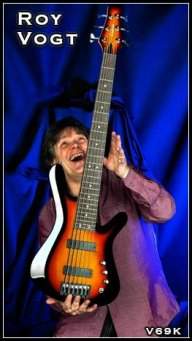
More than pointing my finger at any one segment of the business of music academia, I prefer to point at a general community of music educators and simply advise you all that playing a gig, no matter the gig, means nothing. What is important is playing those gigs and improving as a player should be an occurance for years to come. Many guys who learn from rock ed can't say that they have this.

To be fair, some of you have said that you are just into playing the fun of it, with no other major plans to go along with your good time. If so, then you can dismiss anything that I am saying at this time, if learning how to play doesn't figure into your day. Just know that you won't get any real musical or professional results if you learn how to play from the more entertaining elements of music ed .

Everybody else, a bell should has gone off! If you have any interest in becoming a better player than you already are, then, no matter the title of the institute, the teacher, or the DVD, if there is little content to accompany the rock cuuriculum, then you will not improve because rock and blues doesn't provide good results in an academic environment. ACADEMIA provides academic improvement
This isn't about punching out a business. This is about punching out a principle that will not get you what you want, no matter how much one wishes that it does.
 
+1 !!!

The SOR students are typically Jr High and HS age kids though. I suppose some exposuer to music is better than none. Especailly in a time when music in public schools is getting cut pretty freqently. Even though whatthey are learning might be BS.

As some vitaims are better than none. As some government that helps us is better than none. See where I am going with this? People often accept low quality for things by thinking that some element of what they are looking for is better than none. If people accept this standard, then there is no real incentive to improve. Why should they? Some exposure to music is better than none.

I am here to tell you all that a high level exposure to musical quality is better than some level of exposure and it is out there somewhere. Don't settle for some of what you are seeking when you could have most of what you are seeking.

This is a philosophy of music that I have always lived by, and through it, I have raised myself up to heights of musical awareness that I don't think that I would have ever gotten to without this philosphy in my life.
 
Certainly there are rock and blues classes and I advise to avoid them all. Plus, there are magazines, DVD's, events of all kinds, and internet lessons that all point to rock or blues as academically valid.

Along with this, are lessons based in credible information and these are the lessons that I suggest that one seeks out if they intend to invest in an education.

In my opinion, the thing about magazines, DVDs, some instructional books and events is that the bottom line is money. They have to be popular and sell significant quantities in order to make money. Is it more important to teach solid music principles or is it to feature the "latest" metal player (or whatever the flavour of the week is) in a popular band and "rip" a few riffs? The general public gets what they want because they are the ones that are paying for it. Unfortunately, most don't know enough to know how to get the "good stuff" or what it is.

Of course, the argument could be made that these outlets are not music academia but are art/entertainment mediums with the occasional hint of worthy music thrown in.

It always makes me cringe when I see magazine covers that have a header with "chops" or similar words to describe music as well as include TAB as part of any instruction or written lines. The good thing is that I know enough to be able to wade through the "crap". Unfortunately, I have a feeling that there are a lot of younger and more impressionable players that cannot.
 
I wonder if Stacey Mitchart is still around. I know the blues is poo poo'ed around here, but man, love to hear guy play.

I believe he's still playing, mostly at BB King's these days. I played the Clarksville River Stages with Stan Lassiter and Dale Armstrong last September (talk about some Old School Fusion :)) and he and his band played right after us. They fairly well smoked-great bass player!
 
Certainly there are rock and blues classes and I advise to avoid them all. Plus, there are magazines, DVD's, events of all kinds, and internet lessons that all point to rock or blues as academically valid.

Along with this, are lessons based in credible information and these are the lessons that I suggest that one seeks out if they intend to invest in an education.
We're in an interesting position at Belmont-we offer a degree in "Commercial Music" so that covers the entire gamut. A student might play a Level 42 piece, a Bebop Standard on upright, An Alain Caron piece, and a R and B standard (say, Everything is Everything with Willie Weeks bass solo) on a Junior or Senior Recital. I've even had students play "Joe Frazier" and "Bach" :)
We're pretty serious about keeping our instruction based around Jazz Harmony, Improv, and marketable skills like sightreading (Jamerson's good for that because unless you're reading Zappa scores those same syncopations occur over and over again, only less so because they've been "dumbed down" by arrangers in Pop and R and B). I just graded a guitar student's senior recital that included Liquid Tension Experiment tunes and "All the Things You Are".
One of the most interesting things that happened to me as a young student at NTSU was that the program was SO Straight-ahead Jazz oriented that I would routinely send bass players who were in the higher Lab Bands (in the 70s that was the Caste system there, starting with the 1:00 O'Clock and going down to the 10:00 O'Clock band) as subs only to be told by the Contractors/Bandleaders in Dallas, "Please don't send that guy again-his electric sound is terrible, his feel is funny, and he doesn't know any current tunes!" The program was SO Jazz-oriented that all they taught or encouraged at the time was Upright Bass. The successful players there became successful at what worked in the "bubble" of the Jazz Program, but when they went into the Commercial Sector, trouble.
So-I teach Slap, Motown, Standards, Improv, Charlie Parker solo transcriptions, transcriptions of current bassists and other musicians like Chick Corea, Pat Martino and Clifford Brown, have the students do their OWN transcribing, Dotzauer Cello etudes, Bach Violin Partitas, Upright Doubling, Nashville Number System and session techniques (we have to often compose a part that supports the singer, creates the arrangement, and locks the Rhythm Section together in very specific styles in 10-15 minutes or less), Joe Diorio's intervallic approach, Slominsky, you name it. I look as my work as a Bass Teacher as a vocational instructor, much like some of my friends who taught at BIT in the '80s (the late Jim Lacefield, Jeff, Steve Bailey, Alex Sklarevski and others). I want people to graduate who are employable, but more importantly I want them to learn how to learn. As the tides of the Music Biz change, players who learn how to learn can adapt. That leads to long, prosperous careers in this really unstable business.
FWIW, I've advised more than one student to attend the Player's School of Music (either an Intensive or longer courses) BEFORE they come to Belmont. I think Jeff's approach guarantees good students who will become Musical Winners.
 
We're in an interesting position at Belmont-we offer a degree in "Commercial Music" so that covers the entire gamut. A student might play a Level 42 piece, a Bebop Standard on upright, An Alain Caron piece, and a R and B standard (say, Everything is Everything with Willie Weeks bass solo) on a Junior or Senior Recital. I've even had students play "Joe Frazier" and "Bach" :)
We're pretty serious about keeping our instruction based around Jazz Harmony, Improv, and marketable skills like sightreading (Jamerson's good for that because unless you're reading Zappa scores those same syncopations occur over and over again, only less so because they've been "dumbed down" by arrangers in Pop and R and B). I just graded a guitar student's senior recital that included Liquid Tension Experiment tunes and "All the Things You Are".
One of the most interesting things that happened to me as a young student at NTSU was that the program was SO Straight-ahead Jazz oriented that I would routinely send bass players who were in the higher Lab Bands (in the 70s that was the Caste system there, starting with the 1:00 O'Clock and going down to the 10:00 O'Clock band) as subs only to be told by the Contractors/Bandleaders in Dallas, "Please don't send that guy again-his electric sound is terrible, his feel is funny, and he doesn't know any current tunes!" The program was SO Jazz-oriented that all they taught or encouraged at the time was Upright Bass. The successful players there became successful at what worked in the "bubble" of the Jazz Program, but when they went into the Commercial Sector, trouble.
So-I teach Slap, Motown, Standards, Improv, Charlie Parker solo transcriptions, have the students do their OWN transcribing, Dotzauer Cello etudes, Bach Violin Partitas, Upright Doubling, Nashville Number System and session techniques (we have to often compose a part that supports the singer, creates the arrangement, and locks the Rhythm Section together in very specific styles in 10-15 minutes or less), you name it. I look as my work as a Bass Teacher as a vocational instructor, much like some of my friends who taught at BIT in the '80s (the late Jim Lacefield, Jeff, Steve Bailey, Alex Sklarevski and others). I want people to graduate who are employable, but more importantly I want them to learn how to learn. As the tides of the Music Biz change, players who learn how to learn can adapt. That leads to long, prosperous careers in this really unstable business.

Roy-(or Jeff)
Do you remember Mike Delaney from MIT?
He was a teacher there back in the 80's...He's a guitar guy, but he offered to teach me some jazz-stuff (very knowlegable)..No bass players around here to teach what I already know....
 
Roy-(or Jeff)
Do you remember Mike Delaney from MIT?
He was a teacher there back in the 80's...He's a guitar guy, but he offered to teach me some jazz-stuff (very knowlegable)..No bass players around here to teach what I already know....

I was not at BIT or MI-other than stopping by when I was touring or doing a TV taping and in town. The people I mentioned were people I knew from NTSU who ended up teaching there-and they could SERIOUSLY play the Electric Bass (as well as Upright in the case of Jim Lacefield and Steve Bailey) Alex was not an NTSU alum, but a player I met through Jim. Forgot to mention Gary Willis.
I don't know Mike, but if he's of the same quality as Jeff's friend Sid Jacobs I can't see how that would be anything but awesome :)
 
I was not at BIT or MI-other than stopping by when I was touring or doing a TV taping and in town. The people I mentioned were people I knew from NTSU who ended up teaching there-and they could SERIOUSLY play the Electric Bass (as well as Upright in the case of Jim Lacefield and Steve Bailey) Alex was not an NTSU alum, but a player I met through Jim. Forgot to mention Gary Willis.
I don't know Mike, but if he's of the same quality as Jeff's friend Sid Jacobs I can't see how that would be anything but awesome :)

Yeh..He was a teacher at GIT...He has recently started on "pedal-steel" guitar! and kicks a$$!
Just want to expand on the "chord-tone' thing..
 
:bassist::eek:I just "discovered" Jon Reshard while surfing the net. Holy crap!!!!

anybody know about this guy? Where/with you he has studied? I can't believe I have never heard of him before.

Jeff- have you heard of him? can you comment on his playing?
 
:bassist::eek:I just "discovered" Jon Reshard while surfing the net. Holy crap!!!!
anybody know about this guy? Where/with you he has studied? I can't believe I have never heard of him before.

Jeff- have you heard of him? can you comment on his playing?

I just checked out the clip on his website-thanks! No doubt he's got chops for days :bassist:
Thanks for sharing that! Do me a favor and post about him on my Talent Deserving Wider Recognition thread.
 
Will do. Do you think he can play chord tones in all 12 keys?... and inversions? :smug:

Somehow, it wouldn't surprise me. It sounds like that bass neck is Home Sweet Home for ol' Jon. Now I remember where I've seen him before-he's endorsing the Human Base OC-5 5 string. I saw the ad in Bass Player and checked him out back then. He reminds me of Philip Bynoe, another amazing LA area bassist too few people know about....
 
Roy, are you aware of any school here in Nashville that teaches theory, but not as part of a four year degree program? I have a college degree, and don't need another one. I just want to study music.

I'd love to sit and pick your brain. God only knows what I'd learn just from the stories you could tell.
 
Roy, are you aware of any school here in Nashville that teaches theory, but not as part of a four year degree program? I have a college degree, and don't need another one. I just want to study music.

I'd love to sit and pick your brain. God only knows what I'd learn just from the stories you could tell.

I'd try The Nashville Jazz Workshop www.nashvillejazz.org. Roger Spencer and Lori Mechem are tirelessly dedicated to Jazz Education. They have classes at all levels-my guitarist Shane Roberts is teaching a Pat Metheny Ensemble Class this cycle and I've taught Fusion, Chick Corea Elektric Band, and Yellowjackets Ensembles there. The classes are generally 6 weeks in length and pretty reasonably priced. It's a great local resource IMHO.
 
btw, as point of fact, eric and julie slick came from the school of rock, and they're now playing with adrian belew, doing sessions, and becoming pretty highly in demand. i see nothing wrong with it, either. these kids get a solid musical education, a background in fundamentals, and they're having fun playing fun music. later on, if they so wish, they can go explore higher concepts, and do it through the school of rock itself. where's the problem? do we have to make kids hate music right off the bat?
 
Status
Not open for further replies.
