• TalkBass has been independent since 1998. Add your voice.
    Create a free account to reply to discussions, view embedded media, and browse with fewer display ads.
    Join freeLog in
    Want zero display ads or expanded classifieds tools? Compare plans.

Kubicki club, part 2

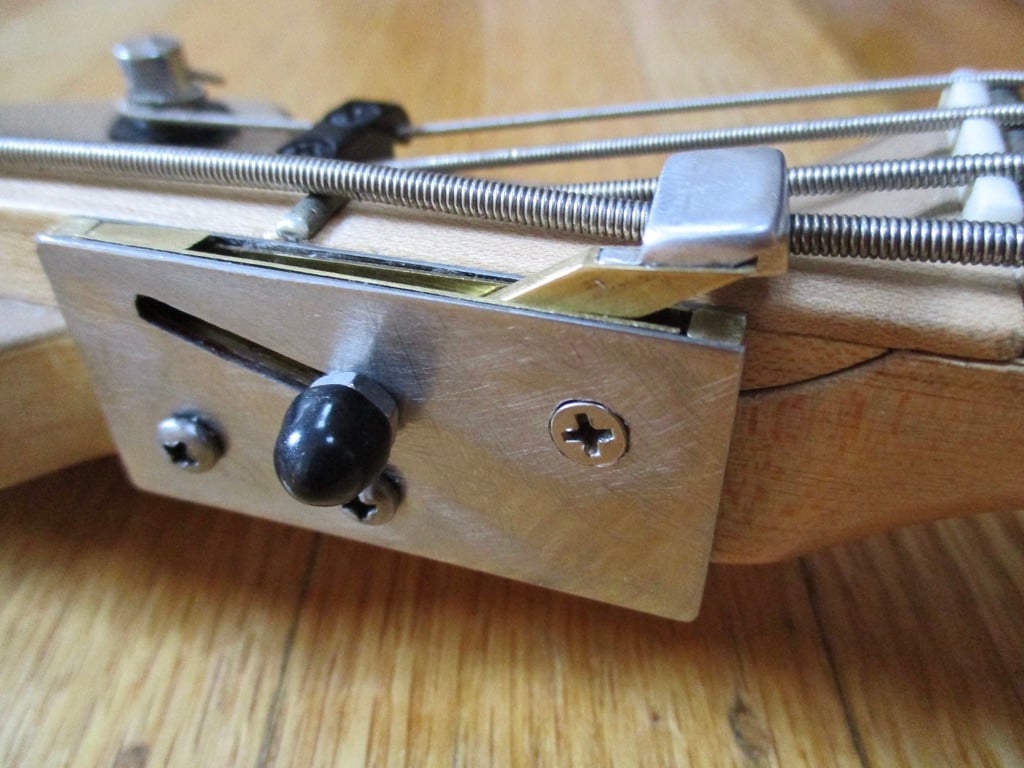
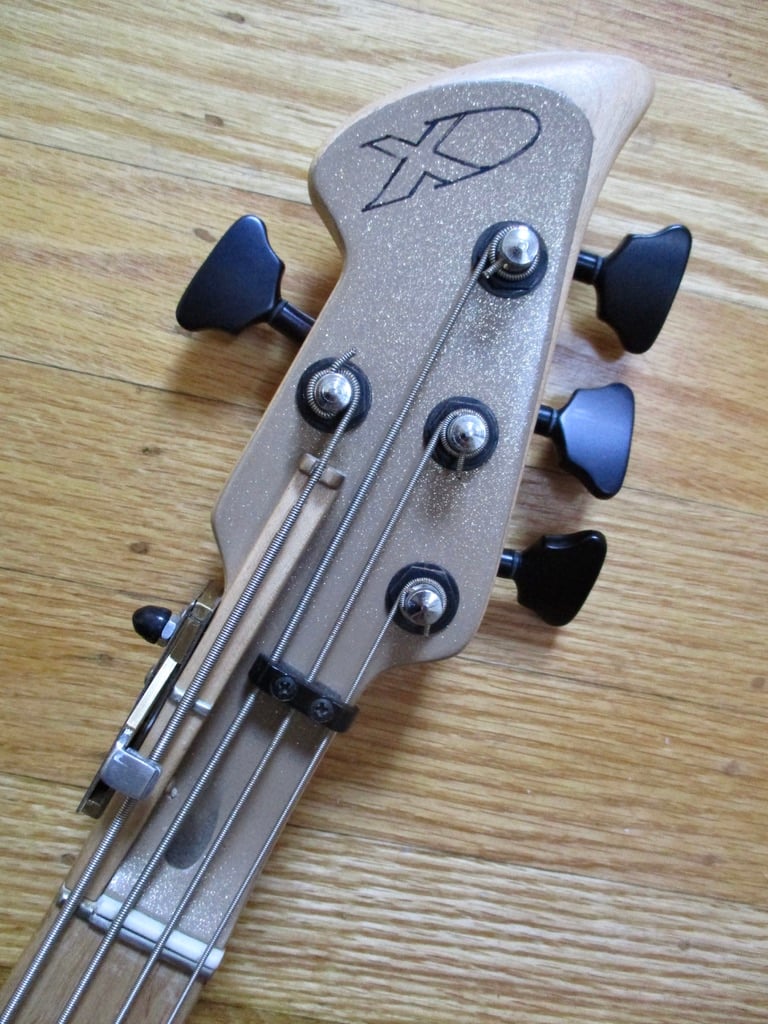
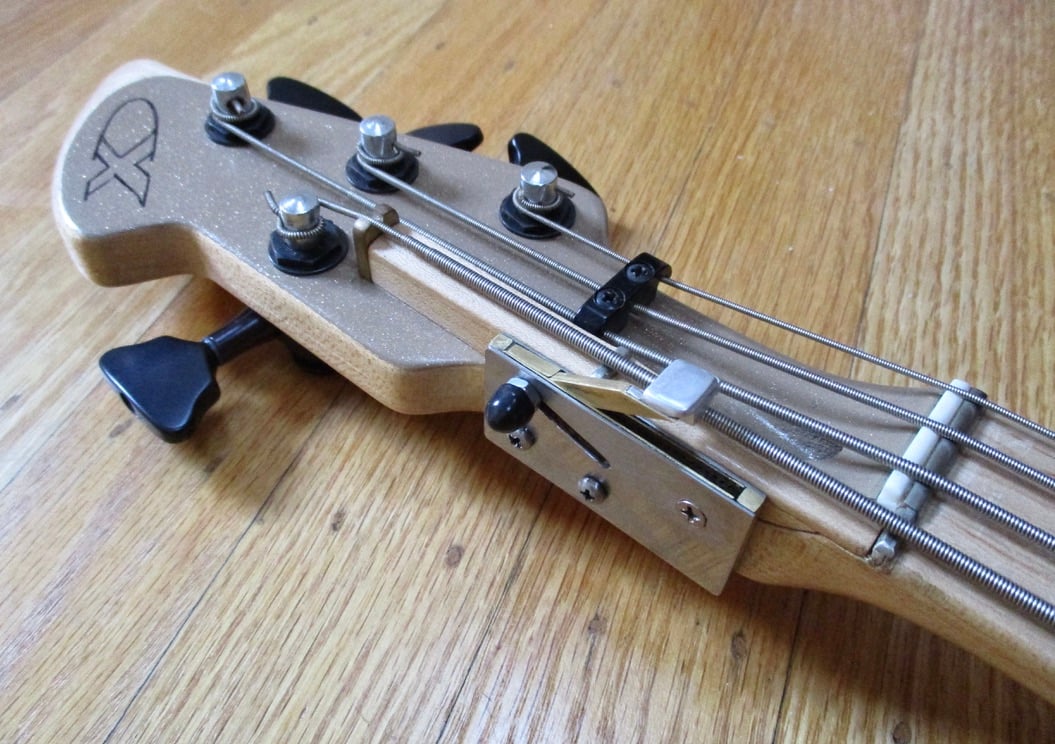
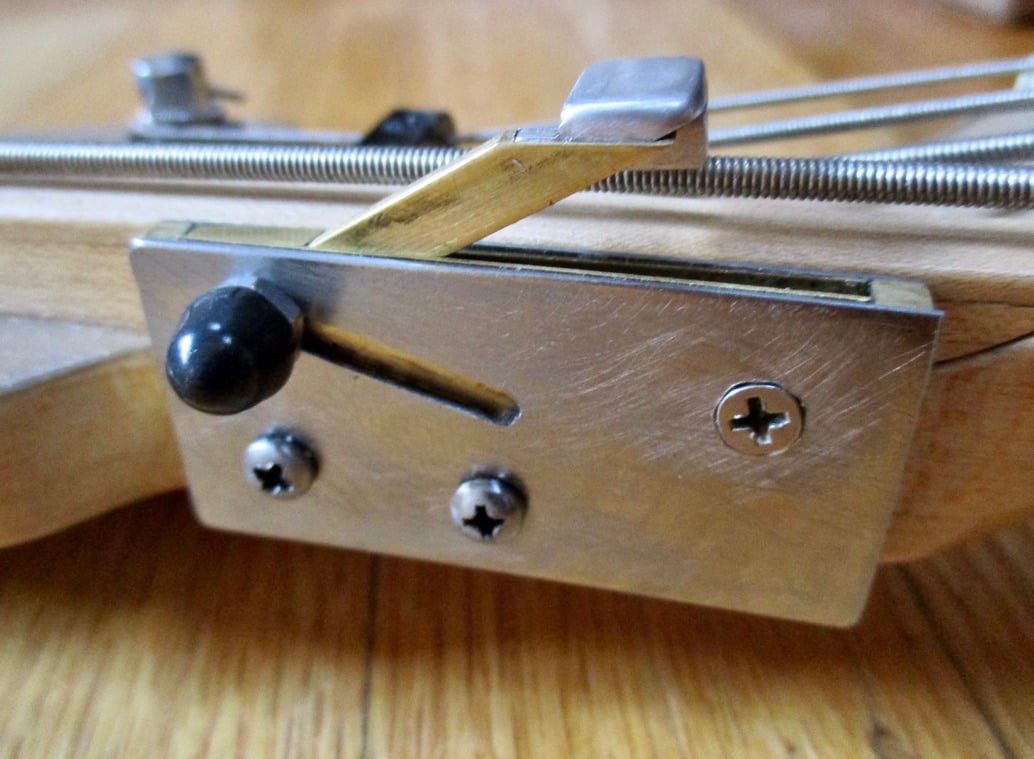
I made a prototype (XD) that does the same thing with tuners at the head, with a 'slider' which can be incorporated with one's thumb. Not too pretty, but it works. I envision a concept of a molded carbon-fiber neck with a designed-in pocket that hold the guts of the mechanism more elegantly. As Kubicki's X-Factor, it's a 32 scale neck and the ramp goes two extra frets to open D, hence X-tended D.
upload_2024-3-25_11-11-50.jpeg
upload_2024-3-25_11-12-9.jpeg
upload_2024-3-25_11-12-27.jpeg
upload_2024-3-25_11-12-44.jpeg
 
I made a prototype (XD) that does the same thing with tuners at the head, with a 'slider' which can be incorporated with one's thumb. Not too pretty, but it works. I envision a concept of a molded carbon-fiber neck with a designed-in pocket that hold the guts of the mechanism more elegantly. As Kubicki's X-Factor, it's a 32 scale neck and the ramp goes two extra frets to open D, hence X-tended D.
View attachment 5397125 View attachment 5397130 View attachment 5397133 View attachment 5397134
so that one string is tuned to D and the clip pushes it into E?
 
That's the right idea. Though, if you actually tune it to D, your E string (clasp engaged) will likely be a bit sharp because of intonation physics I do not understand. I'm talking barely sharp, not enough to practically matter. The same is obviously true in reverse. Tune your E to exact pitch, and your long, open D is a tad flat, just not enough to matter too much.
 
That's the right idea. Though, if you actually tune it to D, your E string (clasp engaged) will likely be a bit sharp because of intonation physics I do not understand. I'm talking barely sharp, not enough to practically matter. The same is obviously true in reverse. Tune your E to exact pitch, and your long, open D is a tad flat, just not enough to matter too much.
pinche physics!

I have a drop d on one of my guitars and it never sounds exactly (EDIT) in tune that is...
 
Last edited:
  • Like
Reactions: JIO and zuma
That's the right idea. Though, if you actually tune it to D, your E string (clasp engaged) will likely be a bit sharp because of intonation physics I do not understand. I'm talking barely sharp, not enough to practically matter. The same is obviously true in reverse. Tune your E to exact pitch, and your long, open D is a tad flat, just not enough to matter too much.

Yes, it's inevitable but barely if at all discernible audibly.
 
  • Like
Reactions: zuma
Hi all, I was inspired by the above experiments and decided to try one as a holdover until I can justify getting a Kubicki (which is probably years away at best). I'm a medium & short scale player due to concerns about joint injuries (I haven't had problems from playing bass yet but I seem to get tendonitis from everything else, so don't want to risk playing long-scale basses except for the occasional D# here). I got the cheapest 'good' bass I could find to use for this experiment since it permanently damages the neck. I created a permanent capo for the A D & G strings, and a rotating capo for the E to drop D string. I just got it assembled this morning, it seems to work really well (but I'm at the beginner/intermediate stage of learning so I'm probably not capable of evaluating it to the level of anyone else here). The D-string capo looks like it would get in the way of playing E, I can definitely feel it but it's not bothersome or obstructive. The prototype is pretty crude, we'll see if I find the motivation to build a more polished version or just live with it. I plan to move the fret markers to match the new tuning, but probably just crudely in keeping with the prototype-y nature of the project. There's adhesive-backed felt under the A-D-G, and a thick felt furniture pad under E. I would love any thoughts or feedback, otherwise won't load any more non-Kubicki content here.

IMG_4233.jpg


IMG_4232.jpg


IMG_4231.jpg
 

Attachments

  • IMG_4233.jpg
    IMG_4233.jpg
    2 MB · Views: 14
I appreciate it when someone has and idea and goes for it, that's how things happen!

Are all the strings tuned down a whole step?
I tune it E-A-D-G when the capos are in place, when I rotate the E capo that string is tuned to D. I think (?) tuning is working well, I've done minimal setup so far so can't really confirm. I adjusted the intonation before adding the capos, it was close but probably not perfect. And yeah - I wish it didn't have markers. I'm definitely going to get the side markers correct, at least.

I played it for a while today, I was really enjoying playing drop D songs with 'normal' fingering. It was fun!
 
Last edited:
  • Like
Reactions: zuma and JIO
I tune it E-A-D-G when the capos are in place, when I rotate the E capo that string is tuned to D. I think (?) tuning is working well, I've done minimal setup so far so can't really confirm. I adjusted the intonation before adding the capos, it was closed but probably not perfect. And yeah - I wish it didn't have markers. I'm definitely going to get the side markers correct, at least.

I played it for a while today, I was really enjoying playing drop D songs with 'normal' fingering. It was fun!

ATC - it's a "fix" - not a solution... but an interesting fix.
 
I think I see, you are tuning "through" the capo?

When I only had one bass (ah, college!) I would tune my E down to D. I got so used to that fingering it was actually a little difficult to go back to regular tuning. It was a Hohner Steinberger copy so a Hipshot wasn't an option. But I knew I needed that low D so there it stayed. I really, really, really wanted a Kubicki for that reason. Took a while but I finally got one. I hope you do as well!
 
I think I see, you are tuning "through" the capo?

When I only had one bass (ah, college!) I would tune my E down to D. I got so used to that fingering it was actually a little difficult to go back to regular tuning. It was a Hohner Steinberger copy so a Hipshot wasn't an option. But I knew I needed that low D so there it stayed. I really, really, really wanted a Kubicki for that reason. Took a while but I finally got one. I hope you do as well!

Man, you really needed one of those (ultra rare) TransTrem bass bridges for that Hohner you had. :D

 
Last edited:
Steinberger did actually have a drop D tuner but it came attached to a very expensive bass!

I installed one on a custom bass. Much like the Hipshot - it requires transposing (shifted at the bridge instead of the hs), unlike the Kubicki system which has the "Ex" tended fb.
 
  • Like
Reactions: ModuMan
I think I see, you are tuning "through" the capo?

When I only had one bass (ah, college!) I would tune my E down to D. I got so used to that fingering it was actually a little difficult to go back to regular tuning. It was a Hohner Steinberger copy so a Hipshot wasn't an option. But I knew I needed that low D so there it stayed. I really, really, really wanted a Kubicki for that reason. Took a while but I finally got one. I hope you do as well!
Yes to tuning 'through' the capo, the material I'm using on the underside is a synthetic felt and offers little friction. Again, a super crude solution compared to a Kubicki, but a super attainable one for this stage of my playing.
The Kubicki is just a brilliant example of 1980's Industrial Design and I'm a bit embarrassed to share my prototype here, but this is where I found the conversation about D extensions. I expect Philip Kubicki had a bunch of crude prototypes lying around his shop as well, during the design and development phase of the Factor.
 
Man, you really needed one of those (ultra rare) TransTrem bass bridges for that Hohner you had. :D


Man, the TransTrem is just an amazing piece of engineering. Yeah sure it requires "calibrated strings", replacement parts are frighteningly hard to find but still.... the darn thing actually works!

I think the closest modern equivalent would be the (still upcoming??) Evertune bass bridge? I'd be interested to see how that works out in the real world.

EDIT: That's not what Evertune does ( facepalm ), for some reason I thought it was an electronic system? WTH was I thinking of here, in the guitar world?
 
Last edited:
  • Like
Reactions: zuma and txhawaii
Man, the TransTrem is just an amazing piece of engineering. Yeah sure it requires "calibrated strings", replacement parts are frighteningly hard to find but still.... the darn thing actually works!

I think the closest modern equivalent would be the (still upcoming??) Evertune bass bridge? I'd be interested to see how that works out in the real world.
other than the cost of engineering this...there must be a reason this didn't take off big with Fender or other big instrument co. this seems ideal for working musicians who deal with multiple factors.
 
  • Like
Reactions: zuma