
Speak for yourself...we dont play chords

Enjoy the benefits of a premium membership!
Upgrade Account
-
TalkBass has been independent since 1998. Add your voice.
Create a free account to reply to discussions, view embedded media, and browse with fewer display ads.
Join free Log in
Want zero display ads or expanded classifieds tools? Compare plans.
You are using an out of date browser. It may not display this or other websites correctly.
You should upgrade or use an alternative browser.
You should upgrade or use an alternative browser.
Let's face it: bass guitar isn't that hard
- Thread starter Mantis Tobaggan
- Start date
More options
Who Replied?
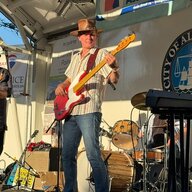
on bass, at a low-end amateur/community band level, I can maintain a consistent zero-practice regime and still do a serviceable job.
it is completely possible to go completely onto cruise control and still be a useful bass player.
Having said all that - I'm happy to accept compliments for just serviceable playing. People like the bass to be there, and they appreciate that.
You are my farging hero!!
Joebone: I agree. Just want to say go listen to the OP's band, in his sig. there is nothing about a groove that these guys could understand. It's metal punk. not the slightest thing musical about it, just rage.
I've enjoyed this discussion, getting to the musicality of bass and such. But the OP will never get it, and probably never had any intent to.
Interesting question - if unbridled rage is his thing, and he's bringing it, then he's doing what he needs to do. More power to him, etc…may his riffs redound throughout the walls of Valhalla, as funeral pyres smoke and Viking goddesses choke...
But…BUT…It's a ballsy thing to equate covering that one vibe with being a "bass player!"
''Unbridled anger player' does NOT equal a "bass player!"
The bass guitar is such a nuanced instrument. Only your imagination dictates how simple the instrument is.

The only time when the bass guitar instrument isn't hard is when the bass guitar part isn't hard.
If you find the music you play is easy, that's fine. Just as long as your part is serving the song and you're having fun. There are plenty of simple basslines in great songs. There are plenty of great bassists playing simple basslines.
I think the only problem is if you're finding yourself unhappy about what you're doing. Then I'd recommend finding a better outlet to serve your best interests in playing bass and/or any other instrument you want to play.
I don't think it's an insult to me or any other bassist just because of your opinion, nor do I feel any need to show examples or have a bass-off to prove each others' talents. People can cite all the greatest bassists in history to prove a point, but it's not going to matter much to me when I still don't want to listen to their music.
--
I decided that the cover-band situation gets kinda boring with some song selections, so I wanted to challenge myself playing at a Jazz Open Mic. That meant a lot more practice learning new songs and techniques, because I'm usually playing alongside elite experienced musicians in that area of music. This helps from keeping stale.
--
By the way, I listened to the OP's music. I like it. Good riffs upon riffs. Reminds me of old Suicidal Tendencies without the solos, but even S.T. expanded a lot musically when they had Robert Trujillo, not that I recommend OP's band moving into funk-metal. It's just an example of how a bassist can successfully do something a bit more complicated to serve the music.
If you find the music you play is easy, that's fine. Just as long as your part is serving the song and you're having fun. There are plenty of simple basslines in great songs. There are plenty of great bassists playing simple basslines.
I think the only problem is if you're finding yourself unhappy about what you're doing. Then I'd recommend finding a better outlet to serve your best interests in playing bass and/or any other instrument you want to play.
I don't think it's an insult to me or any other bassist just because of your opinion, nor do I feel any need to show examples or have a bass-off to prove each others' talents. People can cite all the greatest bassists in history to prove a point, but it's not going to matter much to me when I still don't want to listen to their music.
--
I decided that the cover-band situation gets kinda boring with some song selections, so I wanted to challenge myself playing at a Jazz Open Mic. That meant a lot more practice learning new songs and techniques, because I'm usually playing alongside elite experienced musicians in that area of music. This helps from keeping stale.
--
By the way, I listened to the OP's music. I like it. Good riffs upon riffs. Reminds me of old Suicidal Tendencies without the solos, but even S.T. expanded a lot musically when they had Robert Trujillo, not that I recommend OP's band moving into funk-metal. It's just an example of how a bassist can successfully do something a bit more complicated to serve the music.
Doner Designs
Steve Doner
- Jun 2, 2012
- 5,784
- 6,819
- Disclosures
- Doner Designs is an alias for Steve Doner
Trying to find the McCartney quote where he says something self-effacing about his early work and how he evolved in bass playing and how at the end he was effectively playing "lead bass".
When the guitar player messes up, nobody notices. When the bass player messes up, everybody suddenly "notices" the bass.
A TBer once said that bass is easier to learn but harder to master compared to guitar.
When the guitar player messes up, nobody notices. When the bass player messes up, everybody suddenly "notices" the bass.
A TBer once said that bass is easier to learn but harder to master compared to guitar.
I have met some Brazilian tambourin players who totally blew my mind. Let's face it, tambourin isn't that hard to play, most 1 years olds can play the tambourin.
Have you Heard of Jaco? So are you saying as the pitch gets higher it gets easier/quicker to develop a musical ear? This might be true for some. The human brain is more likely to assimilate a high frequency to a low frequency. I'm sorry your statement to me is very subjective, but I can appreciate that you have your own opinion
Why do people think listing exceptional players disproves the claim? Yes I've heard of Jaco... Just because a bass player manages to develop very good ears does not really disprove my point. Yes my statement is subjective, in that I haven't done a scientific study to support it.
I think you're drawing a conclusion that really isn't supportable. Yes, the bass is not within the optimum range of human hearing, but you are assuming that the low end is all that a bass player listens too. A person develops musical ears by listening to everything, not just the instrument they are playing. In fact, I would submit that the inverse may be true: that in attempting to pick apart or create the harder-to-distinguish bass lines by ear, we are actually training our ears to be more musical.
I think my conclusion would be hard to test scientifically for a lot of reasons. The argument for the inverse may make logical sense to a degree, but I think the evidence is pretty weak. In my personal experience, the bass players I know usually have worse ears for intonation, chords, phrasing than the piano players and horn players I meet. In college, the horn players and piano players always were much better at recognizing chords and extensions, and playing by ear. I think that listening to bass might be a good challenge to grow the ear, but in general, learning to play in tune, in time, with good phrasing, is much easier to do when the instrument is in a range closer to the human voice or a little higher. I think that arguing that the bass being harder on the ear results in better ears is like saying typing with only one hand will make you better at typing. You may learn a lot by doing it, and get really good at it, but in general, people using both hands will be quicker. If you've ever done any arranging for horns/strings, you will know that certain chord extensions such as the b9 sound awful in the lower registers except for special occasions. The physics of sound generally makes music in the lower register considerably more obscure and troublesome. Therefore, a low voiced instrument will struggle to do these things. And while of course you learn by listening to records and stuff, the largest growth for a musician probably comes from performing and practicing. If you can't hear yourself well doing these things, (especially true of performing and playing bass) than you will probably struggle.
I will not be responding to any more posts that simply list famous bass players or say my claim is an opinion.
Last edited:

A few more of my thoughts:
The first time my wife heard me played she said, "wow you're really good!". Best compliment I ever received.
I feel embarrassed when I pick up a bass at a music store because I feel people there will hear me and think I suck. I still feel that way after learning Tom Sawyer, or Roundabout and whip those out...then I feel like I'm showing off.
I love playing in a band a laying down the groove. Locking in with a drummer is one of life's guilty pleasures for me.
None of these feelings or emotions or embarrassment would have been possible without the thing I love the most the bass guitar (and my wife). None of it was easy, it took a lot of hard work and I still feel inadequate most of the time but that drives me to be better.
Geddy Lee has a quote about striving to be better. I don't have it memorized, I probably should find it and do that. Maybe the OP should too.
The first time my wife heard me played she said, "wow you're really good!". Best compliment I ever received.
I feel embarrassed when I pick up a bass at a music store because I feel people there will hear me and think I suck. I still feel that way after learning Tom Sawyer, or Roundabout and whip those out...then I feel like I'm showing off.
I love playing in a band a laying down the groove. Locking in with a drummer is one of life's guilty pleasures for me.
None of these feelings or emotions or embarrassment would have been possible without the thing I love the most the bass guitar (and my wife). None of it was easy, it took a lot of hard work and I still feel inadequate most of the time but that drives me to be better.
Geddy Lee has a quote about striving to be better. I don't have it memorized, I probably should find it and do that. Maybe the OP should too.
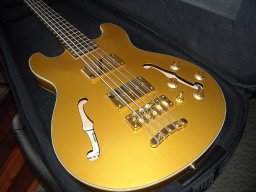
I had a similar beginning-I learned a LOT in the first 8 years of playing. Then cruised on my abilities for a few years, so I had work damn hard to push myself out of this rut & to develop my craft.
I modelled myself after 'arry at the start.
within two years I was pretty good and had a great gallop down. you can hide a lot behind fret clank too.
I got bored with that style-took me years to get out of that rut and expand.
I have more of a legato style of playing; my fingers aren't as dexterious as they once were.
I love to play walking lines and bounce. I love double-stops and broken chords. I love playing harmonically around melodies.
I really simplified my playing in the past few years due to all sorts of hand issues. I play each note now like it costs me a dollar, which is a good thing. I always felt like I played too much anyhow; now I look for reasons not to play a note.
I am a unique bassist I think. I have my own thing going on and it took many years of hard work to be like that.
it is very hard to be a smooth bassist; especially when your drummers are in question but that's a whole 'nother enchilada.
Well yes a "bass player " really doesn't need to play chords.
but I also keep myself in check by reminding myself that I am just the bass player..
Shame on you sir. JUST THE BASS PLAYER?!?!? Never say that around me. Show some self-respect!
word-I've played guitar and bass for years, and actually attempted to become a drummer. I'm going to say drumming is the hardest of the three. You can learn guitar and bass techniques, but I'm pretty sure you either have it or don't as a drummer. Plenty of guys who have drummed for years can't hold a tempo beyond four bars.
you can tell the gifted musicians; they just have 'it'.
there is talent and there is gift.
I start a thread-zero responses.
OP starts one and it becomes a mega-thread by morning.
I am doing something wrong-
OP starts one and it becomes a mega-thread by morning.
I am doing something wrong-
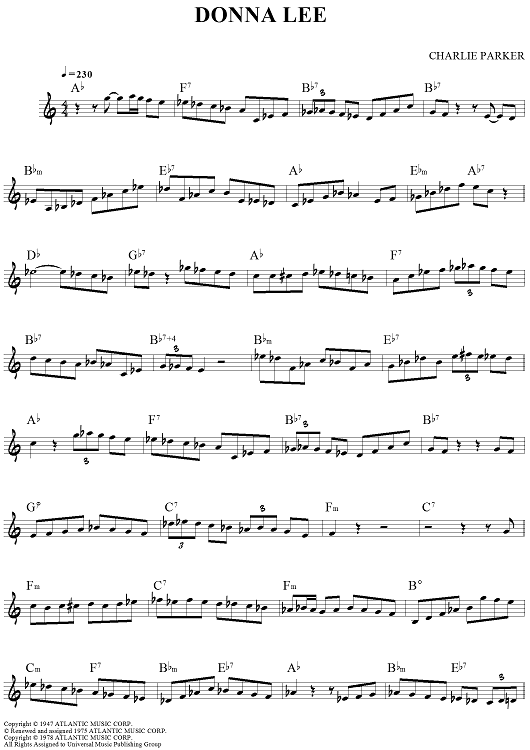
I'd love to see the OP "shred" over this, melody and all, at the full 230 BPM:

Your instrument is what you make of it. I would have lost interest if I just tried to keep the groove and not be too forward with my sound. Call me blasphemous but that's just how I like it.

I think it's relatively easy to be passable on bass, with so many styles of music turning the bass way down in the mix and only expecting basic root note lines. At the top end, though, you have bassists with massive theoretical knowledge who shred like guitarists and groove like drummers at the same time.
In summation, I think it's harder to be a decent guitarist than it is to be a decent bassist, but it's harder to be a great bassist than it is to be a great guitarist.
At least that's my opinion.
In summation, I think it's harder to be a decent guitarist than it is to be a decent bassist, but it's harder to be a great bassist than it is to be a great guitarist.
At least that's my opinion.
I'd love to see the OP "shred" over this, melody and all, at the full 230 BPM:
View attachment 726056
It's been decades since I heard it, but don't think Jaco did Donna Lee at 230…more like 160, with cool conga line underneath?
Maybe someone has the album and can check this for the universe…
jk

I haven't read all the posts on this thread, but I'll say this about playing bass guitar in a band ... IMO and IME, the bass player holds the rest of the band together. I may "just" be the bass player, but I'm more advanced in music theory than any of the other band members, and if there's ever any confusion where we are in a tune, I am the one who straightens things out ... just by playing bass guitar.


