
Yep. All other things equal, it's technique (hand /plucking placement, finger technique, damping, floating etc) Some players have built careers and a unique identity on clack...

Enjoy the benefits of a premium membership!
Upgrade Account
-
TalkBass has been independent since 1998. Add your voice.
Create a free account to reply to discussions, view embedded media, and browse with fewer display ads.
Join free Log in
Want zero display ads or expanded classifieds tools? Compare plans.
You are using an out of date browser. It may not display this or other websites correctly.
You should upgrade or use an alternative browser.
You should upgrade or use an alternative browser.
Let's talk about clack!
- Thread starter redwood
- Start date
-
- Tags
- string noise
More options
Who Replied?

Adjust your level of playing intensity & dial your tone knobs back. Problem solved!?

Yep. All other things equal, it's technique (hand /plucking placement, finger technique, damping, floating etc) Some players have built careers and a unique identity on clack...
Yup. Steve Harris comes to mind...
I can turn it on and off as wanted with varying right hand action, but on instruments where I have a hard time with unwanted clacking, the action is often too low, the neck relief is out of adustment, or both.
There are two real solutions to this.
Raise the action or play with a lighter touch.
Other solutions are bandaids on a cancer; they will not really fix a problem but will mask it. And there's nothing inherently wrong with doing that.
I have been struggling for years with poor right-hand habits that were learned during my bread-and-butter working musician days when the only bass I had would not set up low. So I beat the crap out of it, which was a ton of fun. But I don't want to play like that now, and I have a much better instrument that will set up below factory spec, and I like that. It makes it easier to play certain types of music, but the trade-off is that I have to keep myself from becoming too excited and hitting too hard. I'm stubborn enough that I would rather fix this in my fingers than notch it out with EQ, but it's a challenge.
Raise the action or play with a lighter touch.
Other solutions are bandaids on a cancer; they will not really fix a problem but will mask it. And there's nothing inherently wrong with doing that.
I have been struggling for years with poor right-hand habits that were learned during my bread-and-butter working musician days when the only bass I had would not set up low. So I beat the crap out of it, which was a ton of fun. But I don't want to play like that now, and I have a much better instrument that will set up below factory spec, and I like that. It makes it easier to play certain types of music, but the trade-off is that I have to keep myself from becoming too excited and hitting too hard. I'm stubborn enough that I would rather fix this in my fingers than notch it out with EQ, but it's a challenge.

Y'know. It could be that your action is set a bit too low for your attack.
This. 'clack' is something you can induce or reduce by altering the set-up, and it varies with different strings because different strings have different pull which affects teh relief.

I had an interesting thing happen recently where I got me a Sunn 200s and that thing would pick up on my clack just from left hand fingering (the bass has a little bit of bright top with my other heads, but totally managable without rolling off highs). I had to use my Formula 5f6 to dial back the highs and mids to get the squishy tube goodness without the clack.
I might need to raise up my e string action a smidge, but this is really just a super bright head with a bright bass.
I might need to raise up my e string action a smidge, but this is really just a super bright head with a bright bass.
play lighter
higher action
heavier strings
notice no mention of eq, pedlas ect... because it don't matter.
higher action
heavier strings
notice no mention of eq, pedlas ect... because it don't matter.

Missed the opportunity to name your thread "Yakkity Clack". 

I have one bass that I was getting some Clack I had to raise the bridge slightly also where you are plucking from and the tension of that area makes a difference.Y'know. It could be that your action is set a bit too low for your attack.

Thanks for posting this Jeff. I was hoping to find a reference here before making one of my own.Can we include Click? After all, they were brothers (R.I.P. Tom).

Nothing to add here but to chime in support for the many prior suggestions, which all combined, have it covered.

I probably should have specified that it's more a left hand issue than a right. It's the lighter passages that I have more of an issue with. Even lightly frettring the note gives me a lot more clack than I have had on any other bass. Also, my right hand technique isn't great, but I move position alot to get the sound I'm after, as well as using a pick (quite a bit more than I used too). That doesn't seem to help at all.The answer you don’t want to hear is clean up your technique. Sorry. Perhaps you need to turn your volume knob up and pluck lighter as well. Or raise your action. Those might also help.
Tried them as well ( I had forgotten). They sounded meh, and died way too soon for my liking.You mentioned DR strings. Have you tried the Pure Blues? I love everything about them including less clack. I have also found GHS Pressurewounds to be much quieter. Not your true roundwound, but they do come through the mix with some nice crunch.

That was sort of my original thought. Just looking for some confirmation. ThanksThe three DR's mentioned are all round-core SS rounds (except the BBs are coated), meaning they're relatively flexible, while NYXL's are hex-core NPS rounds. It has been my experience that, whenever I'm playing flexible strings, I need to be careful how hard I press them down when fretting. I can control the amount of clack more easily when I'm playing hex-core strings, which tend to be stiffer and more resistant to the fretting action, preventing them from hitting the frets harder than necessary.
You might want to try the SS Lo-Riders, which are the hex-core sibling to Hi Beams/Fat Beams to see their firmness might help you control the amount of clack.
I thought the OP is referring to the clack of the string making contact with the fret. Nothing right hand related. Simply fretting the string makes a clack. Even with the string damped with the right hand, that clack still happens.
Many of the responses don’t seem to be about that clack.
Many of the responses don’t seem to be about that clack.
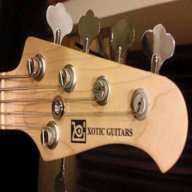
LOL. That's the first thing I did ;-)Strandberg? Check that headstock again
Exactly.I thought the OP is referring to the clack of the string making contact with the fret. Nothing right hand related. Simply fretting the string makes a clack. Even with the string damped with the right hand, the clack still happens.
Many of the responses don’t seem to be about that clack.

Which? Pure Blues or Pressurewounds?Tried them as well ( I had forgotten). They sounded meh, and died way too soon for my liking.
The only clack I ever get it when I pluck the strings hard enough to hit a fret unintentionally. Left hand fretting should be close enough to the fret that you never get any unintentional sound from that. If you're getting that, you're also dealing with a technique issue, but that's a fairly rare issue that normally doesn't rise to an audible level.I thought the OP is referring to the clack of the string making contact with the fret. Nothing right hand related. Simply fretting the string makes a clack. Even with the string damped with the right hand, that clack still happens.
Many of the responses don’t seem to be about that clack.
My only other comment is that using string choice to deal with this is going to limit your string choices for other reasons. You can sacrifice tonal options to this if you want, but for me it would not be the optimal fix.
OP mentions he's played around with action, etc. I'd suggest a professional setup.
Last edited:


