
Enjoy the benefits of a premium membership!
Upgrade Account
-
TalkBass has been independent since 1998. Add your voice.
Create a free account to reply to discussions, view embedded media, and browse with fewer display ads.
Join free Log in
Want zero display ads or expanded classifieds tools? Compare plans.
You are using an out of date browser. It may not display this or other websites correctly.
You should upgrade or use an alternative browser.
You should upgrade or use an alternative browser.
Marginal interest in upright bass
- Thread starter LBS-bass
- Start date
More options
Who Replied?


My encouraging advice is to start with a hang with that old duffer and try out his bass and get some pointers.
My cautionary advice is that it’s a serious physical & mental endeavor to get good and make it swing.
But who knows till you try???
My cautionary advice is that it’s a serious physical & mental endeavor to get good and make it swing.
But who knows till you try???

At almost 60, I started playing bass at a time (late 70's) when only very traditional jazz and orchestral players were, for the most part, interested in the double bass. I took violin lessons when I was a kid, so fretless intonation doesn't scare me, but I've always been happy enough to play a fretted bass guitar.
Nowadays the upright is a lot more in demand. I played a show last night with several bands and was the only electric bassist in the bunch. I'm torn. I watched a woman struggling to get through the crowd with her enormous bass after I tore down my stuff. Did NOT look like something I have any interest in doing. I'm kind of old-fashioned in the sense that I think if my BG is played right, most people won't really care if the tone isn't the same, even in most situations where an upright might be typically employed.
But there are a lot of "Americana" and small jazz groups springing up around here, and mostly they want that sense of "authenticity" which, I could argue, is bunk in the case of Americana unless you're playing a homemade instrument. Bear in mind that my family hails from West Virginia and my granddaddy whittled his own fiddle from a piece of wood. So I'm not trying to be snobby here; nobody doing that back in his day could afford a decent instrument and the whole handcrafted, folksy nature of the music is part of its charm.
So I'm trying to sort out if I should actually take the plunge, get an instrument, and take some lessons. There's a guy here who's getting up in years and he's willing to teach me; might be a good lead on work, if I do that, since he's got a lot of connections. But I'm getting up in years, too, and I'll need to brush up a lot on my sight reading, as well. Wondering if it's worth the time it will take to achieve the level of competence I'll need in order to feel comfortable seeking work.
What say you all?
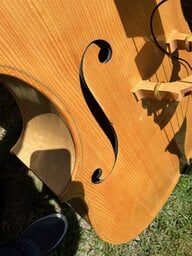
I would say check out the double bass side of this website, but maybe try renting one for a bit and see if you like it. The ns design is great, but theres nothing like playing the real thing. Feeling the vibration through the whole body of the bass is something special.

my $0.02.
I'm 55 and been playing bass for 15 years, added DB for about the last 6 of those.
On DB, I only play bluegrass/americana. And only at jams at the moment. It's enough to scratch my itch.
If I want to play jazz, I want to do that on piano (been playing that for 48 years).
When I sought out to learn DB, I just wanted to be an average player. Able to hang in any bluegrass jam I might encounter. You can't make any money playing bluegrass in LA area. Maybe elsewhere, but not here. That was never my motivation. So when I gig/play out, its either on keys or BG.
I like the fact that I can play both, although I've never actually sought out or been hired for any "doubling" roles. They are out there, but I'm not all that interested. I agree with what everyone has said about the physicality of playing the DB and the schlepping around that big an instrument. But if you love something, you'll do anything to do that, won't you?
I'm 55 and been playing bass for 15 years, added DB for about the last 6 of those.
On DB, I only play bluegrass/americana. And only at jams at the moment. It's enough to scratch my itch.
If I want to play jazz, I want to do that on piano (been playing that for 48 years).
When I sought out to learn DB, I just wanted to be an average player. Able to hang in any bluegrass jam I might encounter. You can't make any money playing bluegrass in LA area. Maybe elsewhere, but not here. That was never my motivation. So when I gig/play out, its either on keys or BG.
I like the fact that I can play both, although I've never actually sought out or been hired for any "doubling" roles. They are out there, but I'm not all that interested. I agree with what everyone has said about the physicality of playing the DB and the schlepping around that big an instrument. But if you love something, you'll do anything to do that, won't you?
Good luck to you and don't be discouraged by the people here...most are helpful, but sometimes you can find someone that will totally discourage you (so far, no one here in this thread that I can see  )
)
About 10 years ago I was looking into the same thing, getting into upright bass. Had some pretentious snobs here (don't even remember their names) tell me it will take DECADES of work to get close enough to gig with anyone and that I shouldn't even try, especially as I'm an older person. It totally turned me off to the whole idea...and actually the idea of Talkbass for a while. I even pointed out that someone like Scott LaFaro was playing with Bill Evans and was on several recordings, yet he didn't have decades of work with it, as LaFaro died at 25 in a car crash. But of course, they just moved the goal-posts and I just dropped the whole thing and logged off and went to be a goat farmer for a while. Ok, making the goat part up, but you get my point.
You're getting a teacher and and that's a wonderful start right off the bat. I say go for it and don't look back.
)About 10 years ago I was looking into the same thing, getting into upright bass. Had some pretentious snobs here (don't even remember their names) tell me it will take DECADES of work to get close enough to gig with anyone and that I shouldn't even try, especially as I'm an older person. It totally turned me off to the whole idea...and actually the idea of Talkbass for a while. I even pointed out that someone like Scott LaFaro was playing with Bill Evans and was on several recordings, yet he didn't have decades of work with it, as LaFaro died at 25 in a car crash. But of course, they just moved the goal-posts and I just dropped the whole thing and logged off and went to be a goat farmer for a while. Ok, making the goat part up, but you get my point.
You're getting a teacher and and that's a wonderful start right off the bat. I say go for it and don't look back.
At almost 60, I started playing bass at a time (late 70's) when only very traditional jazz and orchestral players were, for the most part, interested in the double bass. I took violin lessons when I was a kid, so fretless intonation doesn't scare me, but I've always been happy enough to play a fretted bass guitar.
Nowadays the upright is a lot more in demand. I played a show last night with several bands and was the only electric bassist in the bunch. I'm torn. I watched a woman struggling to get through the crowd with her enormous bass after I tore down my stuff. Did NOT look like something I have any interest in doing. I'm kind of old-fashioned in the sense that I think if my BG is played right, most people won't really care if the tone isn't the same, even in most situations where an upright might be typically employed.
But there are a lot of "Americana" and small jazz groups springing up around here, and mostly they want that sense of "authenticity" which, I could argue, is bunk in the case of Americana unless you're playing a homemade instrument. Bear in mind that my family hails from West Virginia and my granddaddy whittled his own fiddle from a piece of wood. So I'm not trying to be snobby here; nobody doing that back in his day could afford a decent instrument and the whole handcrafted, folksy nature of the music is part of its charm.
So I'm trying to sort out if I should actually take the plunge, get an instrument, and take some lessons. There's a guy here who's getting up in years and he's willing to teach me; might be a good lead on work, if I do that, since he's got a lot of connections. But I'm getting up in years, too, and I'll need to brush up a lot on my sight reading, as well. Wondering if it's worth the time it will take to achieve the level of competence I'll need in order to feel comfortable seeking work.
What say you all?
I just rented one over thanksgiving break for many of the reasons you mentioned. I think since than I played it roughly a half dozen times and realized exactly how much work I will have in store for me if I want to play it well.
I plan on taking a few lessons, but honestly at the age of 50 I think I am better off just putting the time into becoming a better electric bass player. Im trying to pick up some piano skills as well...so time is really limited.

I think if you want to play an upright bass that is what you should do.
However, if you just want to fit the Americana vibe, I will second the notion that a UBass is a good option. I think you get close to the right tone and I think the look fits well with Americana as well.
IMHO the UBass does produce a nice sound. In my experience, audience members are often extremely unsophisticated when it comes to sound, and they tend to respond more strongly to visual cues. So, the UBass will sound fine, but it won't create the same effect with the audience. Then again some audience members will be totally mesmerized because the UBass is so tiny...so maybe the distinction is not that big of a deal.
At age 54, I'm re-learning cello to see if I can play jazz on it. There is no demand for jazz cellists, but it's just an interesting challenge.
Not to derail... but have you switched to the D'Addario 4th tuning cello strings, or are you still in standard?
Just curious.
Carry on...

I say yes, you will do fine.
Get a decent instrument. If it's not for you it is sellable for the same that you paid. Good strings are about $300. A teacher is valuable.
I gig about 75 dates a year on a 5/8ths carved upright, a bass I bought in 1974. Carved basses generally sound a lot better than laminated and are more satisfying to play. Usually I use a Realist or Underwood pickup and have a variety of amps, from Ampeg tube to small GK depending on venue and band. Been gigging upright and electric since 1972.
Feel free to pm me if you have any questions on gear or instruction.
Get a decent instrument. If it's not for you it is sellable for the same that you paid. Good strings are about $300. A teacher is valuable.
I gig about 75 dates a year on a 5/8ths carved upright, a bass I bought in 1974. Carved basses generally sound a lot better than laminated and are more satisfying to play. Usually I use a Realist or Underwood pickup and have a variety of amps, from Ampeg tube to small GK depending on venue and band. Been gigging upright and electric since 1972.
Feel free to pm me if you have any questions on gear or instruction.
IMHO the UBass does produce a nice sound. In my experience, audience members are often extremely unsophisticated when it comes to sound, and they tend to respond more strongly to visual cues. So, the UBass will sound fine, but it won't create the same effect with the audience. Then again some audience members will be totally mesmerized because the UBass is so tiny...so maybe the distinction is not that big of a deal.
This is my thought, as well, and it's not just audiences. People want to see that big bass fiddle up there. The sound is probably not as important at this moment in time as the visual. I know that I can get an acceptable sound from my BG, but it *looks* out of place in that context.

If you have a rented bass and an instructor, go for it. Go online and look at some transcribed Ray Brown walking lines. Learn em first on BG using the correct fingering for DB and then try playing em on the DB.
In my case, I got most of the juice for the squeeze by learning to play the lines on the BG. (I am a Will Lee wanna-be)
In my case, I got most of the juice for the squeeze by learning to play the lines on the BG. (I am a Will Lee wanna-be)
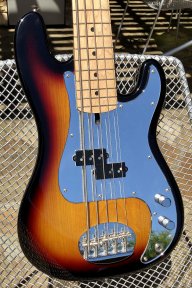
I went through the following progression - electric fretted 4 string - electric fretted 5 string - electric fretless 4 string - electric fretless 5 string - acoustic upright 4 string - electric upright 5 string, then back to electric fretted 5 string. To be clear, I am not properly trained on upright (not at all orchestral, no bowing, etc.). I took up the upright for a somewhat similar reason to the OP, which is that I needed to be able to do acoustic gigs and acoustic bass guitars couldn't really keep up in terms of volume. There are a lot of people who will tell you that upright and bass guitar are two different animals, requiring very different skills, technique, etc. This is somewhat true, but really depends on what you're going to be playing. If you're aiming for jazz virtuoso or classic musician, then yes, you will need to get a teacher and really learn properly. If you are interested in just playing a typical rock, blues, country, etc. line in an acoustic setting, then you can pretty much figure out what to do on your own. For example, instead of one finger per fret with your left hand, you'll use your first two fingers and your pinky, but not your ring finger because the spacing is longer. You have to pluck more from the side of your finger than the tip on your right hand too. Holding and stabilizing the instrument is really the most important thing as you can't really play it until you get this part down. You also use open strings more often (or at least I do) to help keep yourself in tune (also, fingerings are not as easy).
Anyway, I enjoyed figuring out upright and playing it. Then, two things changed. First, the singers (older people like me) needed things tuned down of a few songs (the main reason I started on a 5 string electric), and at the same time, the gigs got a bit bigger, requiring amplification. Amplification requires a pickup on the upright and a preamp. The bass still sounds more like an upright, but the trouble is that uprights can have a lot of feedback issues. The need to avoid feedback and have a B string (at an affordable price) led me to a 5 string electric upright. In some ways, this is the best of all worlds in terms of having a killer B string - longest scale and highest tension you can get. However the look is not quite so traditional as it is with an acoustic upright. Also, the tone of an electric upright is neither here nor there (not quite an acoustic upright, not quite a bass guitar). I ultimately switched back to regular 5 string electric bass guitar. All the extra work wasn't really worth it. I still occasionally play acoustic upright unamplified along with unamplified acoustic guitars, but for anything amplified, I stay with a solid body bass guitar. Just my experience.
Anyway, I enjoyed figuring out upright and playing it. Then, two things changed. First, the singers (older people like me) needed things tuned down of a few songs (the main reason I started on a 5 string electric), and at the same time, the gigs got a bit bigger, requiring amplification. Amplification requires a pickup on the upright and a preamp. The bass still sounds more like an upright, but the trouble is that uprights can have a lot of feedback issues. The need to avoid feedback and have a B string (at an affordable price) led me to a 5 string electric upright. In some ways, this is the best of all worlds in terms of having a killer B string - longest scale and highest tension you can get. However the look is not quite so traditional as it is with an acoustic upright. Also, the tone of an electric upright is neither here nor there (not quite an acoustic upright, not quite a bass guitar). I ultimately switched back to regular 5 string electric bass guitar. All the extra work wasn't really worth it. I still occasionally play acoustic upright unamplified along with unamplified acoustic guitars, but for anything amplified, I stay with a solid body bass guitar. Just my experience.

- Jan 12, 2004
- 1,493
- 1,270
- Disclosures
- Owner, Stand Up Guy Basses (Repair/Sell/Buy upright basses)
If you want a challenge, definitely take up the upright. I gradually migrated away from playing electric and haven't looked back.
Nowadays, I spend 98% of my time on the upright. I have one electric bass gig each summer. We rehearse a few times beforehand and everything works well. The reverse (suddenly picking up the upright, with all your time spent on electric) would be a train wreck.
I say go for it!
Nowadays, I spend 98% of my time on the upright. I have one electric bass gig each summer. We rehearse a few times beforehand and everything works well. The reverse (suddenly picking up the upright, with all your time spent on electric) would be a train wreck.
I say go for it!
Upright reminds me of playing keys when I was younger. I was primarily a piano player, but my teacher wanted me to learn organ (actually, playing pipe organ at church). Piano and pipe organ, same keys (though there's no 88-key pipe organs . . . . ), similar technique, but ultimately two entirely different mind and skill sets, and two utterly different instruments.
I've dabbled around on upright (had a friend who had a wonderful, symphony-grade 3/4 German) and took to the basics easily enough, but it's just not me. I'd dread the size and its' relative fragility, and I don't even want to think about amping one.
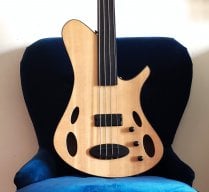
I'd think about one of the NS uprights, but I already play electric . . . . . . it's just not me.
I've dabbled around on upright (had a friend who had a wonderful, symphony-grade 3/4 German) and took to the basics easily enough, but it's just not me. I'd dread the size and its' relative fragility, and I don't even want to think about amping one.
I'd think about one of the NS uprights, but I already play electric . . . . . . it's just not me.
When I was in high school I played in the jazz band without an amp. A bass guitarist played at the same time with an amp. I learned a lot as he was older and knew more about music. When we went to competition, people came up to me who had come to the event specifically to see a string bass in a big band. It didn't matter that they couldn't hear me, just seeing the string bass was cool enough.This is my thought, as well, and it's not just audiences. People want to see that big bass fiddle up there. The sound is probably not as important at this moment in time as the visual. I know that I can get an acceptable sound from my BG, but it *looks* out of place in that context.
The next year I dropped out of the orchestra and jazz band, and went into a vocational electronics program. But doors had been opened. One of the local universities had a small music program with no bass students. Guess who they tracked down and asked to play in their jazz band.
I played professionally and as I have mentioned, I often switched between 6-string electric, 6-string EUB, and 4-string upright in the last big band I performed in. I remember one particular performance where the space was really limited so I could only use one bass. Given the setlist, I chose the EUB. It was an early NS design bass made in the US. The current EU 6-string is supposed to be an exact copy. Anyway I felt the EUB compromised some of the jazz standards because it has lots of sustain and almost no thump. Basically it just doesn't sound or feel right to me. But the string bass would have sounded even worse on some of the more commercial music we performed.
After the show we had a reception with the audience and I got a lot of attention. People wanted to discuss the weird instrument I was playing...it really seemed almost like magic to some. I was most concerned about how it sounded, so I asked them to tell me what they thought and led them into discussing how it was different from what they expected. Very few people could make a distinction and everyone that could said the EUB worked great in the context of the performance. No one was concerned about thump or sustain, but the thought it looked very modern and cool.

I started on electric and added upright later. There's no downside to being more versatile. I say go for it, and do it properly. You sound like you are on the right track.
As far as notes and technique: to me electric and upright are like a pickup truck and a semi. The notes are the road. A pickup and a semi are both trucks and you can travel the same roads, but they require different driving techniques to avoid a wreck.
As far as notes and technique: to me electric and upright are like a pickup truck and a semi. The notes are the road. A pickup and a semi are both trucks and you can travel the same roads, but they require different driving techniques to avoid a wreck.

What has been "the right preamp" for you?
This question was asked back a few pages, about which preamp I use with my NS Designs NXT electric upright. The answer: Fishman Pro-EQ Platinum Bass preamp.
Oh, and also important - upright and electric upright will tear up your plucking fingertips, especially when you're starting. Lots of force and friction going on at the string. Here's a thread I started on how to tape your fingertips. You will be happy to have this information.
How to tape fingertips
Oh, and BTW, I learned upright in the 60's and use all four fingers on the left hand. The EUB does require a bit less pressure than my old upright, perhaps due to better setup.
Last edited:
- Sep 4, 2010
- 3,304
- 2,730
- Disclosures
- Endorsing: Martin Keith Guitars
I've been debating getting back into it...but I dont like playing the 3/4 bass i've sitting the corner of my apt. What I did like a lot when I ran into it in a music store, is a decent 1/4 size bass. Still has the visuals and the tone down (just quieter..but that's why we have amplification)
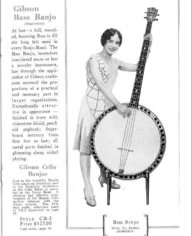
Do gigging bassists really spend $5000 and up for their instruments? I've always wondered this. I used to keep fairly busy free-lancing on electric bass, but I did lose some gigs and get some attitude from musicians over my stubborn refusal to play the upright. I had several reasons for my decision, one of which was that I couldn't rationalize spending four or five figures on an instrument on which to play gigs that usually paid $30-100 or so. Still, if I had it to do over again, I might suck it up, buy a bass with a carved top and plywood sides and back, and fake my way through gigs. Snobbery is a tough thing to try to resist....An even marginally playable good sounding upright would cost somewhere in the 5 to 10K range...
It's worth noting that, I believe, LaFaro used gut strings, which probably helped alleviate the physical strain on his hands somewhat, although it probably limited his volume....I even pointed out that someone like Scott LaFaro was playing with Bill Evans and was on several recordings, yet he didn't have decades of work with it, as LaFaro died at 25 in a car crash...
On the jazz gigs I used to play, there is no way that musicians would have accepted a uke bass as a substitute for an upright bass. And frankly, I don't agree at all that it sounds like an upright. I own a uke bass, and about the best I can say for it is that if it's played in a band and its volume is turned low enough, you can't really tell what kind of bass it is. But turn it up, or play it solo, and there is no mistaking it for an upright.IMHO the UBass does produce a nice sound. In my experience, audience members are often extremely unsophisticated when it comes to sound, and they tend to respond more strongly to visual cues. So, the UBass will sound fine, but it won't create the same effect with the audience. Then again some audience members will be totally mesmerized because the UBass is so tiny...so maybe the distinction is not that big of a deal.


