• TalkBass has been independent since 1998. Add your voice.
    Create a free account to reply to discussions, view embedded media, and browse with fewer display ads.
    Join freeLog in
    Want zero display ads or expanded classifieds tools? Compare plans.

Double Bass Method Book For Adult Self-Teaching

I would suggest at least a few months with a teacher to get the fundamentals right.
My favorite bass learning series is strictly strings for string bass, book 1 to 3, from Highland/Etling Publishing (belongs to Alfred Publishing).
Book 1 has ISBN 0-88284-533-0, Book 2 has ISBN 0-88284-539 and Book3 ISBN 0-38081-13952-2. Hope, the books are still available, I have had them since last century...
The pieces in them lead to playing the instrument, enough theory, scales, chords etc build in to get the needed knowledge.
There were other books in the series for string ensembles, play alongs, christmas songs, classics and such I never had, but you could have found additional material for your level there.
Fingering is Simandl, but much faster progress up the neck.
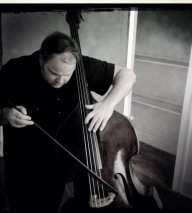
 
Since self-teaching is risky, the most low risk is the most proven method. More great bassists have come up on Simandl than anything else.
It is simple & concise. You don't really do the whole book. You get up the neck and then you end up playing the music you want and actually going back to the earliest exercises.
It is tedious, and not super easy but works best. You can work hard at home or work hard on stage, it is your choice.
You will need to be able to think outside of that and make your own decisions later, but, that is just being a thinking person.
Self-teaching and less proven method doubles the risk.

The lowest risk option is finding a teacher with the fortitude to teach Simandl (I think at least some teachers use other methods not in the best interest of the student but because THEY are tired of hearing Simandl!!!!).
Otherwise just find a teacher use what they say to use.
 
Last edited:
  • Like
Reactions: AGCurry and jheise
I don't have access to a good local teacher otherwise I would happily take lessons. I had an EUB a couple of years ago and drove an hour and a half to take a double bass lesson with a guy and he charged me $65 to listen to him (and show me) how to play 'Smoke On The Water' for 45 minutes. No thank you. However, I don't plan to teach myself from a book alone. I signed up for two online courses. One is John Patitucci's Artistworks course (full year) and the other is Geoff Chalmers Beginner's Double Bass course on Discover Double Bass.
 
  • Like
Reactions: drumsnbass
I don't have access to a good local teacher otherwise I would happily take lessons. I had an EUB a couple of years ago and drove an hour and a half to take a double bass lesson with a guy and he charged me $65 to listen to him (and show me) how to play 'Smoke On The Water' for 45 minutes. No thank you. However, I don't plan to teach myself from a book alone. I signed up for two online courses. One is John Patitucci's Artistworks course (full year) and the other is Geoff Chalmers Beginner's Double Bass course on Discover Double Bass.

which do you like better? Why?
 
There are many teaching methods, most of them good, most of them not really working with only self teaching. I myself was taught using the Ludwig Streicher books. The Lajos Montag Books are well done, too, Gerd Richter of Germany has two sepate series for younger and older students, Then there are the Saßmannhausen books, that would be my second choice for self teaching. and so on ...
For video lessons I like Lauren Pierce courses on left hand and bowing.
My advice: decide on one method and stay with it for at least one or two years, don't try to do too many things at once.
The online lessons usually work better, if you already have some fundamentals. To get them, try to get some lessons with an experienced double bass teacher.
 
A fine reason, for those us who aren't Rabbath fans, to not go that route.

The ABC's of Bass has done very well for me with students both young and old.

-S-

I'm not a Rabbath fan by any stretch of the imagination; quite the opposite. But, to me seeing the bass with his position concept makes too much sense, unfortunately. Much more sense than the mess Simandl devised. But I don't think of playing in "positions", either....
 
The main positions are clear with either method: 1. position is identical, tuning position (Simandl III or Rabath 2), neck heel position (Simandl IV or Rabath 3) and the octave harmonic for starting thumb position. Between that, there are several other positions needed using only three fingers, that would would need a name for referencing when shifted to (Simandl) or a finger placement reference when using different hand positions to be reached (Rabath pivoting). The naming of the in between positions / pivots is messy either way. Using the bass guitar fret numbering doesn't make it any better for people just learning double bass with no bass guitar experience.
I am just interested how to find the position I need using harmonics or not fingered strings to compare and what notes are in it, not how somebody named it. Since I learned that way, the Simandl position names are the ones I understand best. There you get the main positions with the notes of A flat or C scale on the A string (string available on all instruments): index (first) finger on B ==> first position, on C ==> second position, on D ==> third position, on E ==> fourth position ...
To shift through the main Simandl positions, just play the A flat scale on the A string using only your index finger.
 
Using bass guitar fret numbering doesn't make it any better for people just learning double bass with no bass guitar experience.

Why not? It's a very simple system. The easiest there is. Each fret is one position. Where the first finger is that is your position number. You can easily transfer that to upright. Makes much more sense to me than any of the other position numbering system there is for upright.
 
I've never bothered with the names of the fingering positions in either method, and just blew them off when working through the books; to me they were more trouble than they were worth, adding a different and (IMO) superfluous layer of language to something that is more easily understood without it. Might be a dyslexic thing, as I feel the exact same about solfege; it's easier to just learn to hear the intervals and sing the notes than to give them these complicated and arbitrary names. In the bass method books, once the indication of which string a note is to be played on is given, the rest seems readily apparent.

But I would have to agree that the "each imaginary fret/half-step is a new position" method would be a lot more logical, at least to my old addled brain. And probably to a lot of people approaching this material for the first time.
 
I started on the upright a couple years ago after playing electric bass since the 70s, I just turned 59. Very little, if anything, about electric bass playing helped with transitioning to upright. That really surprised me initially. Upright is a totally different animal and I would not be where I am on upright without lessons. Progress is very slow and incremental to this day on upright. I’m told that’s par for the course, especially arco. My upright work, though, has really helped my electric playing.

Do yourself a favor and look into lessons. You need someone watching you play to make sure your left and right hand techniques are progressing the way they should whether your playing pizz or arco. It’s almost impossible to do on your own if you don’t even know what good technique is. And reading what good technique is one thing but getting real-time advice while you play from teacher is so much more instructive.
 
Agreed. You really just worry about the first position you learn, half position with Simandl. Once you realize you are moving a three half step span up the neck until thumb position you just worry about which three half steps are in the hand wherever you are.
Simandl & Rabbath both use sound logic to come to different conclusions, to play the bass you need be able to have a multi-dimensional view anyway. Either is more about thinking about the fingerboard, not playing.

I've never bothered with the names of the fingering positions in either method, and just blew them off when working through the books; to me they were more trouble than they were worth, adding a different and (IMO) superfluous layer of language to something that is more easily understood without it. Might be a dyslexic thing, as I feel the exact same about solfege; it's easier to just learn to hear the intervals and sing the notes than to give them these complicated and arbitrary names. In the bass method books, once the indication of which string a note is to be played on is given, the rest seems readily apparent.

But I would have to agree that the "each imaginary fret/half-step is a new position" method would be a lot more logical, at least to my old addled brain. And probably to a lot of people approaching this material for the first time.
 
Once you realize you are moving a three half step span up the neck until thumb position you just worry about which three half steps are in the hand wherever you are.

I think of it as 2, 3, or 4 half steps under the hand in any "position": In set position, 2 half steps; with an added upper 4-4 pivot, 3 half steps; with an added 1-1 pivot*, 4 half steps. So any position is kind of like an accordion. It can be either closed or open. There are reasons for all the various different stretching-of-the-bellows scenarios depending on the musical passage.

* For me, the 1-1 pivot is really more of a "shivot", but feels equally secure.
 
To no one in particular:

Learning to play the bass isn't a "Rabbath or Simandl" proposition. I recommended one alternative which I like, The ABC's of Bass, and no doubt there are others.

Position numbers are useful to students. On guitar, I have seen fingerings in combination with string identifiers - together, they tell you where to play a note and with what finger. On the bass, it seems the combination of position indicated by a Roman Numeral, plus finger number serves the same purpose (and I've also seen that used for guitar as well.)

Rambling on about position numbers - it's funny, IMO, how often we forget that we sometimes can't play something because we don't know what we're supposed to be playing, not because we know what we're supposed to play but just can't do it. As a teacher - and we're talking about music reading here, not improvising - I try to keep that distinction clear. Job #1 is to know what it's supposed to sound like and what you're supposed to do to make it sound like it's supposed to sound like. Then you can spend some brain power and practice time on learning how to actually do it.

-S-
 
Anyone even entertaining self-teaching needs to be able to figure out the positions. It isn't actually confusing in the least.

I found it very confusing...so confusing, in fact, that I ended up completely disregarding it and thinking of them in other ways.
 
  • Like
Reactions: Joshua and Les Fret
I don't have access to a good local teacher otherwise I would happily take lessons. I had an EUB a couple of years ago and drove an hour and a half to take a double bass lesson with a guy and he charged me $65 to listen to him (and show me) how to play 'Smoke On The Water' for 45 minutes. No thank you. However, I don't plan to teach myself from a book alone. I signed up for two online courses. One is John Patitucci's Artistworks course (full year) and the other is Geoff Chalmers Beginner's Double Bass course on Discover Double Bass.
Just because you had a bad teacher, you shouldn't give up on trying to find a good one. At this juncture particularly, what you are looking for is not musical instruction, it's physical approach to the instrument. And since it's physical, having an actual live human being in the same room with you, who can take the instrument out of your hands to demonstrate something or actually manipulate your body so that you can feel what it's like viscerally to adapt a posture or move your right or left arm or hand is not something you can currently access through consumer electronics.
You don't tell us where you're located, but unless you're on an oil platform in the middle of the North Sea (or some such), there is likely a resource that you don't know about, but someone here on this site does, that you could access to at least get enough of a handle on physical approach that you don't start bad habits or, worse, sustain injury, either immediate or cumulative.
 
  • Like
Reactions: marcox

Latest posts