• TalkBass has been independent since 1998. Add your voice.
    Create a free account to reply to discussions, view embedded media, and browse with fewer display ads.
    Join freeLog in
    Want zero display ads or expanded classifieds tools? Compare plans.

Mic vs DI vs "Blend of Both"

Hey Y'all,

I have been experimenting with recording over the past 2 years. I am still not sure when I would use just a mic vs just a DI. If there is a blend of both, is high passing one and low passing the other the only way to go or are there other ways to blend DI and mic signals?

Also, how would you blend multiple mics and a DI signal or two mics together?

Finally, why do people hate the beta 52 mic on bass cabs? I saw some things about mid scoop but if you place it at the recommended distance of 2 inches, you have normal level of mids...
I have put in a ton of time recording and experimenting with multiple mics + di.

In almost every case, I just ended up using the di signal and muting all the mic tracks. Except when using heavy fuzz.

Just one untrained home studio novice’s inexpert experience.
 
I record both straight DI and Mic'd for guitars and a two DI system for bass. When I record bass, I have straight DI and then another preamp style DI with effected signal such as overdrive or whatever I am intending. Most of the time the effected signal is going through a Zoom MS-60B and MXR M81. I do change that up, depending on what I feel like doing. I have recorded with a band where I recorded DI from my GK and mic. They all can sound good and is useful to have both signals.

As far as the workflow is concerned, I typically start with the more effected signal since that has the sound I was intending. I get that in the mix where I want it. Then, I take the clean signal and bring it up to where I can hear it doing something and see if I if I like it. This is the tricky thing. Sometimes I like 100% effected signal, sometimes I prefer to lean toward the cleaner signal. Each recording I do is a little sonically different, so you just have to play with the two levels in the mix for each recording and decide what you like.
 
I record both straight DI and Mic'd for guitars and a two DI system for bass. When I record bass, I have straight DI and then another preamp style DI with effected signal such as overdrive or whatever I am intending. Most of the time the effected signal is going through a Zoom MS-60B and MXR M81. I do change that up, depending on what I feel like doing. I have recorded with a band where I recorded DI from my GK and mic. They all can sound good and is useful to have both signals.

As far as the workflow is concerned, I typically start with the more effected signal since that has the sound I was intending. I get that in the mix where I want it. Then, I take the clean signal and bring it up to where I can hear it doing something and see if I if I like it. This is the tricky thing. Sometimes I like 100% effected signal, sometimes I prefer to lean toward the cleaner signal. Each recording I do is a little sonically different, so you just have to play with the two levels in the mix for each recording and decide what you like.
To start, do you record = level in both the clean and effected signal and then balance their volume to taste?
 
You usually have to shift the DI a little forward in time to match the delayed mic signal right?
I usually will shift the Mic in a DAW as it's late, live I delay the DI to align with the Mic.
or...
What I actually do when recording proper is use both the Dry and Effect out of my SansAmp BDDI recording both with exactly the same signal chain to the DAW so they are time aligned, then reamp both signals separately in a room with an SVT, then realign in post. Leaving me with Clean DI, Clean DI's slightly gnarly amp, Distortion DI, and Distortion DI's even gnarlier amp. It's pretty beastly.
 
  • Like
Reactions: BlueTalon
Hey Y'all,

I have been experimenting with recording over the past 2 years. I am still not sure when I would use just a mic vs just a DI. If there is a blend of both, is high passing one and low passing the other the only way to go or are there other ways to blend DI and mic signals?

Also, how would you blend multiple mics and a DI signal or two mics together?

Finally, why do people hate the beta 52 mic on bass cabs? I saw some things about mid scoop but if you place it at the recommended distance of 2 inches, you have normal level of mids...
Lose the mic
 
I am still not sure when I would use just a mic vs just a DI.

The trite but true answer is "when it sounds better in the mix." On my last handful of recordings I have always done both a mix and DI track because it gives me flexibility in terms of blending the two or soloing one of them to suit the individual track or even individual portion of a track wherever it works best. There are some general rules of thumb that might suggest favoring one versus the other (for example, unsurprisingly, the mic track tends to sound better than DI if I run a fuzz pedal during the take), but the most important thing is that both tracks tend to sound *different* overall. Personally I don't see any reason not to record both, listen back to them, and choose to solo or combo based upon the actual sound on that track.
 
  • Like
Reactions: Joblivion
I’m not an engineer. But I’m getting great bass sounds on our new record using the following:

P Bass and J Bass depending on the song
Orange AD200B
OBC115 mic’d with the Beta 52
OBC115 mic’d with the SM57
Avalon DI

pretty sure in mixing we are blending all 3. Don’t know the details. But it sounds great.
 
  • Like
Reactions: Mighty Thumb
Hey Y'all,

I have been experimenting with recording over the past 2 years. I am still not sure when I would use just a mic vs just a DI. If there is a blend of both, is high passing one and low passing the other the only way to go or are there other ways to blend DI and mic signals?

Also, how would you blend multiple mics and a DI signal or two mics together?

Finally, why do people hate the beta 52 mic on bass cabs? I saw some things about mid scoop but if you place it at the recommended distance of 2 inches, you have normal level of mids...


With multiple mics you have to be careful about phase or you'll hollow out your sound.

With how good DAWs and re-amping/in the box plugins sounds, I only take DI tracks for bass now. Half the time I just dupe the track, but some amp on it and EQ and done.

When I use two tracks- it's usually DI and a DI track that is high passed with some distortion added (the fake bi-amp). Mix and group them and call it a bass track. This is usually to get things to sit right in the mix/be audible on non-hi fi devices.

I'm almost that point with guitar as well. Although on guitar I usually take a DI and a mic and use one or the other.
 
Using phase adjustment tools like the Radial Phazer or Little Labs IBP will give far better results than simply time aligning the waveforms in my experience. And like I said in an earlier post, high passing the mic signal, basically use the amp for just mids/highs, can also make things a lot easier (in combination with a phase adjustment tool).

But it always depends on what kind of tone you're looking for. I often only use a DI but in those cases I usually choose a colored DI with tubes&transformers.
 
Last edited:
  • Like
Reactions: Joblivion
To start, do you record = level in both the clean and effected signal and then balance their volume to taste?

I do level the volume for each in the Audio Interface/DAW. I have playback muted while recording through the DAW. I have signal coming through the Audio Interface to a mixer to hear what I am doing on the instrument I am recording. In addition to that, I have output from the DAW playback of the rest of the instuments through the mixer to play along with.

Once the two tracks are recorded, I then work the volume levels in the DAW. I will also do some left/right separation on one or both tracks most times.
 
I do level the volume for each in the Audio Interface/DAW. I have playback muted while recording through the DAW. I have signal coming through the Audio Interface to a mixer to hear what I am doing on the instrument I am recording. In addition to that, I have output from the DAW playback of the rest of the instuments through the mixer to play along with.

Once the two tracks are recorded, I then work the volume levels in the DAW. I will also do some left/right separation on one or both tracks most times.

By left right separation, do you mean listen to each track stereo hard panned one each side?
 
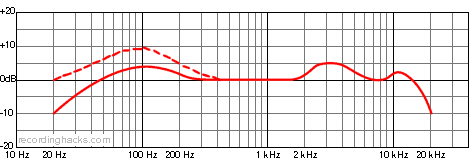
This is the one you want, right here. Great on a kick, also great on a bass.
[Invalid or Expired Link Removed]

0335.png


In terms of mixing DI / mics there's so many things you can do. God city does multiple mics on bass cabs, plus a DI, and blends all the tracks until the desired bass sound in the mix is reached. There's no real rules, just go with what you like.

I'm about to do some recording, and I think on my bass, I'm going to get a clean DI signal, and then reamp it through my set up with various mics. The DI track might also go through an amp sim, and then I'll mix the various tracks until I like what I get.
 
Get as many different signals as possible.
Tracks cost nothing unlike the old days. It's nice to have multiple options.
And I would also suggest effects in their own track, that way you have complete control and can parallel mix everything back together.
 

Latest posts