• TalkBass has been independent since 1998. Add your voice.
    Create a free account to reply to discussions, view embedded media, and browse with fewer display ads.
    Join freeLog in
    Want zero display ads or expanded classifieds tools? Compare plans.

micing vs. DI

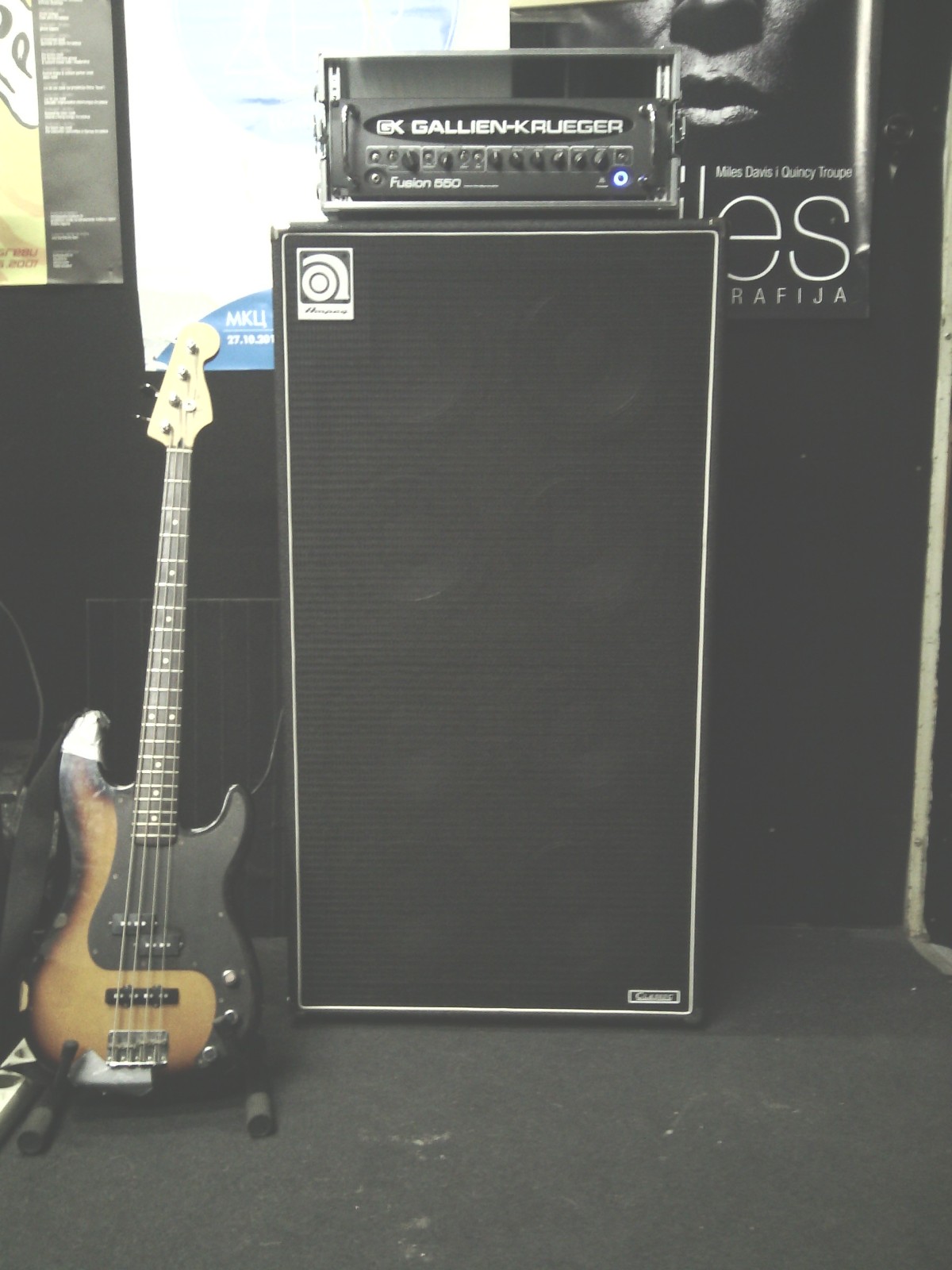
finally got the new rig together:bassist:

2wej429.jpg


I have a pedalboard with a couple of drives, fuzz, delay, looper... and never liked to DI it at gigs.

everybody knows drive + DI = crap.

is the micing the only way of doing it? because honestly I'm already tired of explaining it every time to the sound guy:rollno:

maybe it's a silly question, but is it possible to put DI somewhere else in the chain so it doesn't mess up the sound?

 
this topic has been beat to death on here. but i'll bite.

Buy a mic (use the search function for recommendations on good mics) and a stand.
bring them to every gig and just set it up yourself, be nice to the sound guy (this is the important part!!) and tell him you set up your mic and all he has to do is run it to the board. if he refuses explain (kindly and logically!) that in your experience your dirt box's come off harsh and unpleasant DI, and that you have found the mic to be a simple solution. if he still refuses, drop it and run DI. or don't thats up to you really.

most venues won't have a bass cab mic or even an extra bass drum mic handy to run your rig through so just show up with all the kit you need and the sound guy can't complain.

edit- I used to get alot of "well your head has a DI lets just use that" when I had a head with a DI on the back, I started just telling sound guys it was broken which tended to work fine in convincing them to let me mic it.
 
This is the exact reason Sansamp Bass Drivers were invented. A bass driver at the end of your board to the mixer and the parallel out to your head. Not ideal if you love your tone but it'll work in a pinch.
 
This is the exact reason Sansamp Bass Drivers were invented. A bass driver at the end of your board to the mixer and the parallel out to your head. Not ideal if you love your tone but it'll work in a pinch.

+1

For me one of the biggest turning points was learning to get a sound I liked before my signal hit the cab. There are several points I can DI out on my rig depending on the iteration I have brought. They are all usable. You will run into the signal sent to the PA not sounding exactly like what is coming from your speaker if your speakers have a lot of their own coloration. For me I circumvented that by getting a cab that is tonally pretty close to a good FOH system.

If you love/need the sound your cab provides, then you have to mic it. Its part of your signal chain, and the way to include it in the signal the FoH sees is with a mic.
 
this topic has been beat to death on here. but i'll bite.

Buy a mic (use the search function for recommendations on good mics) and a stand.
bring them to every gig and just set it up yourself, be nice to the sound guy (this is the important part!!) and tell him you set up your mic and all he has to do is run it to the board. if he refuses explain (kindly and logically!) that in your experience your dirt box's come off harsh and unpleasant DI, and that you have found the mic to be a simple solution. if he still refuses, drop it and run DI. or don't thats up to you really.

most venues won't have a bass cab mic or even an extra bass drum mic handy to run your rig through so just show up with all the kit you need and the sound guy can't complain.

ok, so basically what you're saying is there's no alternative to micing it.

buying your own mic is a good idea.

but I remember once a sound guy used a DI, but also miced the cab.
so he used 2 signals. Don't know how, but it didn't mess up the sound. Unfortunately, I don't remember how exactly did he do it...

btw, about your advice on "being nice to sound guy" - learned it. the hard way:ninja:
 
ok, so basically what you're saying is there's no alternative to micing it.

buying your own mic is not a good idea.

but I remember once a sound guy used a DI, but also miced the cab.
so he used 2 signals. Don't know how, but it didn't mess up the sound. Unfortunately, I don't remember how exactly did he do it...

btw, about your advice on "being nice to sound guy" - learned it. the hard way:ninja:

I am not saying that there are no other options. in fact there are tons of different places in your chain to run your DI which all have their pros and cons. but as cl400peavy pointed out, if you want it to sound like your cab is in the signal chain than you need to mic it. and besides it is nice to have your own mic for your bass rig, makes home recording easier, and who doesnt need an extra paper weight? ;)
 
I don't find that most DIs or cabinets with compression drivers play very nicely with distortion effects. A few of the speaker sim DIs do ok but for my money, they don't measure up to a microphone. Cabs without tweeters attenuate the very top end which is conducive to a pleasing distortion sound. This is why you almost never see a tweeter in a guitar cabinet.

I will have 20 years experience mixing live sound this summer (man, I'm getting old) and if I'm working with a bassist that uses distortion, I get a mic ready (and a DI too if I have enough channels on the desk). I also tend to talk to the bands to get a sense of what they're looking for sonically and if they have any preferences for mics/DIs etc. It's too bad that many sound people don't do this.
 
it will lack low end if you have an sm57 micing it. but if you use a mic intended to reproduce the rumbly stuff than that is simply not the case

In a lot of situations, close miking with a '57 actually works great even with its limited LF extension. Lots of times you don't need or want all that low end in the house, especially in a big boomy room.