The amp Im using is an Orange terror bass 500. I believe it is post eq. So its safe to assume the tubes do affect DI?

Enjoy the benefits of a premium membership!
Upgrade Account
-
TalkBass has been independent since 1998. Add your voice.
Create a free account to reply to discussions, view embedded media, and browse with fewer display ads.
Join free Log in
Want zero display ads or expanded classifieds tools? Compare plans.
You are using an out of date browser. It may not display this or other websites correctly.
You should upgrade or use an alternative browser.
You should upgrade or use an alternative browser.
micing vs. DI
- Thread starter elwuss
- Start date
More options
Who Replied?Per the manual:
DI OUTPUT
The DI output is set at professional line level for a padded mixing desk to a PA.
(An external DI box should still be taken from the actual bass guitar itself in most live situations so that a signal can still be present in case of amplifier failure )
That might mean that the preamp tube might not even affect that signal. My amp's DI out is tied to the volume. If I turn up the volume, the signal is louder. Not sure exactly what that means, though.
DI OUTPUT
The DI output is set at professional line level for a padded mixing desk to a PA.
(An external DI box should still be taken from the actual bass guitar itself in most live situations so that a signal can still be present in case of amplifier failure )
That might mean that the preamp tube might not even affect that signal. My amp's DI out is tied to the volume. If I turn up the volume, the signal is louder. Not sure exactly what that means, though.

Everyone likes different tones for different styles of music so many people will disagree. As for rock/metal music Ill tell you what I did. I went to many concerts and my band opened for many national acts. Some of which included my favorite bass players and out of my favorites I discovered from looking at their rigs or straight up talking to them that their signal to front of house was entirely sans amp. In my opinion the magic of the sans amps is the ability to blend the sans amp signal with the dry bass signal and effects loops that can be selected for 50/50mix or 100%. It essentially allows you to send multiple bass sounds to the board with one cable for a bigger fuller sound. The mix of those sounds is controlled by you. And they work great for all kinds of tones.
I will use a mic along with the sans amp in the studio but only to add color and "air" to my sound. Most the time I actually prefer vocal mics like shure58(non beta) or a 57 for that purpose.
I have a buddy that actually bought an akg d112 and a little mic stand that he brings to every gig and he gets the tone he wants and ive never seen a sound guy argue with him about using his own mic. As for going for a "nastier" tone I prefer the sans amp because the only way I've heard it done well with microphones was with a bassist who had two amps for clean and dirty cab setup. An I never went that direction for several reasons. For one I'm not carrying another cab to a gig, and also as most of you have discovered its usually one or the other(xlr or mic) and rarely both. So that type of rig is worthless when you can't use it as intended
Because different people have different basses cabs, amps, and prefer different tones there really is no right answer. I mean argueing about using a mic I or going direct is essentially the same as two guys with identical basses and rigs arguing over eq settings.
I will use a mic along with the sans amp in the studio but only to add color and "air" to my sound. Most the time I actually prefer vocal mics like shure58(non beta) or a 57 for that purpose.
I have a buddy that actually bought an akg d112 and a little mic stand that he brings to every gig and he gets the tone he wants and ive never seen a sound guy argue with him about using his own mic. As for going for a "nastier" tone I prefer the sans amp because the only way I've heard it done well with microphones was with a bassist who had two amps for clean and dirty cab setup. An I never went that direction for several reasons. For one I'm not carrying another cab to a gig, and also as most of you have discovered its usually one or the other(xlr or mic) and rarely both. So that type of rig is worthless when you can't use it as intended
Because different people have different basses cabs, amps, and prefer different tones there really is no right answer. I mean argueing about using a mic I or going direct is essentially the same as two guys with identical basses and rigs arguing over eq settings.

You still have to ensure that the DI has some sort of speaker sim, which I don't beleive the countryman has. Distortion will still sound quite harsh. The JDI can do this as well but it has the option of engaging the speaker sim and that helps roll off the uneccessary highs and lows that would not be present in a cab. Also the OP has a SS head. a speaker level DI does not add much in this scenario, generally a speaker level DI is used to capture the sound of a tube power amp. the OP would be better off adding a DI at the end of his pedal chain or micing his cab.
Nope. It's not a speaker simulator. It is actually taking the signal from the POWERED output (speaker output) of the amp. The DI (in this case, the Countryman Type 85 which DOES do speaker level DI) converts the signal to the kind used by regular DI, mics, etc.
Just for my own needs.... what do you do with a bassist that runs two identical amps, one clean and one pedal heavy.... aby, volume, fuzz, chorus, flange, delay?
It depends. I would probably mic the dirty one and take the XLR line out from the clean head. But assuming I had time to mess with it during sound check, I would try a couple of things.
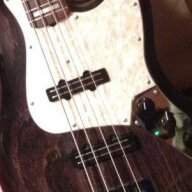
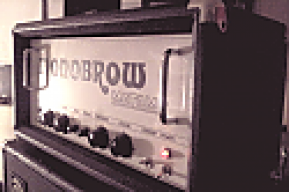
I would test your Orange Terror Bass DI before gigging with it because their DIs are configured for +4dbu line level while most DIs output at mic level and that may present some issues depending on your gigging situation. 2010 TBs had distorted DIs that were fixed in later production runs so you should also check for that (they do fix these under warranty). In any case, you will get the tone of the tube preamp through the DI.
Nope. It's not a speaker simulator. It is actually taking the signal from the POWERED output (speaker output) of the amp. The DI (in this case, the Countryman Type 85 which DOES do speaker level DI) converts the signal to the kind used by regular DI, mics, etc.
right, and therefore does not solve the OPs problem.
right, and therefore does not solve the OPs problem.
It could. His "problem" is that sound guys don't like to mic bass cabs because many of them are lazy. However, I have never met a sound man who would have a problem plugging a mic cable into a Countryman. And the tone of speaker level DI is different from that of either micing or straight DI. But in its own way, speaker level DI preserves "his tone". THe powered output reacts more like speakers than straight DI. It's hard to explain unless you have tried it and listened. The OP just might like that sound. And if it gets him around that same old argument with the next few dozen sound guys, then, yes, it does solve his problem. Most sound guys won't even know you are running speaker level. They are just instinctively plugging a mic cable into what they perceive to be a good quality DI.
It could. His "problem" is that sound guys don't like to mic bass cabs because many of them are lazy. However, I have never met a sound man who would have a problem plugging a mic cable into a Countryman. And the tone of speaker level DI is different from that of either micing or straight DI. But in its own way, speaker level DI preserves "his tone". THe powered output reacts more like speakers than straight DI. It's hard to explain unless you have tried it and listened. The OP just might like that sound. And if it gets him around that same old argument with the next few dozen sound guys, then, yes, it does solve his problem. Most sound guys won't even know you are running speaker level. They are just instinctively plugging a mic cable into what they perceive to be a good quality DI.
Agreed - it also allows him to already have a quality DI on hand, in case his amp craps out at a gig...
- georgestrings
It could. His "problem" is that sound guys don't like to mic bass cabs because many of them are lazy. However, I have never met a sound man who would have a problem plugging a mic cable into a Countryman. And the tone of speaker level DI is different from that of either micing or straight DI. But in its own way, speaker level DI preserves "his tone". THe powered output reacts more like speakers than straight DI. It's hard to explain unless you have tried it and listened. The OP just might like that sound. And if it gets him around that same old argument with the next few dozen sound guys, then, yes, it does solve his problem. Most sound guys won't even know you are running speaker level. They are just instinctively plugging a mic cable into what they perceive to be a good quality DI.
In my experience a speaker level DI without a speaker sim did not sound good with OD and fuzz. way too much highend content especially compared to an Ampeg 810.
It depends. I would probably mic the dirty one and take the XLR line out from the clean head. But assuming I had time to mess with it during sound check, I would try a couple of things.
Thank you.
I don't prefer micing bass cabs unless I can run a Di with the mic as well. I'd HPF the mic and get the bottom end form the Di.
mic only would be tough because having an open mic with that much bass content takes away system headroom and can create a lot of problems. kik mics an bass cabs are too scooped for my taste and have too much bass content, you can gate a kik drum but bass guitar is a little different.
ultimate situation is a 57 blended with a Di.
there's reasons soundmen don't prefer mic only on bass and it isn't laziness.
mic only would be tough because having an open mic with that much bass content takes away system headroom and can create a lot of problems. kik mics an bass cabs are too scooped for my taste and have too much bass content, you can gate a kik drum but bass guitar is a little different.
ultimate situation is a 57 blended with a Di.
there's reasons soundmen don't prefer mic only on bass and it isn't laziness.

I recently saw an AKG P2 that only costs $100 and looks like it would be excellent for bass on a budget. Didn't get to hear it, but the frequency response is fairly flat and has a good low end.
But as a former cab mic'er turned DI'er, I can tell you that even if you have a really nice mic, amp and cable for the soundman all ready to go, you are still going to get stick about it from some occasional (incompetent) soundmen. I've had soundmen ask me if they could do a blend and then turn off the mic, and I've even had a soundman sneak a mic cable onto the back of my amp when I went to dinner after soundcheck (worst soundman in the world, BTW...I'm usually pretty nice but I let that dude have it). The whole reason I got a REDDI is because I think other DI's suck, but I had to have a DI that I actually like or I knew I was going to continue to get screwed.
And now the REDDI has performed awesomely for me, and it and I are having a love affair at a level previously reserved for my tube Ampegs Only problem I have with the REDDI is with a distortion pedal that doesn't roll off highs. So now I only use distortion pedals that have a highs rolloff built in like the VT. And maybe one day I'll get a speaker simulator, but it's working fine for me to have it built into the pedals, so I stick with it.
But as a former cab mic'er turned DI'er, I can tell you that even if you have a really nice mic, amp and cable for the soundman all ready to go, you are still going to get stick about it from some occasional (incompetent) soundmen. I've had soundmen ask me if they could do a blend and then turn off the mic, and I've even had a soundman sneak a mic cable onto the back of my amp when I went to dinner after soundcheck (worst soundman in the world, BTW...I'm usually pretty nice but I let that dude have it). The whole reason I got a REDDI is because I think other DI's suck, but I had to have a DI that I actually like or I knew I was going to continue to get screwed.
And now the REDDI has performed awesomely for me, and it and I are having a love affair at a level previously reserved for my tube Ampegs
Only problem I have with the REDDI is with a distortion pedal that doesn't roll off highs. So now I only use distortion pedals that have a highs rolloff built in like the VT. And maybe one day I'll get a speaker simulator, but it's working fine for me to have it built into the pedals, so I stick with it.
Forgot to address your volume question. Micing actually works better if you're putting out a pretty healthy signal. That way you don't have to crank the mic so hard and the bleed it can create gets minimized. Not saying you have to blast because I certainly don't, but you don't want to be playing barely above a whisper either.
I recently saw an AKG P2 that only costs $100 and looks like it would be excellent for bass on a budget. Didn't get to hear it, but the frequency response is fairly flat and has a good low end.
But as a former cab mic'er turned DI'er, I can tell you that even if you have a really nice mic, amp and cable for the soundman all ready to go, you are still going to get stick about it from some occasional (incompetent) soundmen. I've had soundmen ask me if they could do a blend and then turn off the mic, and I've even had a soundman sneak a mic cable onto the back of my amp when I went to dinner after soundcheck (worst soundman in the world, BTW...I'm usually pretty nice but I let that dude have it). The whole reason I got a REDDI is because I think other DI's suck, but I had to have a DI that I actually like or I knew I was going to continue to get screwed.
And now the REDDI has performed awesomely for me, and it and I are having a love affair at a level previously reserved for my tube Ampegs
not prefering to mic doesn't mean the soundman is incompetent, it could mean that the system isn't up to par or time to dial in a sound might be limited etc.
it's not their job to give in to the whim of every request made by performers.
sometimes you just have to make due.
if a player wants A level touring quality production, they have to be playing gigs at that level or carry their own production crew. round round we go.

not prefering to mic doesn't mean the soundman is incompetent, it could mean that the system isn't up to par or time to dial in a sound might be limited etc.
it's not their job to give in to the whim of every request made by performers.
sometimes you just have to make due.
if a player wants A level touring quality production, they have to be playing gigs at that level or carry their own production crew. round round we go.
They don't seem to have a problem micing guitar cabs, drums, horns and vocals. Since when did micing a bass cabinet become the stuff of "touring quality production?"
Round round we go.

Anyone who can't deal with a Fender Precision plugged into an Ampeg amp and mic'ed with a Heil PR40 is incompetent.not prefering to mic doesn't mean the soundman is incompetent, it could mean that the system isn't up to par or time to dial in a sound might be limited etc.
It is on our gigs. Those who don't never work for us again if we can help it at all. Of course, if we're screwing the pooch, the soundman is free to make suggestions or ask us to get a different sound, but to sneak behind the performer's back and pull a stunt like plugging in the XLR out while we're not looking is just plain wrong.it's not their job to give in to the whim of every request made by performers.
Even A level performers with their own soundman don't always get their way. Juan Alderete was talking about it on his website once...he said that the Mars Volta hired a new soundman whose job was to take their insane stage volume and make it sound good in the house. The soundman told Juan, "I'm going to put up a cab mic because you want it, but that doesn't mean I'm going to use it."sometimes you just have to make due.
if a player wants A level touring quality production, they have to be playing gigs at that level or carry their own production crew. round round we go.
None of that is true in our case, though. Our stage volume levels are quite reasonable. And sorry...I don't want to live in a world where a soundman sees a bassist with a vintage B-15 and bristles at the thought of micing it.
Nowadays I make both soundmen and myself quite happy with the REDDI, and I never get into an argument about wanting to use it with anyone, but I see no reason why my needs should be questioned when nobody else's are. The biggest argument I ever had against using a cab mic was bleed. Our band typically has 7-8 people, two or three horns, 4 singing musicians and a lead singer, and there's usually about 15 open mics onstage, and the bass mic is going to cause bleed? Get real! It's either a control issue or a "Sorry, I don't want to have to spend 10 seconds listening and moving a couple knobs" issue.
That said, if you're a bassist, it's a DI world and you better be prepared for the inevitable. Won't happen on every gig, but it will happen.
I saw a video of Juan talking about on big shows they give him a DI box and the sound man re-amps him in protools
I wouldn't want a plain old direct box with no eq or anything. But using the xlr out on a pre amp or bass head is pretty standard these days in my area. I'd say 3 out of 4 bassist that play in my area run a sans amp xlr to the pa. So I can understand why the soundguy doesn't cater to that 1 other guy. Still never seen a soundguy against a bassist bringing his own mic to a gig. And that's the way to do it it that's the sound you prefer.
I wouldn't want a plain old direct box with no eq or anything. But using the xlr out on a pre amp or bass head is pretty standard these days in my area. I'd say 3 out of 4 bassist that play in my area run a sans amp xlr to the pa. So I can understand why the soundguy doesn't cater to that 1 other guy. Still never seen a soundguy against a bassist bringing his own mic to a gig. And that's the way to do it it that's the sound you prefer.

I run both mic and DI, but I'm fortunate enough to always use the same soundman.
Two points:
1. An SM57 is an excellent choice, you don't want the mix muddied up with all the super low rumble anyway.
2. You will more often than not get a nasty phase cancellation robbing your tone of guts if you blend a mic and DI together out front. To get around this, I use a Radial Phazer to bring the two signals into phase alignment. Its what it is designed to do and its a very useful tool.
Two points:
1. An SM57 is an excellent choice, you don't want the mix muddied up with all the super low rumble anyway.
2. You will more often than not get a nasty phase cancellation robbing your tone of guts if you blend a mic and DI together out front. To get around this, I use a Radial Phazer to bring the two signals into phase alignment. Its what it is designed to do and its a very useful tool.


