• TalkBass has been independent since 1998. Add your voice.
    Create a free account to reply to discussions, view embedded media, and browse with fewer display ads.
    Join freeLog in
    Want zero display ads or expanded classifieds tools? Compare plans.

My Cab Build - 2X15 monster

May be you did an error for volume dimension or at decimal point?

A loudspeaker like Gauss 4580 with Qts around 0.25 can't generate a Qtc around 0.7 unless the net volume per speaker becomes impractical small 0.3-0.4 cu ft

Perhaps --- I will revisit and check. WIN ISD is simple but maybe too simple --- the metric system with lenghts in "meters" is a bit difficult for this 'merican to use :-)
 
Shorter port length improves low response.
There is a certain point where response becomes very bassy and kind of muddy just at same tuning point.
This point then means too litle damping.

Then tune the cab slightly down for best performance of low response and damping.
Probably needs some trials and errors to hit the sweet spot.

It's good practise to evaluate a certain tuning at rehearsal or on stage.
Admitted it's somewhat tricky to determine proper port dimensions to have some reserve in both directions of tuning the cab, therefore somewhat tricky to hit the aimed goal as effectively as possible at once.
 
Last edited:
  • Like
Reactions: 83_Silberpfeil
OK, so when I do the test what should I be looking to hear --- what is good and what is bad? Perhaps adjusting the length and hearing that the low frequencies are more apparent?


By ear partly. But ideally, with the cab on its back, and some rice grains on the speaker, sweep a sine wave through frequencies between 30 and 200hz going into it until the rice grains are moving least, there will be a dip in their movement at some point in that range. Then you can adjust the port lengths to somewhere about 40-50hz, tends to be good for bass.
 
  • Like
Reactions: 83_Silberpfeil
Thanks @Mr. Foxen --- I'll first try the cab 'sealed'. If it passes my ears then will leave it at that. If not, then will port/tune. I play very high up on the neck (standard scale 4-string Yamaha BB1200S --- Peter Hook (Joy Division / New Order style). Also play a bass 6 (Shergold Marathon6) --- also play mainly the high notes.

By ear partly. But ideally, with the cab on its back, and some rice grains on the speaker, sweep a sine wave through frequencies between 30 and 200hz going into it until the rice grains are moving least, there will be a dip in their movement at some point in that range. Then you can adjust the port lengths to somewhere about 40-50hz, tends to be good for bass.
 
OK, got one thing done and another thing started tonight --- a bit progress at a time :-).

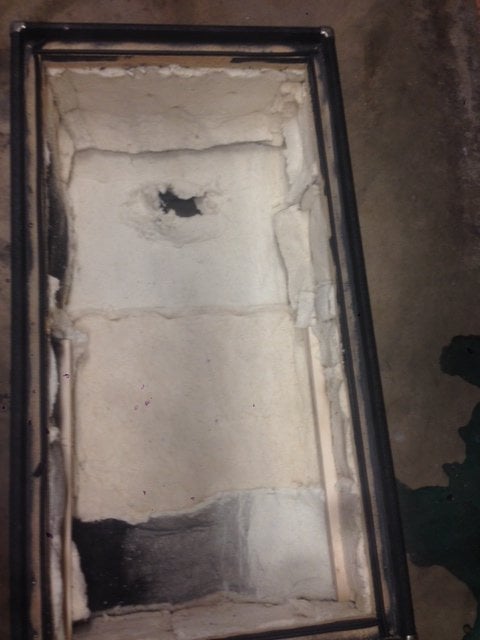
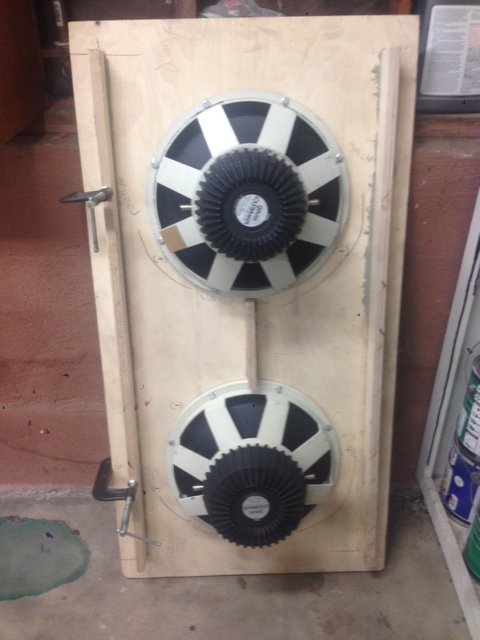
1) tested the polarity of the two drivers. One was correct polarity. Another was reversed. Strange, as both are Gauss 4580's. Though one looks much older than the other. Good that I validated and marked up the back of the plywood so that there will be no mistakes.

2) started gluing 2" strip of the baltic plywood (0.71") to the back of the face/plywood for additional reinforcement. Got one side glued/clamped. The middle bit glued and wedged in between the drivers. Once it dries, tomorrow AM, I will glue the other side. Some pix below...
 
Wow, this loctite PL Premium Fast Grab thing works well!

A bit difficult to squeeze out of the tube --- even w a caulking gun. But it is rather thick and stays, no dripping. Ample time to align/position and set the plywood to desired location and then apply the C clamps. Left it overnight ~ 12 hrs. Hard as a rock! One more side to go.

As for inside the cab --- not planning on any ribbing support. Will see how that goes.
 
Made good progress tonight --- nice to have a holiday. Happy 4th everyone!!!!!

1) added the second bracing strip on back of face.
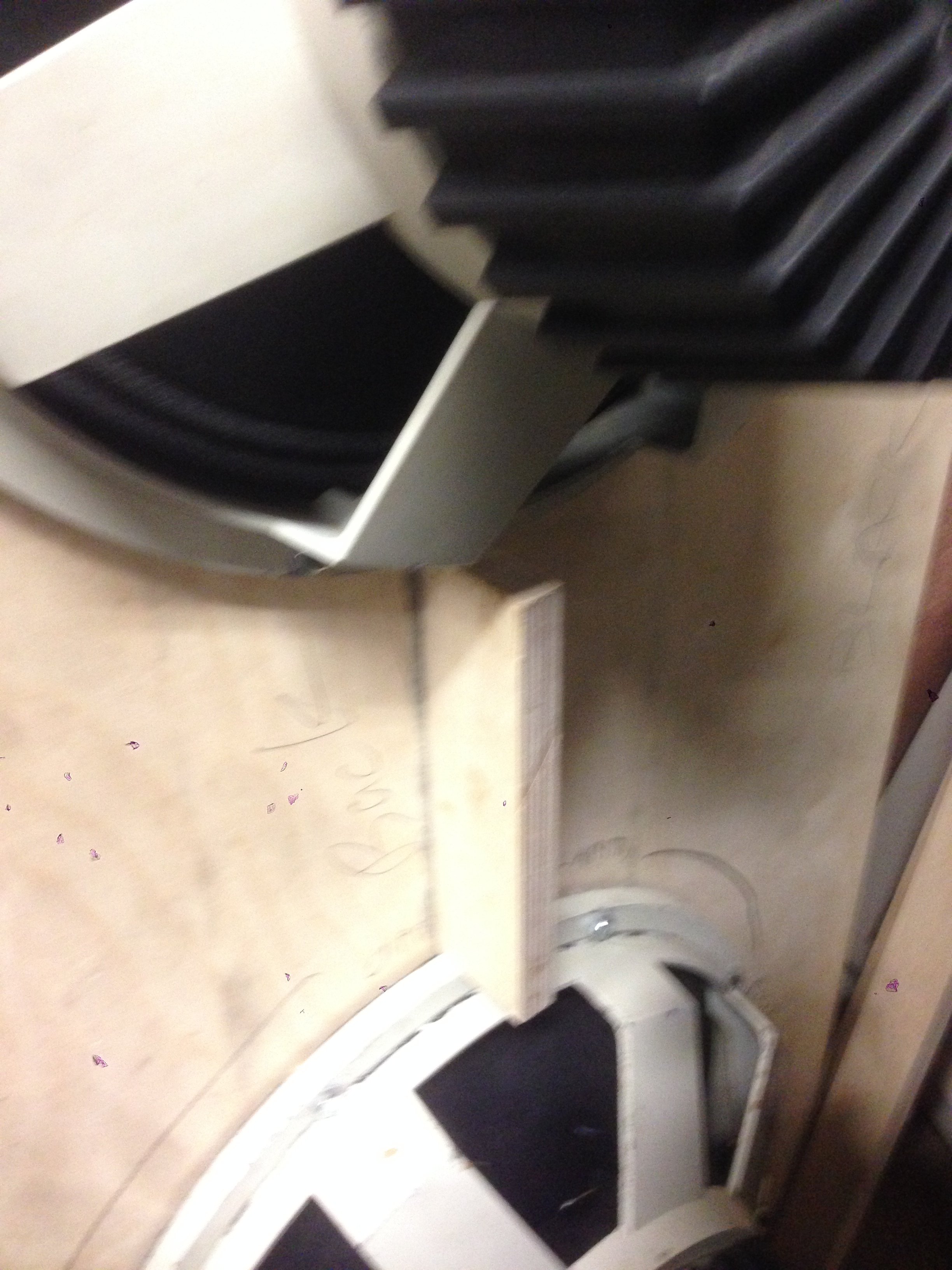
2) added some interior bracing using some leftover pieces I had (0.71" baltic birch 2" wide strips) --- did not overkill
3) added a strip of air seal --- looks like rubber/synth tube with sticky on one side. Stuck it all around the perimeter of the cab body where the the face will be mating the cab body.
4) tinkered with speaker wires to estimate length and explored how to secure the speaker wire so that there will be no stress on the connections to a) driver terminals and b) female TRS jack

Got so me fotos below to show.

Question: speaker wire to female TRS jack connection. Does this absolutely need to be soldered? Or can I use the female spade type of connector show on my foto.

Thanks!
 
Quick-connects do work, but you don't want them to find a way to come loose. I suggest solder.

If you have winISD and t/s numbers, as well as cab volume dims, why not calculate ports before you put it together?
also, is there any kind of access panel? If you do decide you need ports AFTER it's put together, you'll have to remove the whole baffle to get inside the cab again. Would really be a PITA if you went to cut a port and got something inside the cab that rattled...

About your last question there... well the way I've always heard (or read), sealed cabinets get stuffed, ported cabs get lined.
 
Question: speaker wire to female TRS jack connection. Does this absolutely need to be soldered? Or can I use the female spade type of connector show on my foto.

The one in your picture is for TS plugs, not TRS. If that's a standard Switchcraft jack, the terminals are not intended to be used with Faston connectors, solder them. If you are using more than one of those jacks, be aware that they are not airtight and an unused one can whistle pretty badly unless it resides in a sealed subenclosure.
 
  • Like
Reactions: 83_Silberpfeil